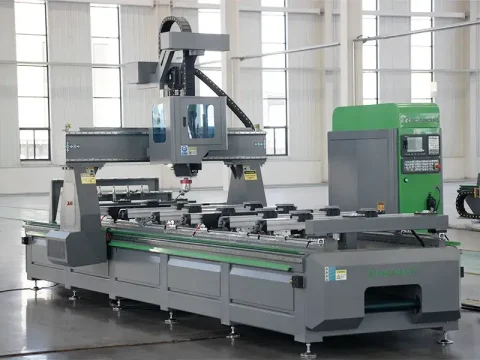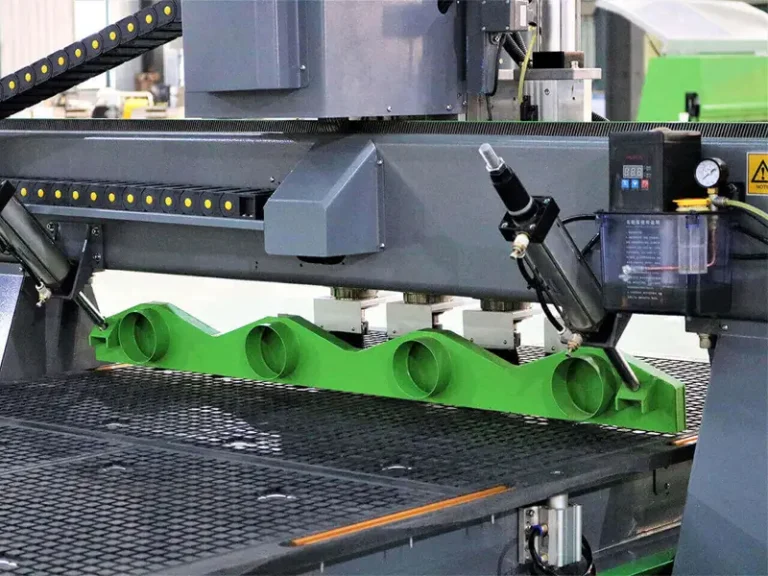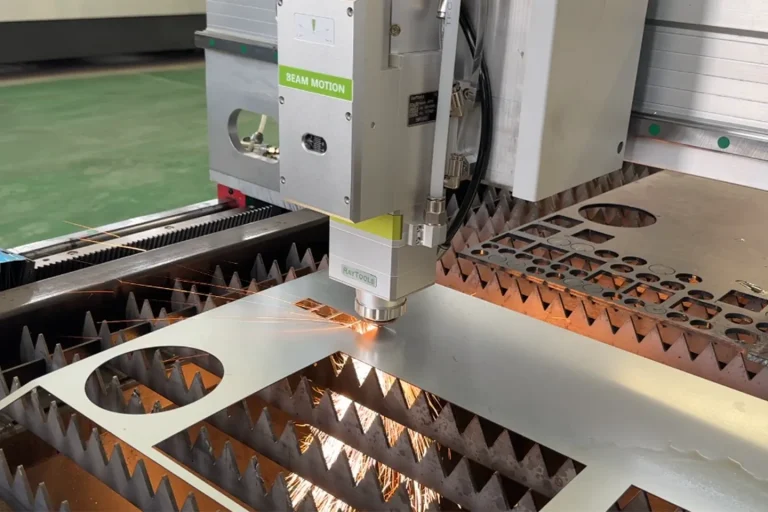

An ATC tool magazine is a device on a CNC router that stores multiple tool holders and allows the machine to switch tools automatically.
Instead of stopping work to change a bit by hand, the machine selects the right tool directly from the magazine.
This feature is common in professional shops that cut wood, plastic, aluminum, and composite materials. It is one of the most important upgrades for fast and stable production.
How an ATC Tool Magazine Works
1.Tool storage
The magazine holds a set number of tool holders (usually 6–20 tools).
2.Command from controller
The CNC controller reads the G-code and knows when a tool change is needed.
3.Machine moves to the magazine
The spindle goes to the tool rack position and releases the current tool.
4.Automatic tool pickup
The spindle grabs a new tool and locks it securely using an air cylinder or mechanical clamp.
5.Cutting continues
The machine returns to the job and continues cutting without manual intervention.
This process takes only a few seconds, which greatly reduces downtime.
Common Types of ATC Tool Magazines
- Tools are arranged in a row (linear rack).
- Simple structure and easy maintenance.
- Often installed at the back or side of the machine bed.
- Best for small to medium CNC routers.
2. Carousel / Disc Tool Magazine
- Tools rotate inside a circular disc.
- Faster tool change speeds.
- Usually installed on the side of the gantry.
- Suitable for high-volume industrial production.
3. Umbrella Tool Magazine
- Tools hang under a rotary umbrella-style holder.
- Stable and efficient for heavy spindles.
- Common in high-end machining centers.
Advantages of Using an ATC Tool Magazine
1. Higher Work Efficiency
Automatic tool changes shorten cycle time and help operators complete more jobs in a day.
2. Better Precision
Tool changes are consistent and stable, reducing errors caused by manual handling.
3. Multi-process Capability
Engraving, cutting, drilling, pocketing, and slotting can be finished in one setup.
4. Lower Labor Cost
Operators only need to load tools before starting the job. The machine handles the rest.
5. Improved Production Flow
Ideal for cabinet shops, signmaking, furniture factories, and metal/composite processing.
How to Choose the Right Tool Magazine
When selecting an ATC router, consider these points:
- Number of Tools
More tools allow more operations without stopping the machine. - Type of Magazine
Linear is economical; carousel is faster. - Tool Holder Standard
BT30 and ISO30 tool holders are common in CNC routers. - Spindle Power and Weight
Make sure the magazine matches the spindle size. - Maintenance Needs
Look for strong mechanical design and easy-to-replace parts. - Your Job Type
For cabinet production, 8–12 tools are usually enough.
For mixed materials or complex 3D work, 12–20 tools may be better.
ATC Tool Magazines on BCAMCNC Routers
BCAMCNC provides ATC routers equipped with both linear and carousel tool magazines.
Our ATC series focuses on stability, fast change speeds, and long-term accuracy.
We support custom tool counts and tool holder standards based on customer needs.