
CNC Router
9 products
ATC CNC Router Machine
9 products
5 Axis CNC Router Machine
9 products
Stone CNC Machine
2 products
Edge Banding Machine
5 products
Cutting Saw
3 products
8:30 AM - 6:00 PM
Special-Shaped Edge Banding Machines are designed for woodworking factories that need reliable solutions for curved edge banding, swing arm edge banding, and profile edge banding. These machines deliver smooth, seamless edges on cabinet doors, furniture panels, decorative boards, and customized wood products.
Among them, the Edge Banding Machine with Swing Arm Curve is one of the most popular models, offering excellent flexibility and efficiency for processing panels with complex shapes. Whether working with solid wood, MDF, plywood, or composite boards, our curved edge banders ensure high precision, durability, and stable performance.
Available through professional dealers and distributors worldwide, these machines are trusted in cabinet making, door manufacturing, and furniture production.
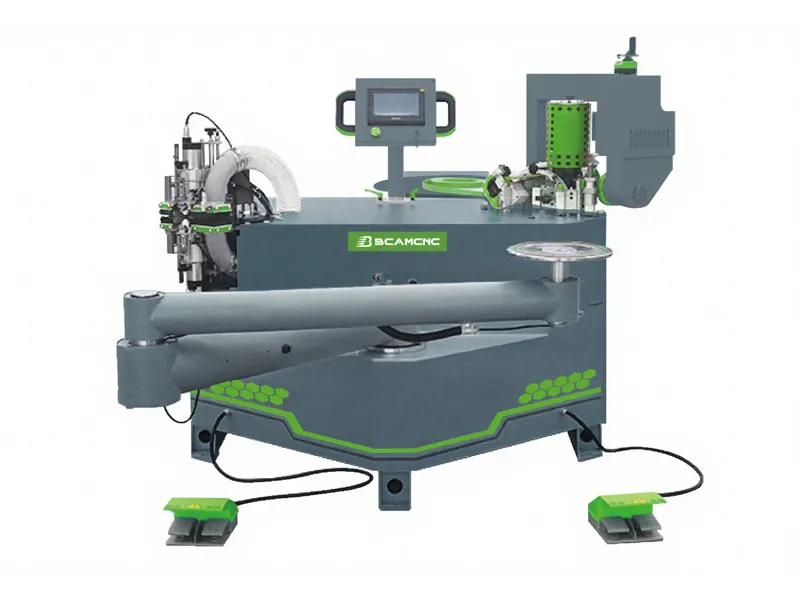
$5,284.00 Original price was: $5,284.00.$5,068.00Current price is: $5,068.00.
Special-Shaped Edge Banding Machines are advanced woodworking solutions designed for manufacturers who need to handle curved panels, profiled boards, angled edges, and irregular shapes with high precision. Unlike traditional straight-line edge banders, these machines are built to manage complex furniture parts, cabinet doors, wardrobe panels, and decorative wood boards, ensuring a flawless and durable finish. A popular option in this category is the Edge Banding Machine with Swing Arm Curve, which allows smooth processing of curved cabinet edges and is widely used in custom furniture production.
With models covering curved edge banding machines, swing arm edge banders, profile edge banding machines, and 3D edge banders, this series provides versatile solutions for different woodworking applications. They are compatible with solid wood, MDF, plywood, particle board, and composite panels, making them suitable for a wide range of industries. By adopting a special-shaped edge banding machine, manufacturers can achieve higher efficiency, improved sealing quality, and reduced manual labor, while also meeting the growing demand for customized and modern furniture designs.
These machines are trusted by dealers, distributors, and woodworking factories worldwide, especially in markets focusing on cabinet making, furniture edge banding, and decorative panel processing. With strong durability, stable performance, and easy maintenance, they have become an essential choice for companies looking to upgrade their woodworking production lines and stay competitive in today’s furniture industry.
A Special-Shaped Edge Banding Machine is a professional woodworking machine designed for curved panels, irregular shapes, angled edges, and profiled boards. Unlike standard straight-line edge banders, these machines are engineered to handle complex shapes such as arc cabinet doors, decorative furniture panels, wardrobe components, and 3D profiled boards, ensuring a seamless and durable edge finish.
They are widely used in custom furniture production, cabinet manufacturing, door fabrication, and decorative panel processing, where flexibility and precision are essential. These machines are especially suitable for woodworking factories, furniture workshops, and distributors who serve clients with diverse design requirements and non-standard panel dimensions.
Special-shaped edge banders are available in various configurations, including curved edge banding machines, swing arm edge banders, profile edge banding machines, and 3D edge banders. Each type is built to offer smooth operation, high stability, and accurate sealing, helping manufacturers reduce manual work, improve efficiency, and deliver professional-quality results on even the most challenging panel designs.
A Special-Shaped Edge Banding Machine works by applying edge tape to curved panels, profiled boards, angled edges, and irregularly shaped furniture components, delivering smooth and durable finishes. The machine typically follows a workflow that includes heating and gluing, precise edge pressing, trimming, scraping, and polishing, ensuring that even non-standard shapes achieve professional-quality edges.
Depending on the configuration, special-shaped edge banders can be curved edge banding machines, swing arm edge banders, profile edge banding machines, or 3D edge banders. Each type is designed to provide flexibility in handling cabinet doors, wardrobe panels, decorative furniture boards, and customized wood products. Advanced models are equipped with PLC or touch-screen control systems, making it easy to adjust parameters according to the panel thickness, radius of curvature, and material type, while reducing operator errors.
This process is compatible with a wide range of materials such as solid wood, MDF, plywood, particle board, and composite panels, making the special-shaped edge banding machine a reliable solution for cabinet manufacturers, custom furniture workshops, door makers, and woodworking distributors or dealers who need to process non-standard panel designs efficiently.
Our special-shaped edge banding machines provide versatile and high-precision solutions for curved edge banding, swing arm edge banding, profile edge banding, and 3D panel finishing, making them ideal for custom furniture production, cabinet manufacturing, door fabrication, and decorative panel processing. Key features and advantages include:
1. Multiple Functional Configurations
Available as curved edge banding machines, swing arm edge banders, profile edge banding machines, and 3D edge banders to meet diverse production needs.
Core processes include gluing, pressing, trimming, scraping, and polishing, ensuring smooth and durable edges even on complex or irregular shapes.
Compatible with a wide range of materials, such as solid wood, MDF, plywood, particle board, and composite panels.
2. User-Friendly Operation
Equipped with PLC or touch-screen control systems, allowing easy adjustments for panel thickness, radius of curvature, and edge profile.
Simplifies workflow, reduces operator error, and improves efficiency for woodworking factories, distributors, and furniture workshops.
3. Durable Structure and Components
High-quality steel or aluminum alloy beam structures provide stability and long service life.
Reliable motors, electrical components, and precision mechanisms ensure consistent performance during extended production.
4. Cost-Effective Solution
Designed for small to medium woodworking factories and furniture workshops, offering excellent value without compromising precision.
Flexible configurations accommodate different budgets, production scales, and panel complexities.
5. Wide Application Range
Perfect for cabinet doors, wardrobes, office furniture, decorative panels, and custom furniture parts.
Supports a broad range of materials and shapes, making it a versatile choice for modern furniture edge banding solutions.
Our special-shaped edge banding machines are designed for a wide range of custom furniture and cabinetry applications, making them an ideal choice for furniture manufacturers, cabinet makers, woodworking workshops, distributors, and dealers.
Suitable Materials:
• Solid Wood – Delivers high-quality, professional edges for doors, wardrobes, and custom furniture.
• MDF (Medium-Density Fiberboard) – Ensures smooth and consistent edge finishing, ideal for cabinets and decorative panels.
• Plywood – Provides durable and precise edges for kitchen cabinets, office furniture, and other panels.
• Particle Board – Cost-effective option for large-scale furniture production, including wardrobes and modular furniture.
• Composite Panels – Handles multi-layer, profiled, and decorative boards with accuracy, suitable for 3D edge banding applications.
Applications:
• Cabinet Making – Perfect for kitchens, wardrobes, office storage units, and custom cabinetry with curved or angled edges.
• Furniture Production – Suitable for tables, chairs, desks, and other custom furniture panels requiring precise edge finishing.
• Doors and Wardrobes – Provides smooth, durable edges on solid, composite, and profiled wood doors.
• Decorative Panels and Wood Surfaces – Ideal for wooden wall panels, moldings, and custom decorative furniture parts, especially for non-standard shapes.
With these capabilities, special-shaped edge banding machines offer efficient, reliable, and high-quality edge finishing for a variety of woodworking projects, helping factories, dealers, and distributors enhance productivity while delivering professional results on even the most complex panels.
Special-shaped edge banding machines are available in multiple functional types to meet diverse woodworking needs, especially for curved panels, profiled edges, and 3D shapes:
1. Curved Edge Banding Machines
Designed specifically for curved panels and cabinet doors.
Ensures smooth, precise edge finishing on non-linear edges.
Ideal for furniture workshops and custom cabinetry requiring professional-quality curved edges.
2. Swing Arm Edge Banders
Features a swing arm mechanism to handle panels with irregular shapes or angles.
Reduces manual adjustment while improving edge alignment.
Perfect for decorative panels, wardrobe doors, and custom furniture parts.
3. Profile Edge Banding Machines
Suitable for panels with profiled or shaped edges, including decorative and molded boards.
Delivers precise adhesion and smooth finishes for complex edge designs.
Widely used in cabinet making, furniture production, and door manufacturing.
4. 3D Edge Banders
Capable of processing three-dimensional panels or surfaces.
Ensures seamless edge finishing on panels with curves, slopes, or irregular shapes.
Essential for high-end furniture, custom wardrobes, and decorative boards.
5. Edge Banders with Combined Functions
Some models integrate pre-milling, tracking, or swing arm functions to handle both complex shapes and surface preparation.
Improves adhesion, smoothness, and edge precision with minimal manual intervention.
Suitable for solid wood, MDF, plywood, particle board, and composite panels.
These types of special-shaped edge banding machines provide flexible configurations, reliable performance, and high-quality edge finishes, making them an ideal solution for cabinet manufacturers, furniture workshops, and woodworking distributors or dealers.
Special-shaped edge banding machines provide a cost-effective and versatile solution for furniture manufacturers, cabinet makers, woodworking workshops, distributors, and dealers who need to process curved panels, profiled edges, and 3D shapes. Prices vary depending on machine type, functionality, automation level, and structural configuration.
• Curved Edge Banding Machines and Swing Arm Edge Banders – Budget to mid-range options, ideal for small to medium workshops and production lines handling cabinet doors, wardrobe panels, and decorative furniture boards.
• Profile Edge Banding Machines – Mid-range pricing for medium to high-volume production, delivering precise and consistent finishes on profiled and molded panels.
• 3D Edge Banders or Machines with Combined Functions (Pre-Milling + Tracking + Swing Arm) – Higher investment for advanced features, suitable for high-end furniture, custom cabinetry, and decorative panels requiring professional-quality edge finishing.
Investing in the right special-shaped edge banding machine helps improve production efficiency, reduce labor costs, and achieve smooth, durable edges on solid wood, MDF, plywood, particle board, and composite panels. For accurate pricing and to select the best model for your production needs, contact our authorized distributors or dealers to receive a tailored quotation.
A special-shaped edge banding machine is a precision woodworking tool designed to handle curved panels, profiled edges, angled boards, and 3D surfaces, with automatic electrical control and programmed operation. When selecting a machine, careful evaluation is essential to ensure it meets your production needs and panel types.
1. Understanding
Review the manufacturer’s product introduction, technical specifications, and performance details.
Learn about the scope of use, operation method, and functional features, including curved edge banding, swing arm edge banding, profile edge banding, 3D edge banding, pre-milling, and tracking functions.
Assess the price range, after-sales support, and compatibility with your production goals.
This step helps determine which machine type is best suited for cabinet doors, furniture panels, decorative boards, and custom wood products.
2. Inspection
Check the machine’s overall structure, quality of components, and ensure all parts are included.
Observe demonstration videos or live operation to evaluate edge finishing quality, operational smoothness, and precision.
Confirm that the machine supports the materials you work with, such as solid wood, MDF, plywood, particle board, and composite panels.
3. Testing
Conduct a test run to check power supply, air supply, and mechanical smoothness.
Listen for unusual noises and verify that functions like swing arm operation, curved edge processing, pre-milling, and tracking work correctly.
Evaluate if the machine meets your requirements for efficiency, edge quality, and reliable operation in production.
By following these steps, distributors, dealers, and woodworking factories can confidently select the right special-shaped edge banding machine, helping improve productivity, reduce labor costs, and achieve professional-quality edge finishes for a wide range of cabinet, furniture, and decorative woodworking projects.
Using a special-shaped edge banding machine correctly ensures smooth, durable edges and extends the machine’s service life. Whether you are a novice or experienced operator, following proper steps is essential for efficiency, precision, and consistent edge quality on curved, profiled, or 3D panels.
Preparation
• Install the machine on a stable surface and connect the correct power and air supply.
• Ensure all components, including glue pots, trimming knives, rollers, and swing arm mechanisms, are clean and in good condition.
• Select the appropriate edge banding tape for your panel, whether solid wood, MDF, plywood, particle board, or composite panels.
Machine Setup
• Adjust thickness, width, and curvature settings according to panel dimensions.
• Configure machine functions: curved edge processing, swing arm operation, profile edge banding, 3D edge banding, pre-milling, and tracking.
• Verify the PLC or touch-screen control settings for your production run.
Step-by-Step Operation (Quick Guide)
1. Select the Edge Banding Tape – Match the tape color and type to your panel.
2. Load the Tape – Place it on the feeder or turntable and guide it into the machine.
3. Prepare the Panel – Position it on the working table, aligned with guide rails or swing arm guides.
4. Feed the Panel – Slowly push the panel into the machine while keeping it pressed against the guide for curved or irregular edges.
5. Automatic Edge Banding – Conveyor rollers and swing arm mechanisms carry the panel through the machine. Glue is applied, edges are trimmed, and surfaces polished.
6. Trim Excess Tape – The machine cuts off extra tape and completes the edge sealing process.
7. Collect the Panel – Remove the finished panel at the output section and inspect the edge quality.
8. Repeat for Next Panel – Prepare and feed the next panel following the same steps.
Post-Operation & Maintenance Tips
• Turn off the machine and clean glue residues, trimming parts, rollers, and swing arm mechanisms.
• Inspect finished edges to ensure high-quality results.
• Perform routine maintenance to prolong the machine’s service life and maintain consistent performance.
Following this approach, special-shaped edge banding machines help improve production efficiency, reduce labor costs, and achieve professional-quality edges on cabinet doors, furniture panels, decorative boards, wardrobes, and custom furniture parts.
Proper care and maintenance of your special-shaped edge banding machine is essential to prevent failures, extend machine life, reduce maintenance costs, and improve production efficiency. Follow these tips to keep your curved edge banding machines, swing arm edge banders, profile edge banding machines, and 3D edge banders in optimal condition:
1. Regular Lubrication
Apply appropriate lubricating oil to bearings, swing arms, rollers, and other moving parts.
Using the correct oil ensures smooth operation, prevents premature wear, and maintains precise edge finishing.
2. Periodic Inspection
Check for wear on gears, bearings, and critical components.
Tighten loose screws and replace worn parts promptly.
Inspect electrical circuits and control systems (PLC or touch-screen) to avoid operational issues.
3. Timely Cleaning
Remove wood dust, scraps, and glue residues generated during edge banding to prevent jams or blockages.
Clean surface stains to maintain a neat appearance and prevent corrosion, especially on swing arm mechanisms and 3D processing units.
4. Keep the Operating Area Clear
Remove scrap material and debris around the machine to ensure safe, smooth, and efficient operation.
5. Adjust Glue Application
Set glue amount and temperature according to panel thickness, edge profile, width, and size, as well as the machine’s heating capacity.
Proper glue settings ensure strong adhesion and a smooth edge finish for cabinet doors, furniture panels, and decorative boards.
6. Clean the Glue Pot Regularly
Prevent carbon deposits caused by long-term high-temperature heating.
Maintains consistent heating and proper glue flow for professional-quality edge banding.
7. Clean the Glue Return Port
Keep the back glue port unblocked to prevent contamination of panel edges.
Prevent glue buildup on conveyor belts and travel switches, which can cause malfunctions.
8. Maintain Proper Workshop Temperature
Avoid extreme temperatures during operation.
Too low can freeze lubricants and hinder operation; too high can cause heat dissipation issues and motor damage.
Following these care and maintenance steps helps your special-shaped edge banding machines deliver consistent performance, high-quality edge finishing, and long service life for furniture, cabinets, doors, wardrobes, and decorative panels.
Even reliable special-shaped edge banding machines may encounter faults during long-term use. Understanding common issues and their solutions can reduce downtime and maintain high-quality edge banding on curved, profiled, and 3D panels.
1. Pressing Issues
Fault: Panel is not pressed tightly, or front and rear pressing heights are uneven, causing deviation during trimming and polishing.
Solution: Ensure the panel is firmly pressed, align reference rulers, swing arms, and profiling wheels with the panel, and adjust until proper trimming and edge finishing is achieved.
2. Trimming Reference Problems
Fault: Trimming knife or profile cutter cannot correctly contact the panel, resulting in inaccurate edge cutting.
Solution: Feed a long, flat-ended panel without glue, stop the conveyor at the working position, align horizontal and vertical reference parts, and fine-tune the tool.
3. Loose Screws or Components
Fault: Unstable trimming or swing arm operation due to loose screws.
Solution: Tighten screws at benchmark positions and adjust the tool; polishing and edge finishing issues will resolve once trimming is correct.
4. Rear Head or Swing Arm Descending Too Fast
Fault: Excessive downward speed or air pressure causes collision with the panel.
Solution: Adjust the inlet/exhaust pressure regulating valve of the rear cylinder or swing arm to reduce speed and force.
5. Front Head or Pressure Roller Too High
Fault: Board collides with the front head or pressure roller when advancing.
Solution: Adjust the front pressure regulating valve or roller pressure for softer operation.
6. Travel Switch Faults
Fault: Incorrect or broken travel switch prevents heads or swing arms from descending.
Solution: Reposition or replace the travel switch.
7. Guide Wheel Issues
Fault: Missing or damaged guide wheels cause panel cracking or misalignment.
Solution: Install new guide wheels and verify alignment.
8. Burrs on Headrest Rulers or Guides
Fault: Burrs interfere with panel contact.
Solution: Remove burrs using fine gauze or sandpaper.
9. Electrical Faults
Fault: Machine stops, slow heating, or program errors.
Solution: Inspect motors, control box, delay devices, and PLC system; seek professional or manufacturer support if needed.
10. Pneumatic Circuit Faults
Fault: Air valve failure, leaks, low air pressure, feeding or cutter failure.
Solution: Check all pneumatic components and replace parts following manufacturer guidance.
11. Mechanical Faults
Fault: Transmission failure, uneven glue application, feeding or cutter malfunction.
Solution: Inspect and secure all mechanical components, verify transmission alignment, and adjust moving parts as necessary.
12. Adhesive and Tape Faults
Fault: Glue not sticking, deviation, or panel misalignment.
Solution: Check rubber shafts, edge banding tape, glue system, substrate, and operation technique; maintenance depends on the specific situation.
By following these troubleshooting and repair guidelines, special-shaped edge banding machines can maintain consistent performance, professional edge quality, and reliable operation for cabinet doors, furniture panels, decorative boards, wardrobes, and custom furniture parts.

Tellus gravida ipsum aut facilisis tempus at et aliquam estsem.

Non pulvinar aenean ultrices lectus vitae imperdiet vulputate a eu.

Aliquet ullamcorper leo mi vel sit pretium euismod eget libero.

Nullam iaculis vestibulum arcu id urnain pellentesque volutpat quis.
Subscribe and grab 20% OFF!




© 2025 Jinan Bcamcnc Machinery Co., Ltd. (BCAMCNC)