
In the world of automated woodworking and manufacturing, choosing the right CNC router is one of the most critical investment decisions you’ll make. The “engine” of your production line is the spindle, and the debate usually comes down to two options: Single Spindle or Multi-Spindle configurations.
At BCAMCNC, we help hundreds of shops transition from manual labor to high-efficiency CNC production. In this guide, we’ll break down the differences to help you decide which machine will maximize your ROI.
What is a Single Spindle CNC Router?
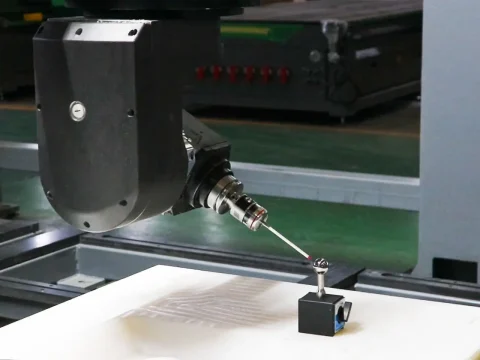
A single spindle CNC router features one motor (the spindle) that holds one tool at a time. If your project requires different bits—for example, one for carving, one for drilling, and one for cutting—the machine must stop so the tool can be changed, either manually or via an Automatic Tool Changer (ATC).
Best For:
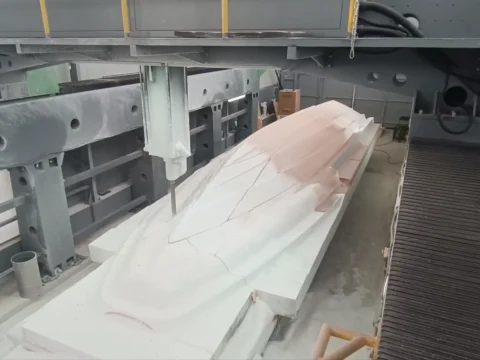
- Complex 3D Carving: Ideal for intricate designs where a single fine-tip bit is used for a long duration.
- Custom Workshops: Perfect for hobbyists or small businesses with diverse, low-volume projects.
- Budget-Conscious Buyers: Generally offers a lower entry price point.
What is a Multi-Spindle CNC Router?
Multi-spindle machines are designed for high-efficiency mass production. These machines are equipped with two or more spindles mounted on the same gantry.
The Power of the 4-Process CNC Router
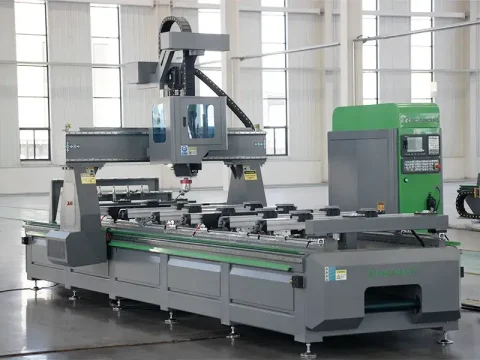
A popular variation in the multi-spindle category is the 4-Process CNC Router. Instead of a complex tool-changing carousel, this machine features four independent spindles, each equipped with a different tool.
How it works: When the program finishes a drilling cycle with Spindle 1, it immediately switches to Spindle 2 for grooving, then Spindle 3 for cutting, and so on. There is zero downtime for tool changes, making it significantly faster than a basic single-spindle machine without an ATC.
Head-to-Head Comparison
| Feature | Single Spindle | Multi-Spindle (4-Process) |
| Production Speed | Slower (requires tool change stops) | High (instant switching between spindles) |
| Complexity | Simple to operate | Requires multi-spindle programming |
| Versatility | High (can use many tools via ATC) | Fixed (usually limited to 2–4 tools) |
| Ideal Application | Prototyping & Custom art | Cabinetry, Wardrobes, & Batch furniture |
Why Choose a BCAMCNC Multi-Spindle Solution?
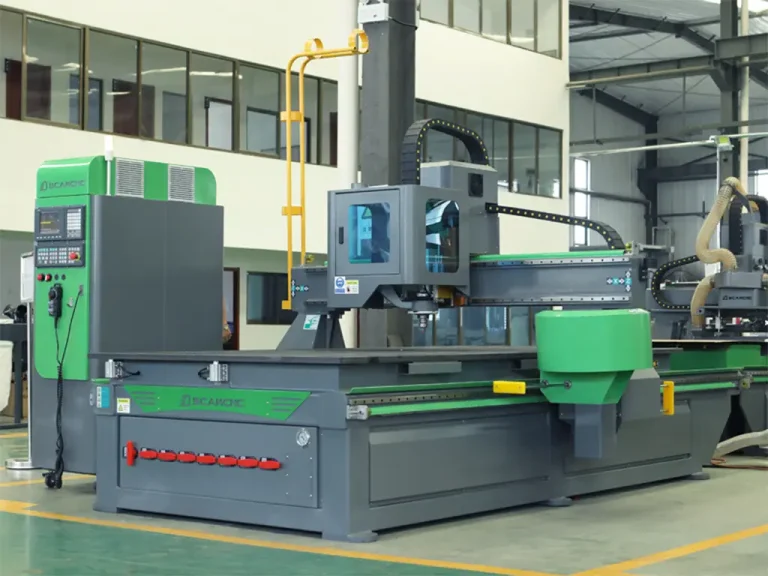
If you are manufacturing kitchen cabinets, office furniture, or wooden doors, efficiency is your top priority. This is where the BCAMCNC 4-Process CNC Router shines.
By integrating four spindles, we’ve created a “workhorse” that mimics the functionality of an expensive ATC machine but with a much simpler mechanical structure. This means:
1. Lower Maintenance: Fewer moving parts than a rotary tool changer.
2. Increased Output: Complete a cabinet door in a fraction of the time.
3. Precision: Every BCAMCNC machine is built with a heavy-duty frame to ensure that even with four spindles running, the vibration is near zero.
Pro Tip: For shops that need more than four tools but want the speed of a multi-spindle setup, BCAMCNC also offers ATC CNC Routers with Boring Heads, combining the best of both worlds.
The Verdict: Which Should You Buy?
- Choose a Single Spindle if you are an artisan, a specialized sign maker, or just starting your CNC journey with limited daily volume.
- Choose a Multi-Spindle (4-Process) if you are scaling your business. If your daily tasks involve repetitive drilling, grooving, and cutting, the time saved on tool changes will pay for the machine upgrade within months.
Ready to Upgrade Your Workshop?
At BCAMCNC, we don’t just sell machines; we provide production solutions. Whether you need a high-speed 4-process router or a precision single-spindle setup, our team is here to help you choose the perfect fit.