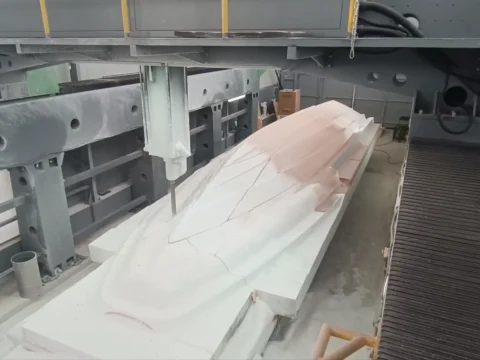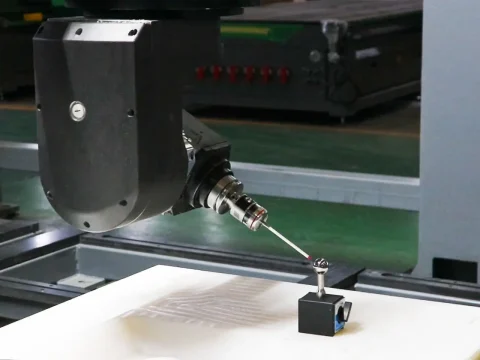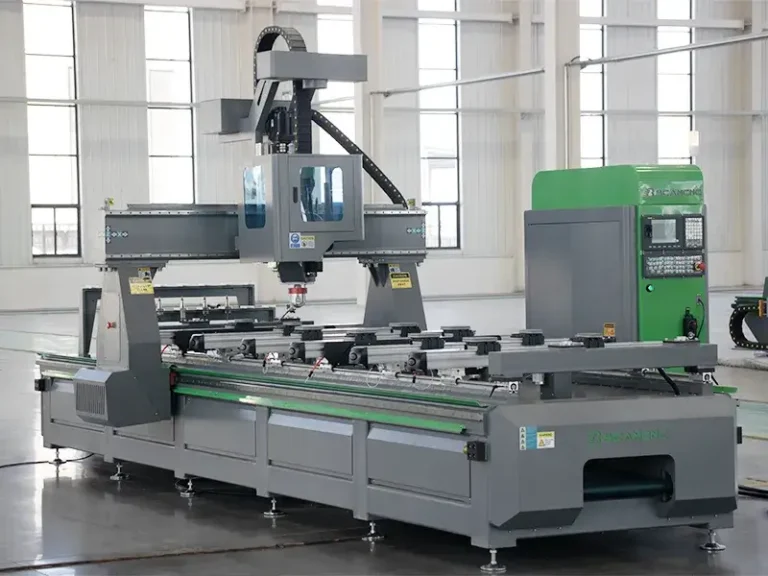

For shipyards producing large composite molds, the adoption of large-format 5-axis CNC machining is primarily driven by measurable improvements in lead time and production consistency rather than theoretical efficiency gains.
In a practical case, a Greek shipyard manufacturing custom yacht hull molds reduced its mold production cycle from several weeks to a matter of days after implementing a DL Series super-large format 5-axis CNC router from BCAMCNC.
This improvement was achieved through process consolidation, not simply faster cutting speeds. The key contributors included eliminating segmented machining workflows, reducing manual fairing, maintaining volumetric accuracy over long distances, and enabling stable 24/7 continuous operation.
From an ROI perspective, the gains were realized through reduced labor input, fewer correction cycles, and improved first-pass quality.
The Core Challenge: Maintaining Accuracy at Scale
Large marine molds, particularly hulls exceeding 15–25 meters, introduce structural and process challenges that are not present in smaller tooling applications.
Volumetric Accuracy Over Long Distances
Maintaining dimensional consistency across extended travel ranges requires more than standard machine precision. Small deviations caused by gantry deflection or thermal drift can accumulate into significant geometric errors.
Key factors affecting accuracy include gantry rigidity, structural damping, and synchronization of linear axes over long travel distances.
Surface Finish Requirements for Resin Infusion
In composite boat building, mold surface quality directly affects the final product. For resin infusion processes, the mold must meet strict surface finish standards.
Typical requirements include low surface roughness (Ra), continuous curvature without visible step transitions, and minimal tool marks to avoid print-through defects.
Material-Specific Machining Behavior
Marine molds are typically produced using high-density foam for roughing and epoxy tooling boards for finishing layers.
These materials require stable spindle torque under varying load conditions, controlled cutting forces to avoid tearing, and consistent chip evacuation to maintain surface integrity.
Why Large-Format 5-Axis CNC Is Structurally Advantageous
The advantage of 5-axis machining in this context is not only about flexibility, but about maintaining consistent cutting conditions across complex geometries.
Simultaneous 5-Axis Toolpaths
Simultaneous 5-axis machining allows continuous tool engagement along curved surfaces, ensuring optimal tool orientation and reducing cusp height without excessive step-over reduction.
Single-Setup Machining
Large molds can be machined in a single setup, eliminating the alignment errors that occur when processing segmented sections. This improves overall geometric consistency.
Gantry Rigidity and Machine Stability
At large scales, machine structure becomes critical. A rigid gantry reduces deflection under load, while stable axis movement ensures consistent surface finish and prolongs tool life.
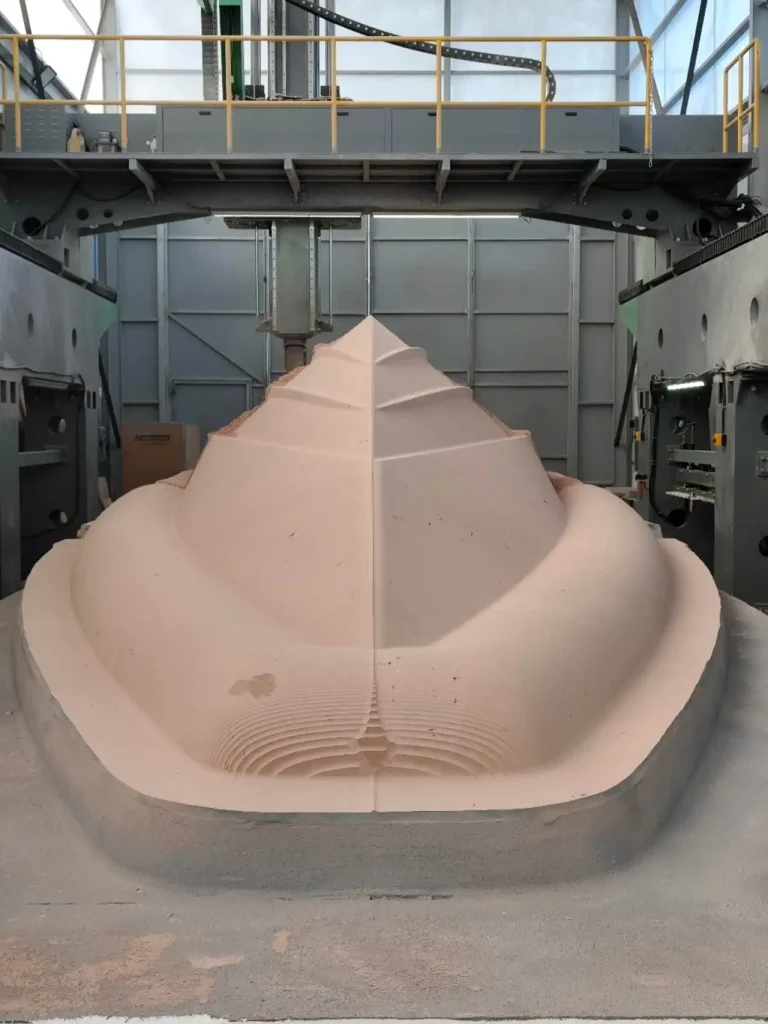
Case Study: Greek Shipyard Using the DL Series
Background
A Greek shipyard specializing in semi-custom yachts previously relied on sectional machining due to equipment size limitations. This required assembling multiple mold sections and performing extensive manual fairing.
The process was time-consuming and introduced variability between projects.
Implementation
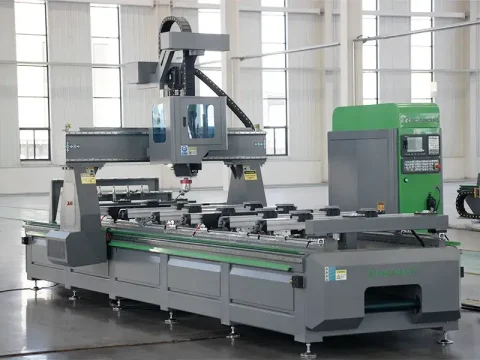
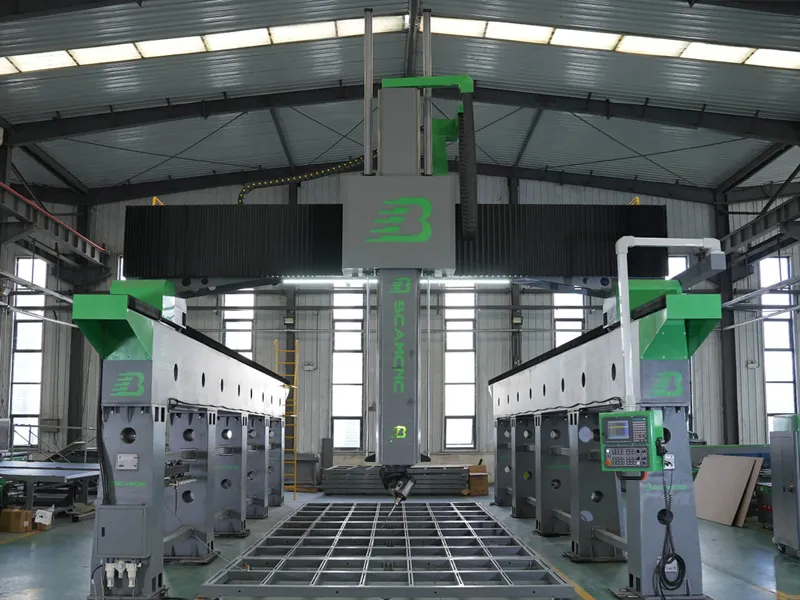
The shipyard installed a DL Series large-format 5-axis CNC router from BCAM CNC, configured specifically for oversized marine mold machining.
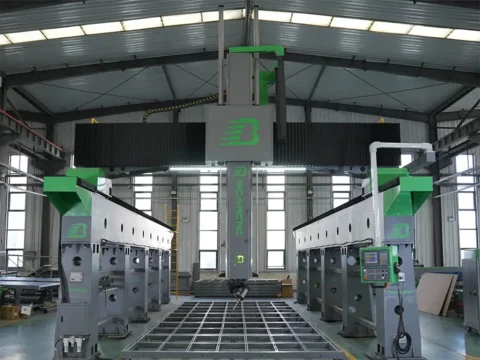
The system featured a machining envelope capable of handling full-length hull molds, a reinforced gantry structure for long-span rigidity, and a spindle capable of maintaining stable torque across foam and epoxy tooling materials.
Process Transformation
Before implementation, the workflow involved segmented machining, manual alignment, and repeated surface correction.
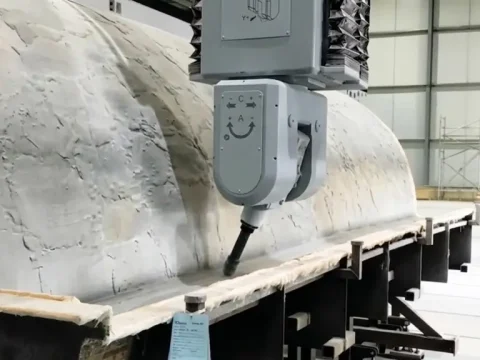
After implementation, the process shifted to full-length machining in a single setup, with significantly reduced manual intervention.
Measured Results
Lead Time Reduction
The mold production cycle was reduced from several weeks to a few days, largely due to the elimination of reassembly and correction steps.
Surface Quality Improvement
Surface roughness (Ra) values became more consistent, reducing the need for aggressive sanding.
24/7 Continuous Operation Stability
The machine maintained stable performance during extended operation, with no significant thermal drift or loss of accuracy.
Improved Repeatability
For repeat yacht models, the machining process ensured consistent mold geometry across multiple builds.
Why the DL Series Configuration Solves Large-Format Machining Issues
Scaling up machining capacity introduces structural challenges that cannot be addressed by simply increasing machine size.
Structural Integrity
Large-format machines are prone to gantry deflection and vibration. The DL Series addresses this with reinforced structural design, maintaining rigidity across long spans.
Kinematic Stability
Consistent axis motion across extended travel ranges ensures stable tool engagement, which is essential for achieving uniform surface finish.
Process Reliability
Long machining cycles require machines that can operate continuously without interruption. Stability during 24/7 operation is critical for large mold production, where downtime directly impacts delivery schedules.
Practical Considerations for Marine Manufacturers
Large-format 5-axis CNC machining is most effective in environments where mold size exceeds the limits of standard equipment, surface finish requirements are tied to composite processes, and manual finishing represents a significant portion of total production cost.
It is particularly relevant for shipyards producing custom or semi-custom vessels, where consistency and lead time are critical.
Final Assessment
From an engineering perspective, the value of large-format 5-axis CNC machining lies in process stability and repeatability rather than raw machining speed.
The Greek shipyard case demonstrates that when machine structure, spindle performance, and toolpath strategy are properly aligned, as seen with the DL Series from BCAMCNC, large-scale marine mold production becomes more predictable, efficient, and less dependent on manual correction.
For manufacturers dealing with complex composite molds, this shift is not optional in the long term—it is a practical step toward maintaining production control and delivery reliability.