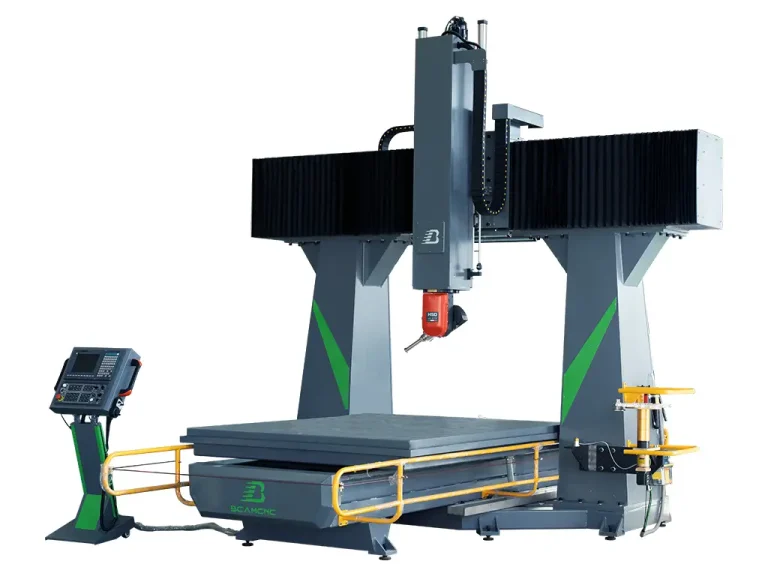

In the world of manufacturing, I’ve run everything from entry-level desktop units to industrial-grade CNC router machines. Both can cut wood, but that’s where the similarity ends.
Many beginners choose their first 3-axis CNC based on specs that look great on paper—same CNC spindle power, same work area. But after three months of real-world production, those “bargain” machines often start screaming like a dying animal. Buying a cheap CNC isn’t saving money; it’s just financing your future breakdowns.
1. High-Speed Spindles: The Silent Precision Killers
A low-cost CNC spindle often hides its biggest flaw: the bearings. Cheap manufacturers use low-grade components that aren’t rated for continuous industrial use. At first, it’s a faint whine; then it turns into chatter. Your cuts look fuzzy, edges burn, and [carbide router bits] wear out prematurely.
I once tore down a budget spindle—the bearings looked like they had been chewed. On a professional high-speed spindle, the bearings stay quiet. You forget they exist.
The BCAM Standard: We equip our machines with industrial-grade P4 angular contact bearings. They are designed for high-speed stability and thermal resistance, ensuring your CNC router spindle remains precise after thousands of hours of operation.
2. Lead Screw vs. Ball Screw: Precision Isn’t Optional
Most hobbyist-grade CNC router kits run on Lead Screws. They rely on sliding friction, which inevitably leads to mechanical backlash. You can try to compensate in software, but your corners won’t be sharp, and your circles won’t be round.
For professional output, Ball Screws are the industry baseline. They use recirculating ball bearings to eliminate friction and provide superior [linear motion accuracy].
The BCAM Standard: Every BCAM machine utilizes high-precision ball screws and linear square rails to ensure the first part is as accurate as the thousandth. You spend your time making parts, not “tuning” out mechanical errors.
3. CNC Motion Control: The Hidden Productivity Thief
Cheap CNC control boards are “noisy”—not loud, but electrically “dirty.” Without proper [EMI shielding], you’ll experience random signal interference, missed steps, and jobs that fail at 98% for no clear reason. There is no fixing this with patience.
The BCAM Standard: Our CNC motion control systems feature professional-grade electronics with fully shielded wiring and optimized grounding. When you press “Start,” the machine finishes the job. Reliability shouldn’t be a luxury.
4. Technical Support: Where Time is Lost
On a cheap machine, the CNC post-processor is often a guessing game. You lose hours debugging why the machine won’t behave. When it inevitably breaks, replacement CNC parts are hard to source and “support” is just a dead-end email.
On a solid setup, the workflow from [CAD/CAM software] to the machine is seamless.
The BCAMCNC Standard: We provide localized documentation and lifetime technical support. Our components are standardized and stocked worldwide. If you have a technical issue, you get an expert solution, not a forum link.
The Bottom Line: What are you actually buying?
Cheap machines don’t just cost less; they waste more. They waste material, they waste expensive tooling, and most importantly, they waste your time.
If you are cutting once a month in your garage, the “Cheap CNC Tax” might be affordable. But if you rely on your CNC router for your business, a budget machine is the most expensive mistake you can make.
Stop fighting your machine and start growing your business.