
CNC Router Motors Explained: Stepper vs Servo vs Hybrid Servo Motors
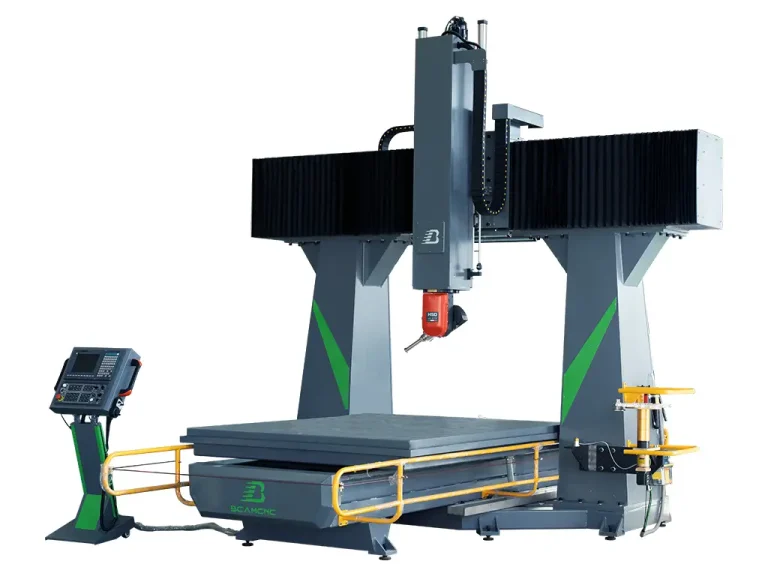
When it comes to CNC routers, one of the most important components that determines cutting precision, speed, and efficiency is the motor system. Motors are the driving force behind the movement of the machine’s axes. Choosing the right type of motor—stepper motor, servo motor, or hybrid servo motor—can dramatically influence the performance and overall reliability of your CNC router.
In this blog, we will explore the three main motor technologies used in CNC routers, analyze their advantages, limitations, and best applications, and help manufacturers, workshop owners, and hobbyists make informed decisions about their CNC investment.
Why the Motor Matters in CNC Routers
CNC routers rely on motors to translate digital design files into precise physical cuts. The motor system affects accuracy and repeatability, cutting speed and acceleration, power and torque, reliability and maintenance costs, and overall efficiency of the production process.
Stepper Motors in CNC Routers
Stepper motors are one of the most common drive systems used in entry-level and mid-range CNC routers. They operate by dividing a full rotation into a number of equal steps, which allows for precise positioning without requiring feedback sensors.
Advantages of Stepper Motors
Cost-effective, simple control, good for low-to-medium speed applications, and high repeatability for short movements.
Limitations of Stepper Motors
Torque drops at high speeds, no feedback system, and higher noise/vibration compared to servos.
Best Applications
Woodworking, MDF, plastics, foam, engraving, and hobby CNC.
Servo Motors in CNC Routers
Servo motors are high-performance motors widely used in professional and industrial-grade CNC routers. Unlike stepper motors, servo motors operate in a closed-loop system with encoders to ensure accurate positioning and error correction.
Advantages of Servo Motors
High speed and power, precision, smooth/quiet operation, energy efficiency, and long lifespan.
Limitations of Servo Motors
Higher cost, complexity in tuning, and maintenance requirements.
Best Applications
Industrial woodworking, aluminum and non-ferrous metals, large-scale continuous production, and high-precision work.
Hybrid Servo Motors in CNC Routers
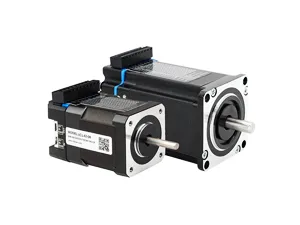
Hybrid servo motors combine the affordability of steppers with some advantages of servos. They are essentially stepper motors with built-in encoders that provide feedback and reduce skipped steps.
Advantages of Hybrid Servo Motors
Affordable compared to full servo, closed-loop control, higher torque at low speeds, quieter operation, and improved efficiency.
Limitations of Hybrid Servo Motors
Not as powerful as full servo motors, higher cost than traditional steppers, and limited scalability.
Best Applications
Small to medium workshops, wood and plastic cutting, light metal machining, and cost-sensitive users needing reliability.
Stepper vs Servo vs Hybrid Servo: Comparison Table
| Feature | Stepper Motor | Servo Motor | Hybrid Servo Motor |
|---|---|---|---|
| Control System | Open-loop | Closed-loop | Closed-loop |
| Precision | Good, may lose steps | Very high | High |
| Torque at Speed | Drops quickly | Strong at high speed | Better than stepper |
| Noise Level | Higher | Quiet | Lower than stepper |
| Cost | Low | High | Medium |
| Maintenance | Low | Medium/High | Low/Medium |
| Best for | Wood, foam, hobby CNC | Industrial, metals, precision | Balanced applications |
How to Choose the Right CNC Motor System
When deciding between stepper, servo, and hybrid servo motors, consider budget, application, production scale, and performance needs. For woodworking and light tasks, stepper or hybrid servo may be sufficient. For metals and high-precision work, servo motors are essential.
Conclusion
Choosing the right motor system for your CNC router is crucial for achieving the balance between performance, precision, and cost.
-
Stepper motors are ideal for budget-conscious users and light applications.
-
Servo motors dominate in professional environments requiring speed, precision, and reliability.
-
Hybrid servo motors provide a middle ground, combining affordability with improved accuracy.
By understanding the differences between these motor systems, CNC users can optimize their machines for efficiency, lifespan, and better return on investment. Whether cutting wood panels, aluminum parts, or custom furniture, the right motor ensures your CNC router operates at its full potential.