
Choosing a CNC router often starts with checking the motor power. Many buyers think that a higher-power motor must mean faster cutting and better performance.
But in real production, motor power is only one part of the whole system. A bigger motor does not always bring better results — and sometimes it can even reduce accuracy or increase running cost.
This article explains the real relationship between motor power and cutting speed, and why “more power” is not always the best choice.
1. What Motor Power Actually Means
Motor power (kW) shows how much force the spindle or drive system can provide.
Higher power is useful when:
- You cut hard materials
- You use big tools
- You need deep cuts
- You run long hours with heavy loads
But power alone does not decide cutting speed. Speed depends on the whole configuration.
2. Cutting Speed Depends on More Than Motor Power
Even if the motor is strong, real cutting speed depends on:
✔ Machine structure
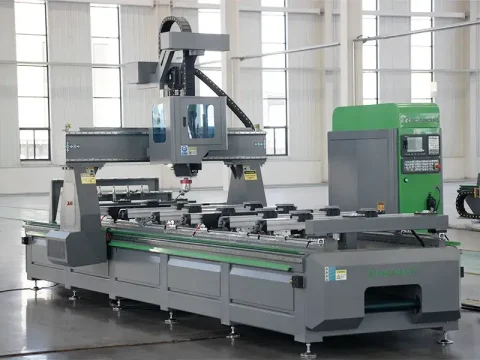
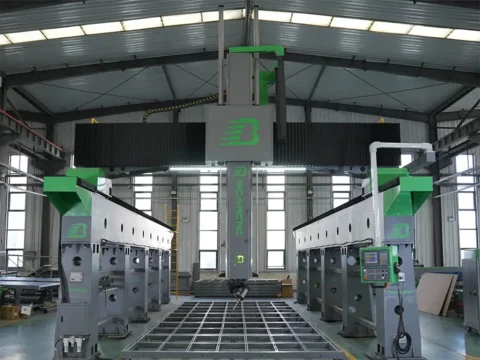
A heavy, stable frame handles high speed better.
A light frame vibrates when the motor is too powerful.
✔ Transmission system
- Rack and pinion for fast cutting
- Ball screw for precision
If the transmission is not matched with the motor, the speed cannot increase safely.
✔ Controller and software
If the CNC system cannot process data fast enough, the machine will slow down — no matter how big the motor is.
✔ Tool quality
A poor-quality cutter breaks easily at high speed.
A good spindle + bad tool = low cutting speed.
✔ Material type
Soft materials like MDF can use high speed.
Hard wood or aluminum needs slower feed rates even with a strong motor.
3. Why “More Power” Can Be a Waste
Buying a high-power motor sounds safe, but it may bring problems:
❌ Higher power uses more electricity
A 6kW spindle is more expensive to run than a 3.5kW spindle.
If you only cut MDF, you pay extra for power you never use.
❌ More heat and noise
High-power motors create more heat and vibration.
If the machine structure is not heavy enough, accuracy will drop.
❌ Bigger motor ≠ Better precision
Sometimes a low-power, high-speed spindle gives cleaner edges on wood and acrylic.
❌ Shorter tool life
When power is too high, operators often cut too aggressively.
This wears out tools faster.
4. How to Choose the Right Motor Power
The best motor power is based on your material + your daily workload:
⭐ For MDF, plywood, acrylic
3.5kW – 4.5kW spindle is enough
Fast, stable, low cost.
⭐ For hardwood, stone, aluminum
5.5kW – 9kW spindle
More torque, safer cutting.
⭐ For cabinet making with nesting
6kW – 9kW ATC spindle
Handles long hours and high feed rates.
⭐ For small workshops
Choosing “just enough power” saves money and electricity.
5. The Best Performance Comes From a Balanced Machine
The correct way to increase speed is not only choosing a large motor.
You need a balanced combination:
- Spindle power
- Motor system (servo / hybrid servo)
- Machine weight
- Transmission system
- Controller
- Vacuum table
- Tooling
When the whole machine is matched well, even a medium-power motor can cut faster and cleaner than a high-power system on a weak frame.
Conclusion
Higher power is not always better.
A CNC router works best when power, structure, and system are balanced.
Choosing the right configuration helps you cut faster, improves accuracy, and lowers your long-term cost.