
Introduction
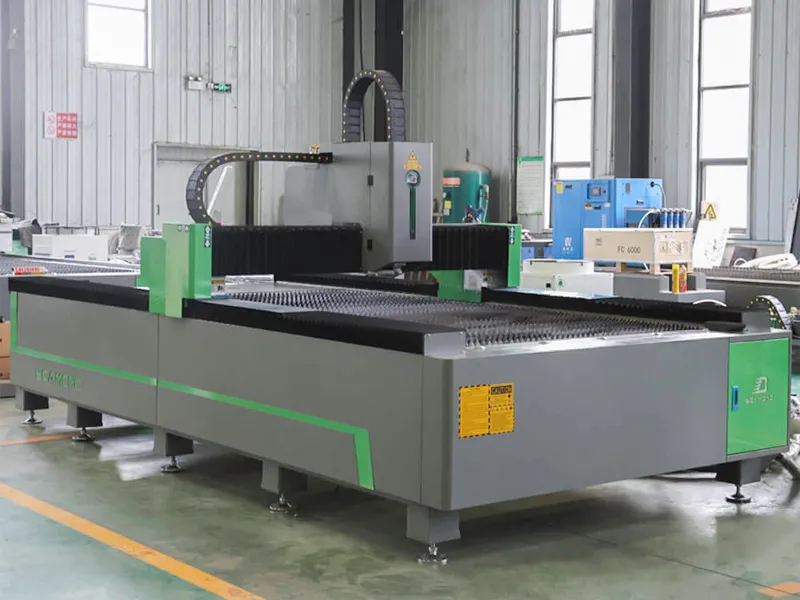
In industrial metal fabrication, assist gas is essential for achieving clean edges, fast cutting speeds, and stable long-term performance with any fiber laser cutting machine. During the cutting process, the laser melts the material, and the assist gas removes molten metal, cools the cutting zone, and prevents contamination of the cutting head.
Different assist gases deliver different cutting effects. Choosing the right one can significantly reduce costs and improve productivity. Below is a complete breakdown of the most common laser cutting gas options used in modern manufacturing.
1. Oxygen (O₂) – Best Choice for Thick Carbon Steel
Oxygen is widely used when cutting medium and thick carbon steel with fiber laser cutters.
Advantages
- Lower gas cost
- Enhances cutting speed due to exothermic reaction
- Efficient for thick mild steel plates
Limitations
- Not suitable for stainless steel or aluminum
- Produces oxide layers on edges
- May require secondary processing
Oxygen is ideal for applications where speed and efficiency matter more than cosmetic edge quality.
2. Nitrogen (N₂) – Clean, Oxide-Free Cutting for Stainless Steel & Aluminum
Nitrogen is the go-to assist gas for high-quality, bright, and clean edges.
Advantages
- Oxide-free cuts
- Best for stainless steel laser cutting
- Excellent for aluminum and galvanized sheet
- Supports high-speed cutting of thin to medium materials
Limitations
- Higher gas consumption
- Requires stable high-pressure nitrogen supply
Nitrogen is recommended for industries where surface finish is critical, such as kitchenware, precision components, and decorative metalwork.
3. Air – A Cost-Effective Option for Daily Production
Compressed air is increasingly popular for general metalworking using fiber laser cutters.
Advantages
- Very low operating cost
- Works with stainless steel, aluminum, and thin carbon steel
- Good choice for general fabrication shops、
Limitations
- Slight oxidation may appear
- Edge quality is lower than nitrogen
- Not ideal for premium-grade parts
Air assist significantly reduces overall cutting cost while maintaining practical edge quality for most industrial applications.
4. Argon (Ar) – Suitable for Reactive and High-Value Metals
Argon is less commonly used but is crucial for high-value or reactive metals.
Advantages
- Completely inert—no oxidation
- Ideal for titanium, magnesium alloys, aerospace materials
Limitations
- Expensive
- Not required for most steel applications
Argon is typically chosen only when material chemistry demands a fully inert cutting environment.
5. Mixed Gases – For Specialized Cutting Needs
Some facilities use gas mixtures to balance speed, cost, and edge quality.
Advantages
- Optimized cutting performance
- Can support specialized industrial applications
Limitations
- Requires precision mixing systems
- Not standard for general factories
How to Choose the Right Assist Gas?
| Material | Recommended Gas | Reason |
|---|---|---|
| Carbon steel (thick) | Oxygen | Fast cuts, economical operation |
| Carbon steel (thin) | Air / Nitrogen | Air for cost; N₂ for edge finish |
| Stainless steel | Nitrogen | Clean, bright, oxide-free edges |
| Aluminum | Nitrogen / Air | Nitrogen for quality; air for savings |
| Titanium & alloys | Argon | Prevents oxidation and contamination |
Conclusion
The right assist gas has a direct impact on cutting quality, productivity, and operating cost.
- Oxygen is best for thick carbon steel.
- Nitrogen delivers high-quality, oxidation-free edges for stainless steel and aluminum.
- Air offers the most cost-efficient results for general production.
- Argon is reserved for special reactive materials.
By selecting the correct gas for each material, manufacturers can maximize the performance of their BCAMCNC industrial fiber laser cutting machines and reduce long-term production costs.