
Who Is a 4-Process CNC Router For? What’s the Difference vs ATC?
When choosing a CNC router for woodworking or light industrial use, many buyers hesitate between a 4-process CNC router and an ATC CNC router. Both machines can handle multi-tool jobs, but they are designed for different users, budgets, and production needs.
In this article, we explain who a 4-process CNC router is best for, how it compares with an automatic tool changer (ATC) CNC router, and how to choose the right option for your workshop.
What Is a 4-Process CNC Router?
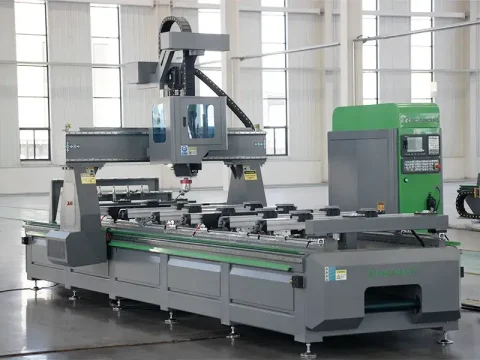
A 4-process CNC router is equipped with four independent spindles, each pre-installed with a different tool. During machining, the machine switches between spindles instead of changing tools automatically.
Each spindle usually holds tools such as:
- Straight cutting bit
- End mill
- Drill bit
- Engraving tool
The machine selects the needed spindle through program control, without manual tool replacement.
Who Is a 4-Process CNC Router Best For?
A 4-process CNC router is ideal for users who need multiple tools, but do not require very high automation.
It is especially suitable for:
1. Small and Medium Woodworking Shops
If you produce cabinets, doors, panels, or basic furniture, a 4-process CNC router can cover most daily tasks.
2. Startups and Budget-Conscious Buyers
Compared with ATC machines, 4-process CNC routers are more affordable while still offering multi-tool capability.
3. Furniture & Cabinet Manufacturers (Low to Medium Volume)
For workshops that:
Run small batch production
Do not change tools very frequently
Focus on MDF, plywood, particle board, or soft wood
A 4-process CNC router offers an excellent balance between price and function.
4. Users Upgrading from a Single-Spindle CNC
If you are currently using a single-spindle CNC router, a 4-process machine is a logical upgrade without a large investment.
What Is an ATC CNC Router?
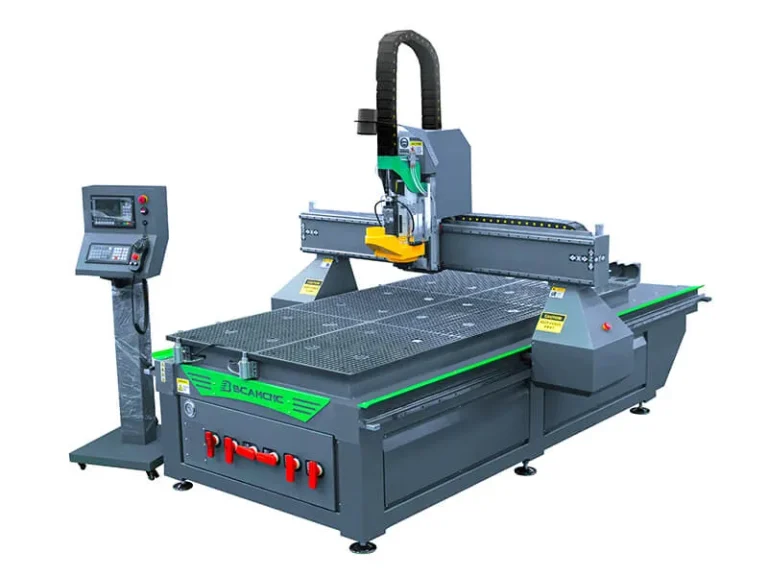
An ATC (Automatic Tool Changer) CNC router uses a tool magazine (linear or carousel). The machine automatically picks up and returns tools during machining, without stopping production.
ATC systems are designed for:
- High efficiency
- Complex machining
- Frequent tool changes
4-Process CNC Router vs ATC CNC Router
Here is a clear comparison to help you decide:
Tool Changing Method
- 4-Process CNC Router: Switches between 4 fixed spindles
- ATC CNC Router: Automatically changes tools from a magazine
Speed & Efficiency
- 4-Process: Faster than manual tool change, but slower than ATC
- ATC: Fastest option, ideal for continuous production
Cost
- 4-Process: Lower machine cost, lower maintenance
- ATC: Higher upfront cost, higher automation value
Maintenance
- 4-Process: Simple structure, easy maintenance
- ATC: More mechanical parts, higher technical requirements
Best Application
- 4-Process: Cabinets, doors, basic furniture, signage
- ATC: Nesting furniture, mass production, complex parts
Which One Should You Choose?
Choose a 4-process CNC router if:
- Your budget is limited
- You want multi-tool machining without high automation cost
- Your production volume is low to medium
Choose an ATC CNC router if:
- You need high efficiency and short cycle times
- You run large-scale or continuous production
- You frequently change tools in one job
BCAMCNC Solutions: From 4-Process to ATC
At BCAMCNC, we offer both 4-process CNC routers and ATC CNC router machines, designed for different stages of business growth.
For customers looking for:
- A cost-effective multi-spindle solution, our 4-process CNC routers are reliable and easy to operate
- A long-term production upgrade, our ATC CNC routers deliver high speed, accuracy, and automation
Our machines are widely used in cabinet making, furniture production, door processing, and panel cutting.
Final Thoughts
A 4-process CNC router is not a replacement for ATC—but it is a smart and practical choice for many workshops. Understanding your production needs, budget, and workflow is the key to making the right decision.
If you are unsure which CNC router fits your business, BCAMCNC can help you choose the most suitable solution.