
In woodworking production, many factories use a CNC router with a vacuum table to process MDF boards. The vacuum pump creates negative pressure that holds the MDF sheet tightly on the machine table. When the suction force is strong enough, the board stays stable during cutting and the machining accuracy improves.
A common question from furniture manufacturers is what vacuum pump capacity is required for full-sheet MDF cutting on a CNC router. The answer depends on several factors such as table size, airflow requirement, and production volume.
This article explains how to select the right vacuum pump for cnc router MDF cutting.
Why a vacuum pump is important for cnc router MDF cutting
MDF is one of the most common materials used in furniture manufacturing. When cutting full sheets with a cnc router, the machine must keep the material firmly fixed to the table.
A cnc router vacuum pump system helps achieve several goals.
It holds the MDF sheet flat on the table during machining.
It prevents the material from shifting during high-speed cutting.
It improves cutting accuracy and reduces vibration.
It allows faster production when using nested cutting.
Without a proper vacuum pump capacity for cnc router operations, small parts may move during cutting and affect the final product quality.
Typical MDF sheet sizes used on CNC routers
The required cnc router vacuum pump capacity often depends on the sheet size being processed.
Common MDF sheet sizes include:
1220 × 2440 mm full sheet MDF
1300 × 2500 mm MDF board for cabinet manufacturing
1500 × 3000 mm MDF panel for large furniture production
When cutting a full sheet MDF board with a cnc router vacuum table, the pump must provide enough airflow to maintain suction across the entire table surface.
Recommended vacuum pump capacity for cnc router MDF cutting
The vacuum pump size is usually measured by power and airflow. Airflow is often expressed in cubic meters per hour.
For small cnc routers used in workshops, a smaller vacuum pump can be sufficient.
Typical recommendation for small cnc router machines:
5.5 kW vacuum pump
Airflow around 160 to 250 m³/h
This setup works well for entry-level furniture production or cabinet panel cutting.
For medium production cnc routers used in cabinet factories, a larger vacuum pump is recommended.
Typical configuration for medium cnc router machines:
7.5 kW to 11 kW vacuum pump
Airflow around 250 to 400 m³/h
This vacuum pump capacity for cnc router MDF cutting is commonly used in furniture factories processing wardrobe panels and cabinet doors.
For industrial cnc routers used in large-scale furniture production, even higher airflow is required.
Typical industrial configuration:
11 kW to 15 kW vacuum pump
Airflow around 400 to 630 m³/h
This configuration supports continuous nested cutting of full-sheet MDF boards.
Factors that affect cnc router vacuum pump performance
Even if a vacuum pump has high power, other factors also influence the hold-down performance.
Vacuum table design plays an important role. A multi-zone vacuum table improves suction efficiency and reduces air leakage.
The condition of the spoilboard also affects vacuum performance. A flat and properly surfaced spoilboard allows better airflow distribution.
Material porosity is another factor. MDF is porous, so some airflow passes through the board during cutting.
Cutting strategy also affects suction. When cutting many small parts, the remaining surface area decreases, which reduces vacuum hold-down force.
Because of these factors, selecting
Vacuum pump types used for CNC router machines
Two types of vacuum pumps are commonly used with cnc router machines.
Oil-lubricated vacuum pumps are widely used in industrial furniture factories. They provide strong suction and stable airflow. These pumps are suitable for full-sheet MDF cutting on large cnc routers.
Dry vacuum pumps are also used in some woodworking shops. They require less maintenance and operate without oil. However, the suction power is usually lower compared with oil-lubricated pumps.
Choosing the right vacuum pump for cnc router applications depends on production needs and machine size.
How BCAMCNC CNC routers improve vacuum hold-down performance
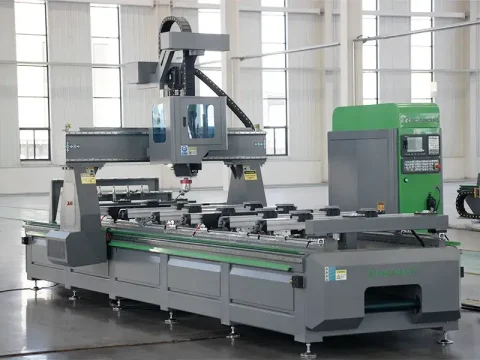
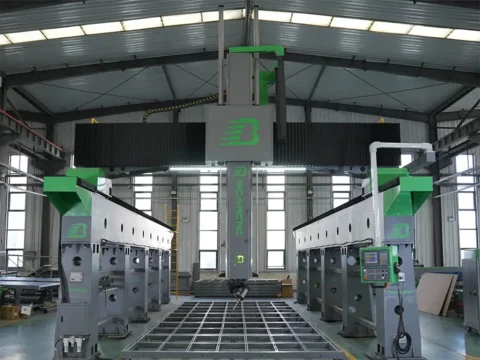
CNC router machines from BCAMCNC are designed to support stable MDF cutting with efficient vacuum systems.
The machines use optimized vacuum table structures that improve airflow distribution. Multiple vacuum zones allow operators to control suction based on the cutting area.
High-efficiency vacuum pumps can be integrated according to the cnc router table size. This ensures reliable hold-down when processing full-sheet MDF panels.
These design features help furniture manufacturers improve machining stability and production efficiency.
Conclusion
Selecting the right vacuum pump capacity for cnc router MDF cutting is essential for stable machining. The required pump size depends on table size, airflow demand, and production volume.
Small cnc routers often use a 5.5 kW vacuum pump.
Medium production cnc routers usually require a 7.5 kW to 11 kW vacuum pump.
Large industrial cnc routers may need an 11 kW to 15 kW vacuum pump for full-sheet MDF cutting.
With the correct cnc router vacuum pump configuration, manufacturers can achieve better cutting accuracy, higher production efficiency, and more stable machining performance.