
How to Select the Ideal Power for a Fiber Laser Cutting Machine?

Essential guidelines to help you choose the proper laser power for cutting different steel thicknesses with maximum efficiency and stability.

Choosing the right power level for a fiber laser cutting machine is essential for ensuring stable performance, clean edges, and efficient production. Among all factors, the thickness of the steel you process most frequently plays the greatest role in determining the power you need.
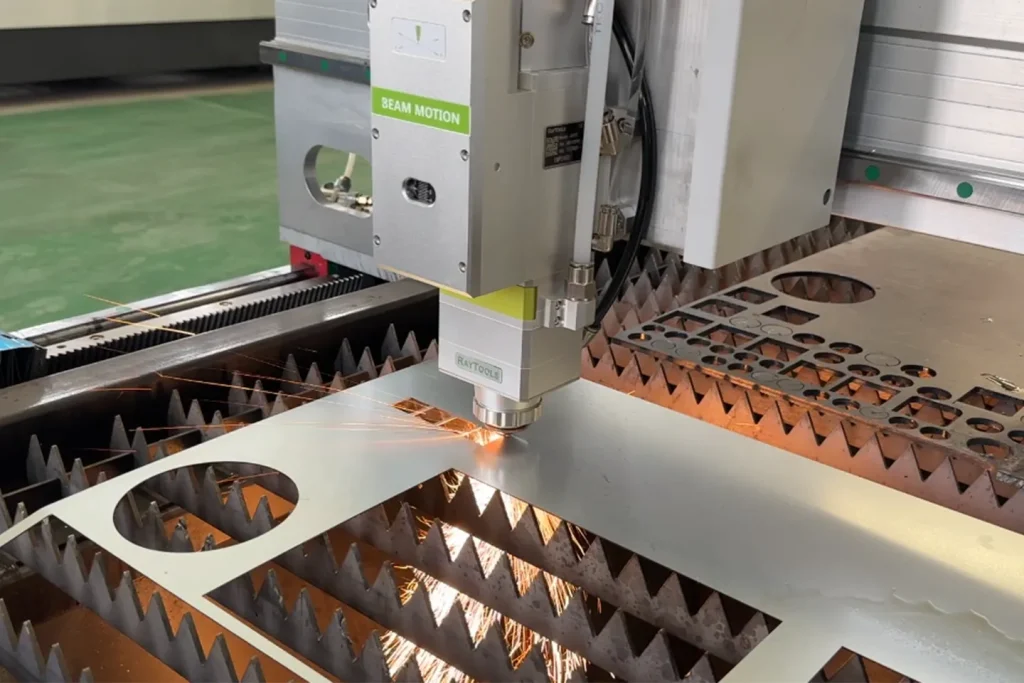
laser cutting machine

Lower-power machines can cut thin sheet metal effectively, but their speed and quality may decline as material thickness increases. To help you choose confidently, here are widely accepted power recommendations for cutting steel:

• Up to 6 mm (¼ inch): minimum 1.5 kW
• Up to 10 mm (⅜ inch): minimum 2 kW
• Up to 12–13 mm: minimum 3 kW
• Up to 25 mm (1 inch): consider 6 kW or higher

These values serve as general industry benchmarks. However, the best choice depends on your production environment—such as batch volume, material type, edge quality requirements, and expected operating hours.

Selecting the proper laser power ensures:

• Consistent cutting performance across your typical material range
• Higher productivity, especially on thicker steel
• Lower operational cost through optimized energy use
• Cleaner edges, reducing the need for secondary finishing

Making an informed power selection is the most effective way to increase efficiency, output quality, and long-term cost savings in any metal fabrication workflow.

BCAMCNC specializes in high-performance fiber laser cutting machines designed for industrial steel processing. With options ranging from entry-level systems to high-power solutions above 40 kW, we help manufacturers choose the right configuration for their materials, thickness ranges, and production goals.
If you need guidance on selecting the ideal power setup for your application, our engineering team is ready to assist.
Share This Article With Others

Further Reading

5-Axis Machining of Complex Curvatures in Wind Blade Molds

Applications of 5-Axis CNC Routers in Wind Turbine Blade Manufacturing

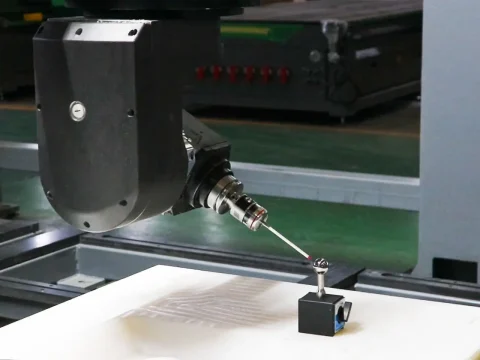
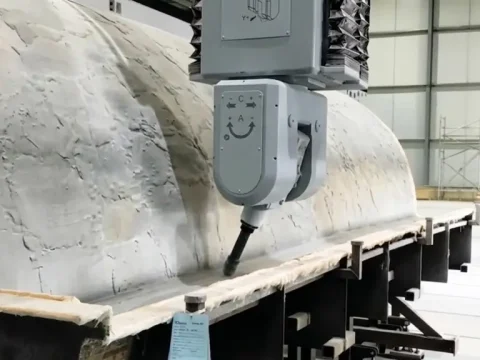
5-axis CNC routers are increasingly used in wind turbine blade manufacturing, particularly for edge trimming, root drilling, and mold production. Rather than replacing traditional processes, their value lies in improving accuracy, reducing manual intervention, and enabling consistent machining of complex composite geometries. This article outlines where 5-axis systems provide measurable benefits—and where careful process integration remains essential.
3axis VS 5axis

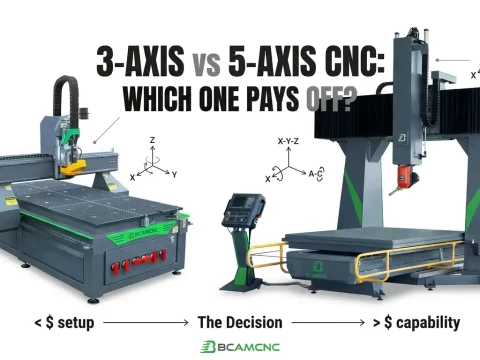
5-Axis vs. 3-Axis CNC Routers: When Does the Investment Actually Pay Off?

Most manufacturers don’t lose money because of the machine they buy—but because they choose the wrong one for their production reality. This guide breaks down the real differences between 3-axis and 5-axis CNC routers, not just in terms of movement, but in labor cost, setup time, tool performance, and error rates. If your workflow involves repeated setups, long tools, or complex geometries, the cost of staying with 3-axis may already exceed the investment in 5-axis.
5-axis-cnc-router-boat-mold-machining-greece

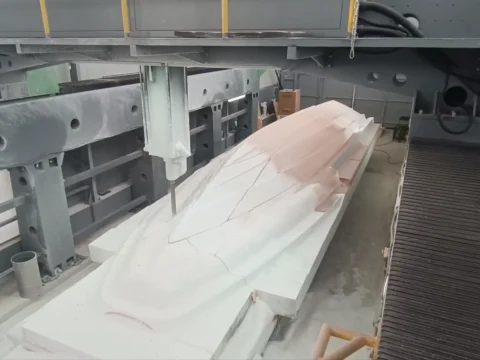
Large-Scale Marine Mold Machining with 5-Axis CNC Routers

Large-scale marine mold machining requires more than size—it demands accuracy, stability, and process control. A Greek shipyard reduced mold production from weeks to days by adopting a DL Series 5-axis CNC router from BCAM CNC, achieving consistent surface quality, reliable 24/7 operation, and reduced manual finishing.

Post Your Review