
How to debug the accuracy of fiber laser cutting machine

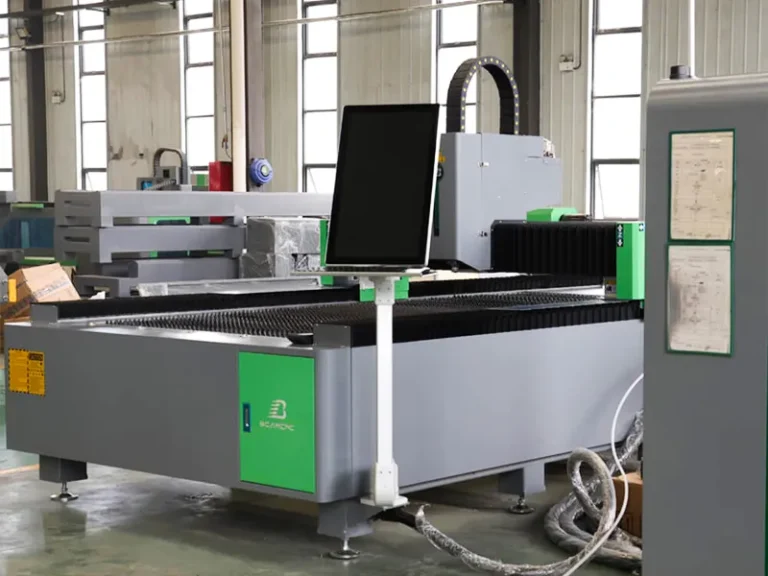
  The fiber laser cutting machine has won the trust of many sheet metal processing companies with its irreplaceable processing advantages. However, the efficiency of the fiber laser cutting machine is very high, but after a period of use, there will be a certain error in the cutting accuracy, and the processed product may not achieve the expected cutting effect. This error is often caused by the change of the focal length. Therefore, mastering how to adjust the accuracy is the necessary knowledge to operate the laser cutting machine. The following BCAM will show you how to adjust the accuracy of the fiber laser cutting machine:

  1. When the spot of the focus laser is adjusted to the minimum, perform spot shooting to establish the initial effect. The focal position is judged by the size of the spot effect. As long as we look for the minimum spot of the laser, then this position is the best Processing the focal length, and then start the processing work.

  2. In the first part of the debugging of the laser cutting machine, we can use some debugging paper and workpiece waste to spot the accuracy of the focal position. Move the position of the height of the upper and lower laser heads, and the laser spot size will have different size changes when the spot is fired. Make adjustments to different positions several times to find the smallest spot position to determine the focal length and the best position of the laser head.

laser machine.png

  3. After the fiber laser cutting machine is installed, a scribing device will be installed on the cutting nozzle of the CNC cutting machine, and a simulated cutting pattern will be drawn through the scribing device. The simulated pattern is a 1m square. A circle with a diameter of 1m is built in, and the four corners are drawn diagonally. After drawing, use a measuring tool to measure whether the drawn circle is tangent to the four sides of the square. Whether the diagonal length of the square is √2, the central axis of the circle should bisect the sides of the square, and the distance between the intersection of the central axis and the two sides of the square and the intersection of the two sides of the square should be 0.5m. Test the distance between the diagonal and the intersection point to determine the cutting accuracy of the equipment.

  The above is the experience we have summed up in the actual cutting process of the fiber laser cutting machine. The operator can carry out the practical operation according to the above method and verify it. For more relevant knowledge, you can continue to pay attention to us: https://www.bcamcnc.com, we will continue to update for you.
Share This Article With Others

Further Reading

5-Axis Machining of Complex Curvatures in Wind Blade Molds

Applications of 5-Axis CNC Routers in Wind Turbine Blade Manufacturing

5-axis CNC routers are increasingly used in wind turbine blade manufacturing, particularly for edge trimming, root drilling, and mold production. Rather than replacing traditional processes, their value lies in improving accuracy, reducing manual intervention, and enabling consistent machining of complex composite geometries. This article outlines where 5-axis systems provide measurable benefits—and where careful process integration remains essential.
3axis VS 5axis

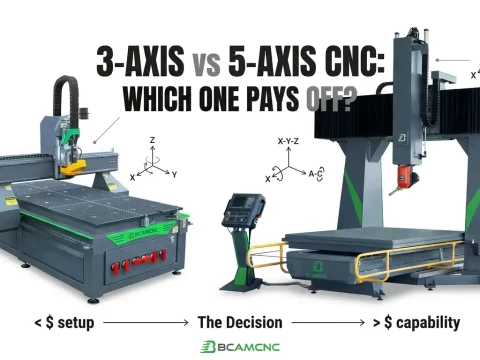
5-Axis vs. 3-Axis CNC Routers: When Does the Investment Actually Pay Off?

Most manufacturers don’t lose money because of the machine they buy—but because they choose the wrong one for their production reality. This guide breaks down the real differences between 3-axis and 5-axis CNC routers, not just in terms of movement, but in labor cost, setup time, tool performance, and error rates. If your workflow involves repeated setups, long tools, or complex geometries, the cost of staying with 3-axis may already exceed the investment in 5-axis.
5-axis-cnc-router-boat-mold-machining-greece

Large-Scale Marine Mold Machining with 5-Axis CNC Routers

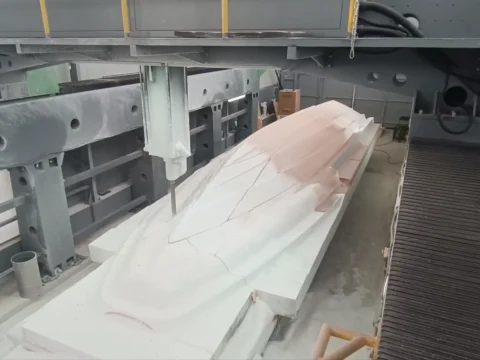
Large-scale marine mold machining requires more than size—it demands accuracy, stability, and process control. A Greek shipyard reduced mold production from weeks to days by adopting a DL Series 5-axis CNC router from BCAM CNC, achieving consistent surface quality, reliable 24/7 operation, and reduced manual finishing.

Post Your Review

Leave a Reply