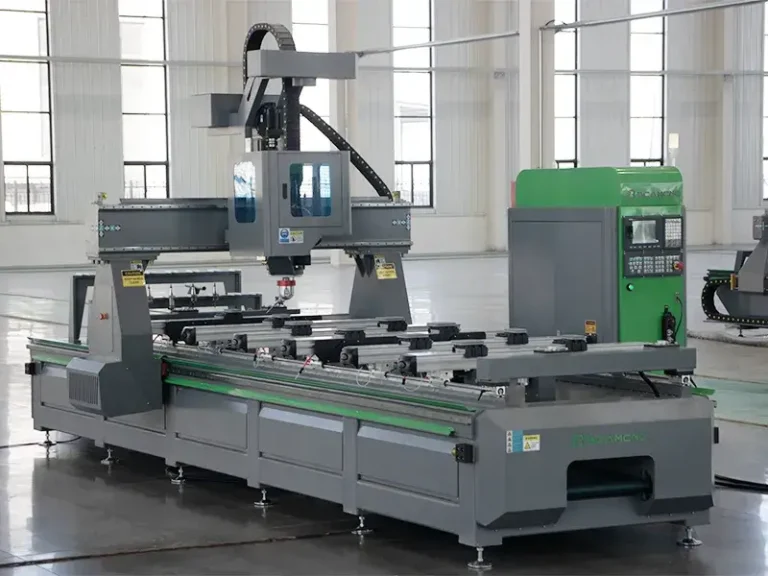

Choosing whether to upgrade to a 5-axis CNC router is a pivotal decision for any manufacturing business or high-end workshop. While a 3-axis CNC router remains the “bread and butter” of the industry, 5-axis technology introduces a level of geometric freedom that can fundamentally change what your shop is capable of producing.
The real question is not whether 5-axis technology is advanced—but whether it makes business sense for your specific applications.
This article provides a practical, production-focused analysis to help you decide.
1. What Truly Sets a 5-Axis CNC Router Apart?
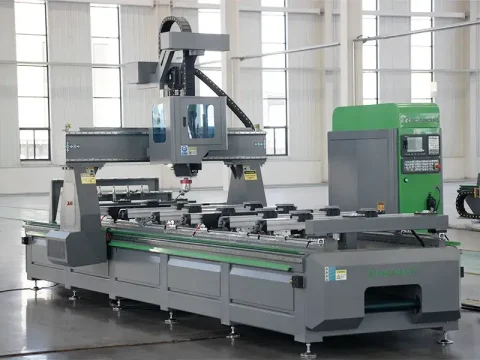
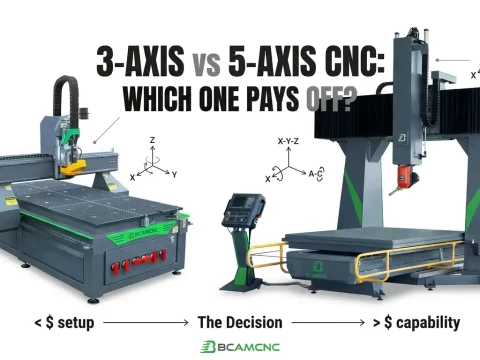
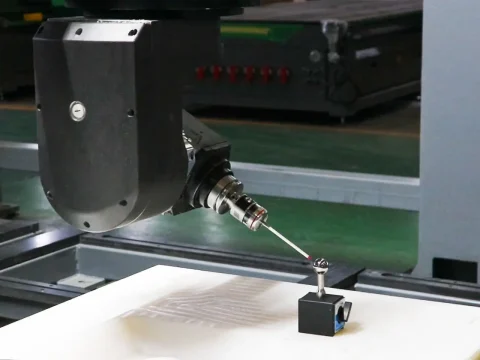
A standard 3-axis CNC router moves along the X, Y, and Z axes. A 5-axis CNC router adds two rotational axes (commonly A and B or A and C), allowing the cutting tool to approach the workpiece from virtually any direction.
This additional freedom is not just about complexity—it is about efficiency, accuracy, and capability.
The One-Setup Advantage
In 3-axis machining, complex parts often require flipping, re-clamping, and re-zeroing. Each manual step introduces risk and consumes labor time.
With a 5-axis CNC router, most complex parts can be completed in a single setup, resulting in:
- Higher precision, as alignment errors are eliminated
- Reduced labor, due to minimal manual intervention
- Shorter production cycles, especially for complex geometry
For manufacturers producing molds, prototypes, or sculpted parts, this advantage alone can justify the upgrade.
2. Key Benefits That Drive the Investment
Machining Complex Geometry
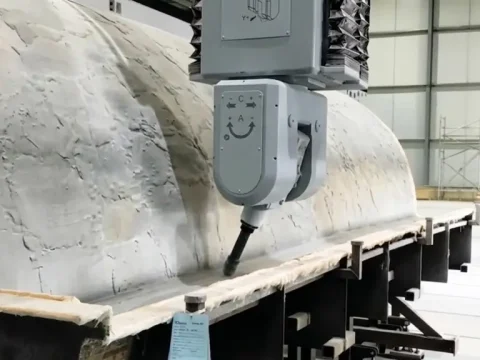
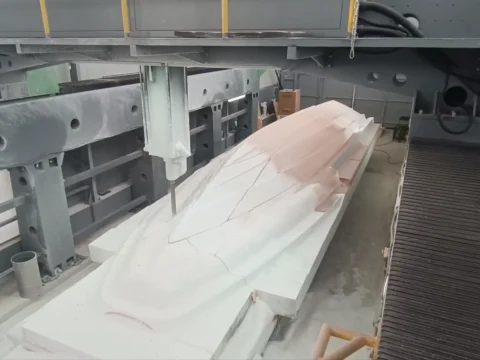
If your products involve deep cavities, compound curves, or undercuts, a 5-axis CNC router is not optional—it is essential.
Typical applications include:
- Architectural and marine molds
- Automotive and aerospace prototypes
- Foam, composite, and large 3D models
- Artistic and sculptural components
Many of these parts are either impossible or extremely inefficient to produce on a 3-axis machine.
Superior Surface Finish
Because the cutting tool can maintain an optimal angle relative to the surface, 5-axis machining allows the use of shorter, more rigid tools.
This results in:
- Less vibration
- More consistent cutting pressure
- A significantly smoother surface finish
In many cases, this reduces or eliminates time-consuming manual sanding and polishing.
Longer Tool Life and Better Cutting Efficiency
On a ball-nose cutter, the very tip has a surface speed close to zero, which leads to inefficient cutting and excessive wear.
By tilting the tool:
- Cutting occurs along the tool’s side, not the tip
- Chip evacuation improves
- Tool life is extended
Over time, this reduces tooling costs and improves process stability.
3. The Real Cost: Beyond the Machine Price
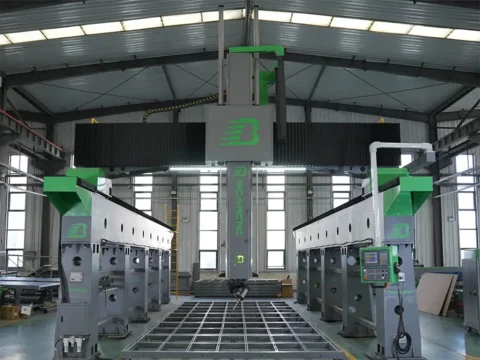
A 5-axis CNC router is not just a machine—it is a system. The total investment includes software, training, and maintenance.
Factor 3-Axis CNC Router 5-Axis CNC Router
Initial Machine Cost Lower Significantly higher
CAM Software Basic 2.5D / 3D Advanced 5-axis CAM
Operator Skill Moderate High
Maintenance & Calibration Low to Moderate Higher
This does not mean 5-axis is “too expensive”—it means the return must come from capability and productivity, not just speed.
4. Is a 5-Axis CNC Router Worth It for You?
It is worth the investment if:
You produce complex 3D parts with multiple faces or undercuts
Your shop spends excessive time on secondary setups
Surface quality and precision are critical
You serve high-value industries such as aerospace, automotive, marine, or mold making
You want to differentiate your business with capabilities competitors lack
It may not be worth it if:
Most of your work is flat panel processing (cabinetry, signage, standard furniture parts)
Your budget only allows for a low-quality 5-axis machine
You lack experienced staff or time for advanced CAM programming
In many cases, a high-quality industrial 3-axis CNC router will outperform a poorly configured 5-axis machine.
5. ROI: Thinking Long Term, Not Short Term
The mistake many buyers make is focusing solely on the purchase price.
A properly utilized 5-axis CNC router can deliver ROI through:
Reduced labor hours
Fewer setup errors and scrap parts
Faster delivery times
Access to higher-margin projects
For manufacturers moving into complex, high-value work, the payback period is often 18–24 months, sometimes sooner.
Final Verdict
A 5-axis CNC router is not simply a faster upgrade—it is a strategic investment in manufacturing capability.
If your business is evolving toward complex geometry, precision machining, and premium applications, a 5-axis CNC router can become a long-term competitive advantage. If your work remains simple and repetitive, the upgrade may not yet be justified.
The right decision depends on your products, your market, and your growth plan—not just the machine specifications.