
Introduction
In modern door manufacturing, speed and precision are critical. Traditional processing methods require multiple setups, manual flipping, and separate machines for slotting and sawing. This leads to high labor costs and frequent alignment errors.
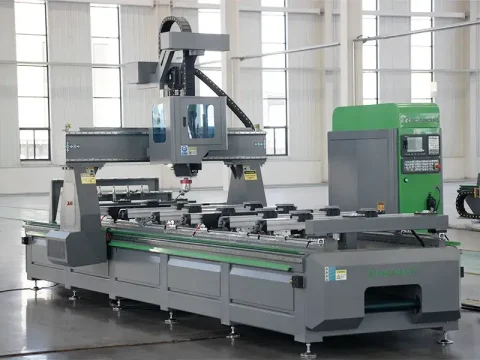
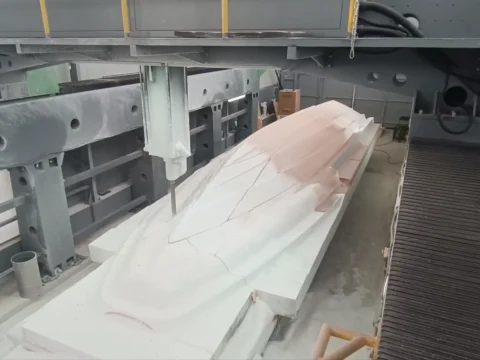
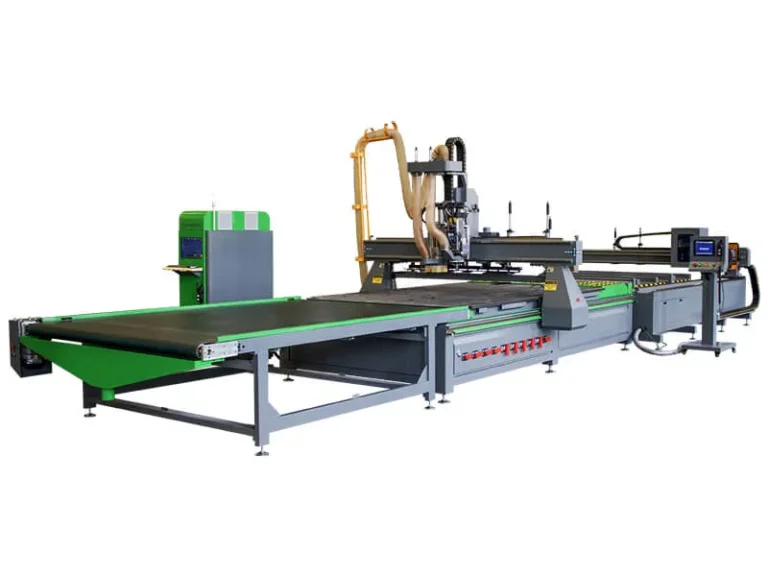
A CNC router equipped with an aggregate head solves these problems. It allows door lock slotting, hinge milling, and edge sawing to be completed in a single setup. This significantly improves production efficiency while maintaining high machining accuracy.
What Is a CNC Aggregate Head?
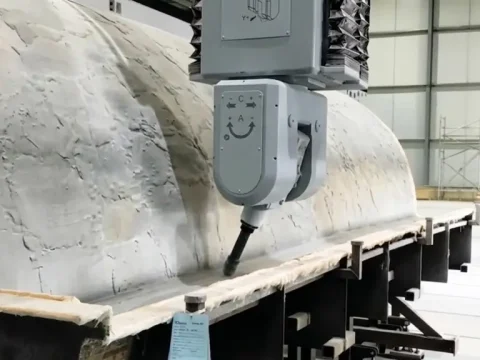
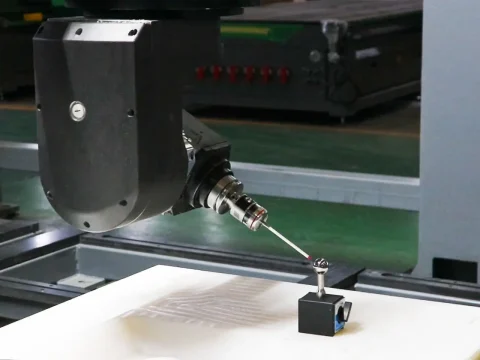
A CNC aggregate head is a specialized tool attachment that redirects spindle power from vertical to horizontal angles, most commonly 90 degrees.
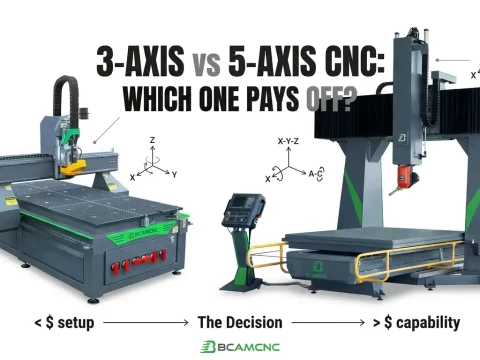
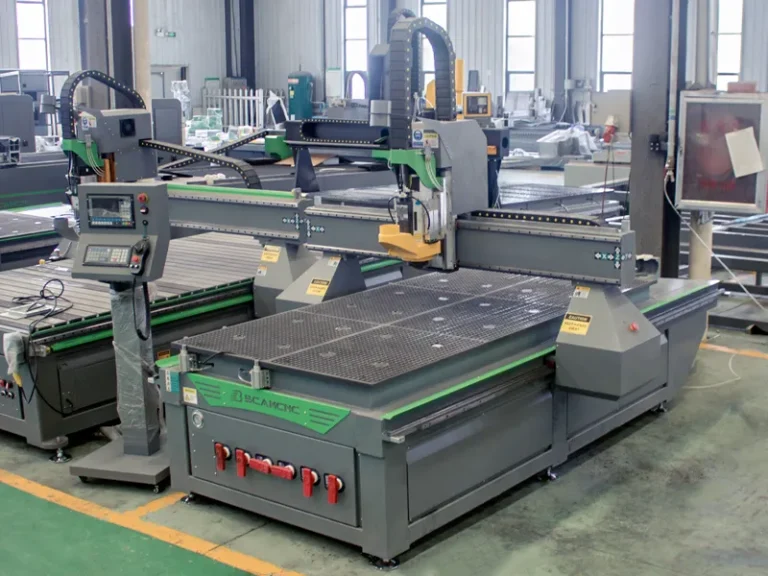
By installing an aggregate head, a standard 3-axis CNC router gains the ability to perform:
- Horizontal milling
- Side slotting
- Edge sawing
- Angle machining
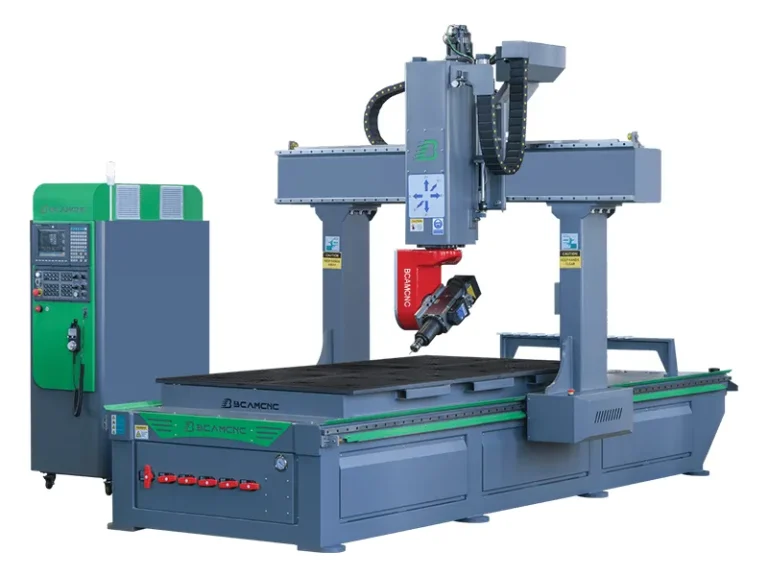
This effectively transforms a traditional CNC router into a multi-direction machining system.
Why Door Manufacturers Need Aggregate Head Technology
Door production often requires deep lock slots, hinge recesses, and precise edge cutting. Using traditional machines means repeated handling and positioning.
An aggregate head provides clear advantages.
Single Setup Processing
The door panel stays fixed during machining. All operations are completed in one cycle.
Benefits include:
- Higher dimensional accuracy
- Reduced handling time
- Consistent machining quality
Multi-Function Capability
One machine can perform multiple tasks, including:
- Lock body slotting
- Smart lock pocket milling
- Hinge recess cutting
- Door edge sawing
- End trimming
This reduces the need for separate equipment.
Increased Automation
CNC programming controls all machining steps automatically.
This leads to:
- Lower labor requirements
- Stable production output
- Reduced operator error
Precision Advantages in Door Lock Slotting and Sawing
Aggregate heads provide technical benefits that standard CNC routers cannot achieve.
High-Accuracy Deep Slot Milling
Door lock slots require narrow and deep horizontal cuts. A 90-degree aggregate head enables precise entry from the door edge.
This ensures:
- Accurate slot depth
- Smooth wall finish
- Perfect alignment for hardware installation
Clean and Efficient End Sawing
When equipped with a circular saw blade, the aggregate head can perform end-cutting operations.
Compared to traditional routing, this method offers:
- Faster material removal
- Cleaner cutting surfaces
- Better dimensional accuracy
Productivity Comparison: Standard CNC vs Aggregate Head
| Feature | Standard 3-Axis CNC | CNC with Aggregate Head |
|---|---|---|
| Machining Direction | Vertical only | Vertical + horizontal |
| Door Lock Processing | Manual / multi-setup | Fully automated |
| Production Speed | 4-6 doors/hour | 12-15 doors/hour |
| Positioning Accuracy | ±0.5 mm | ±0.02 mm |
| Labor Requirement | High | Low |
This productivity improvement directly reduces manufacturing costs.
Key Features to Look for in an Aggregate Head CNC Router
Choosing the right machine is essential for achieving stable performance.
Important factors include:
High-Torque Spindle
A powerful spindle ensures smooth cutting when processing hardwood or thick door panels.
Rigid Tool Interface
Interfaces such as ISO30 or HSK63F provide better stability during horizontal machining.
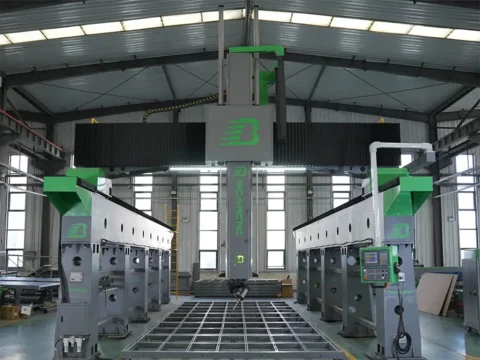
Heavy-Duty Machine Structure
A reinforced steel frame reduces vibration and improves machining precision.
User-Friendly Control System
Easy programming allows fast switching between different door designs.
How Aggregate Head Technology Supports Smart Manufacturing
Modern door factories are moving toward automated production lines. Aggregate head CNC routers support this transition by enabling:
- Continuous workflow processing
- Reduced manual intervention
- Consistent product quality
- Higher output capacity
These benefits make aggregate head technology an essential tool for large-scale door manufacturing.
FAQCNC Aggregate Heads for Door Processing
What is an aggregate head used for in door manufacturing?
It is used for horizontal machining tasks such as lock slotting, hinge recess milling, and edge sawing.
Can a standard 3-axis CNC router use an aggregate head?
Yes. With proper configuration and software support, an aggregate head can significantly expand the capabilities of a standard CNC router.
How accurate is CNC lock slotting with an aggregate head?
High-quality systems can achieve positioning accuracy of up to ±0.02 mm.
Is aggregate head machining suitable for smart lock doors?
Yes. It is ideal for machining deep pockets required for electronic lock installations.
Conclusion
A CNC router with an aggregate head is one of the most effective solutions for improving door production efficiency. It enables multi-direction machining, reduces manual handling, and ensures high precision.
For manufacturers aiming to increase output while maintaining quality, aggregate head technology offers a reliable and future-ready solution.
Get a Customized Door Processing Solution
Ready to eliminate manual door processing and dramatically improve efficiency?
Contact BCAMCNC today to get a customized CNC router configuration designed specifically for your door materials, lock types, and production requirements.