
Quick Answer: Daily Cabinet Output of a CNC Router
A professional nesting CNC router can typically produce:
-
25–40 sheets of 4×8 ft plywood or MDF per 8-hour shift
-
12–20 complete kitchen cabinet carcasses per day
This benchmark assumes:
-
Standard Nested Based Manufacturing workflow
-
Optimized nesting software
-
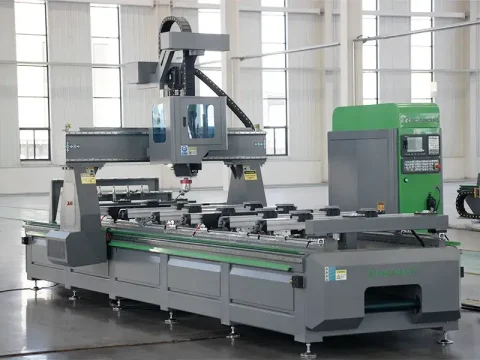
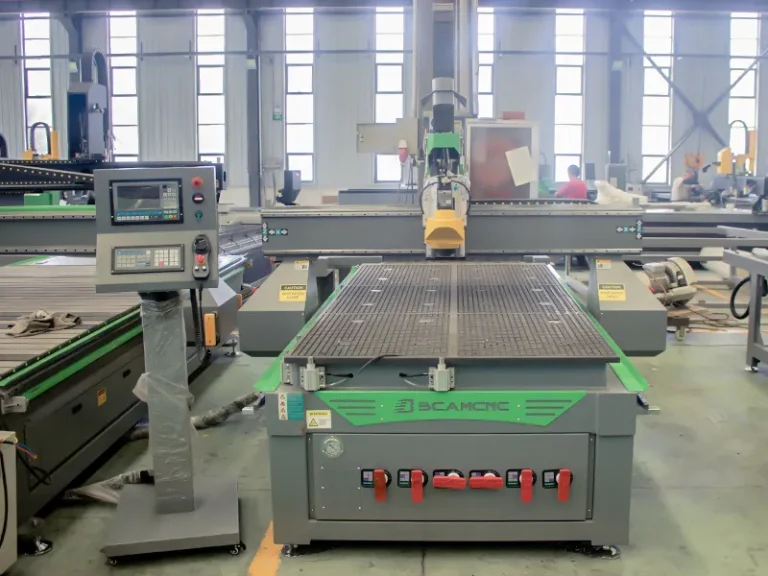
Stable industrial-grade CNC router configuration
For most small to medium cabinet factories, this production capacity is enough to support 2–3 assembly workers continuously.
Understanding CNC Router Cabinet Production Benchmarks
In modern cabinet manufacturing, production output is determined by how efficiently a CNC router converts raw sheets into finished cabinet components.
Typical Industrial Production Range
| Production Metric | Daily Output |
|---|---|
| Sheets Processed | 25–40 sheets |
| Cutting Speed | 15–25 m/min |
| Cabinet Carcasses | 12–20 units |
| Operators Needed | 1 |
This data reflects real-world factory conditions rather than theoretical maximum speeds.
Key Factors That Affect CNC Cabinet Production Speed
The daily output of a CNC router depends on three main technical categories.
1. Machine Hardware Capability
Higher-performance CNC routers significantly increase production throughput.
Spindle Power
-
6 kW spindle → slower feed rates
-
9 kW ATC spindle → stable high-speed cutting
Industrial automatic tool changer systems allow continuous cutting without manual intervention.
Drill Bank Configuration
Dedicated boring units reduce cycle time by up to 20–30% by performing vertical drilling simultaneously.
2. Nesting Software Efficiency
The efficiency of nesting software directly determines material utilization and machining time.
Smart nesting solutions can:
-
Reduce tool path distance
-
Minimize tool changes
-
Increase sheet yield
Optimized nesting often improves total daily output by 15–25%.
3. Loading and Unloading Workflow
The most common production bottleneck is not cutting speed — it is handling time.
| Workflow Type | Downtime per Sheet |
|---|---|
| Manual Loading | 5–8 minutes |
| Automatic Loading System | < 1 minute |
Automated loading platforms can increase daily production capacity by 30–50%.
Manual Production vs CNC Router Output Comparison
The productivity gap between traditional woodworking and CNC manufacturing is substantial.
| Metric | Manual Cutting | Standard CNC Router | ATC Nesting CNC |
|---|---|---|---|
| Operators | 2–3 skilled workers | 1 operator | 1 operator |
| Sheets per Day | 8–10 | 15–20 | 30–45 |
| Daily Cabinets | 4–6 | 8–10 | 15–22 |
| Material Waste | High | Low | Minimal |
For most cabinet factories, switching to CNC production reduces labor costs by over 60%.
CNC Router Production in High-Labor-Cost Markets
In regions where labor costs are high, CNC automation provides even greater economic benefits.
North America
High wages make automation essential for competitive cabinet manufacturing.
Europe
Demand for custom cabinetry requires precision CNC nesting workflows.
Australia
Local CNC production reduces dependency on imported flat-pack cabinets.
These regional factors significantly increase the ROI of CNC router investment.
How to Maximize Daily Cabinet Production
To achieve consistent high output, manufacturers should focus on:
-
Using industrial ATC CNC routers
-
Implementing advanced nesting software
-
Automating loading and unloading processes
-
Maintaining optimal cutting parameters
Consistency and workflow optimization are more important than pushing maximum cutting speed.
Frequently Asked Questions
How many cabinets can a CNC router produce per hour?
A typical nesting CNC router produces 1.5–3 cabinet boxes per hour, depending on design complexity.
Is one CNC router enough for a cabinet workshop?
Yes. One industrial CNC router can support a production team of 2–3 assembly workers.
What affects cabinet CNC production speed the most?
The biggest factors are:
-
Loading efficiency
-
Nesting optimization
-
Tool change automation
Conclusion: Planning Your CNC Production Capacity
A single professional CNC router can realistically produce 12–20 kitchen cabinet carcasses per day under optimized conditions.
For cabinet manufacturers looking to scale production, investing in high-performance nesting CNC systems ensures:
-
Stable daily output
-
Lower labor costs
-
Consistent manufacturing quality
Call to Action
Want to calculate your exact cabinet production capacity?
Contact BCAMCNC engineers for a free production analysis based on your materials, workflow, and factory layout.