
Why the Drive System Matters
The drive system affects how fast the machine moves, how accurate it cuts, and how long it stays stable. For woodworking, sign-making, metal cutting, or panel processing, the right choice can improve your production quality and reduce maintenance.
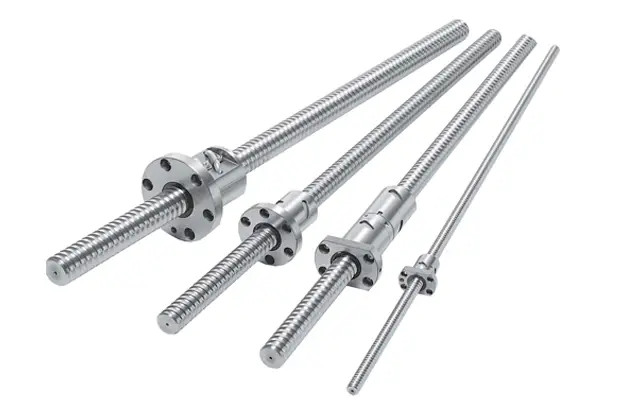
Ball Screw Drive
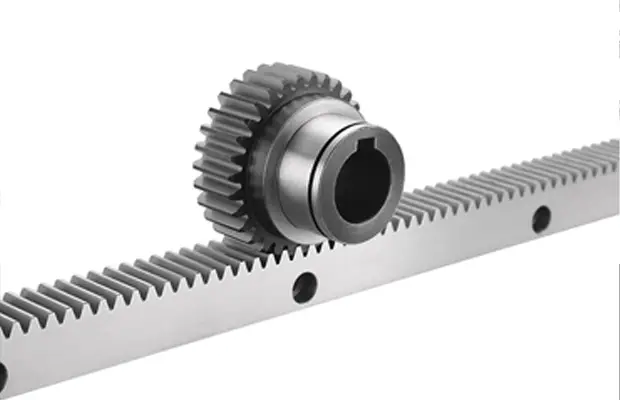
Rack-and-Pinion Drive
What Is Rack-and-Pinion Drive?
Rack-and-pinion uses a gear and a straight toothed rail.
It is widely used on medium and large CNC routers.
Pros of Rack-and-Pinion
- Fast travel speed — Good for large sheet cutting.
- Strong for long-distance motion — Ideal for 1300×2500 mm, 1500×3000 mm, 2000×4000 mm tables.
- Durable — Handles heavy loads well.
- Lower price for large machines — Cost-effective on big formats.
Cons
- Accuracy is good, but not as high as a ball screw.
- Requires gear lubrication and periodic alignment.
Best For
- Cabinet shops
- Furniture factories
- Sign-making
- Large-format cutting
- Medium and high-volume production
What Is Ball Screw Drive?
Ball screw uses a threaded screw and a nut with ball bearings inside.
It is known for high precision and smooth motion.
Pros of Ball Screw
- Very high accuracy — Great for precision engraving and small parts.
- Smooth movement — Less vibration.
- Good for slower, detailed cuts — Improves fine finish quality.
Cons
- Lower max speed than rack-and-pinion.
- Not ideal for long runs because the screw may whip at high speed.
- Higher cost on large CNC routers.
Best For
- Small-format CNC routers
- Precision mould making
- Acrylic and aluminium engraving
- Small furniture parts
- Low-volume but high-precision work
Rack vs Ball Screw: Key Comparison Table
| Feature | Rack-and-Pinion | Ball Screw |
|---|---|---|
| Best Machine Size | Medium–Large | Small–Medium |
| Travel Speed | Very Fast | Moderate |
| Precision | High | Very High |
| Maintenance | Gear lubrication | Screw lubrication |
| Cost (Large Size) | Lower | Higher |
| Cutting Type | Panel cutting, heavy loads | Fine engraving, small parts |
Which One Should You Choose?
Choose Rack-and-Pinion if:
- You process large sheets daily.
- Speed matters more than micro-level accuracy.
- You run long hours and need stable performance.
- You want better cost efficiency for big CNC routers.
Choose Ball Screw if:
- You make detailed parts and need tight tolerances.
- Your machine size is small (600×900 mm, 900×1300 mm, etc.).
- You want smoother and quieter motion.
- You cut materials that require clean, fine detail.
What BCAMCNC Recommends
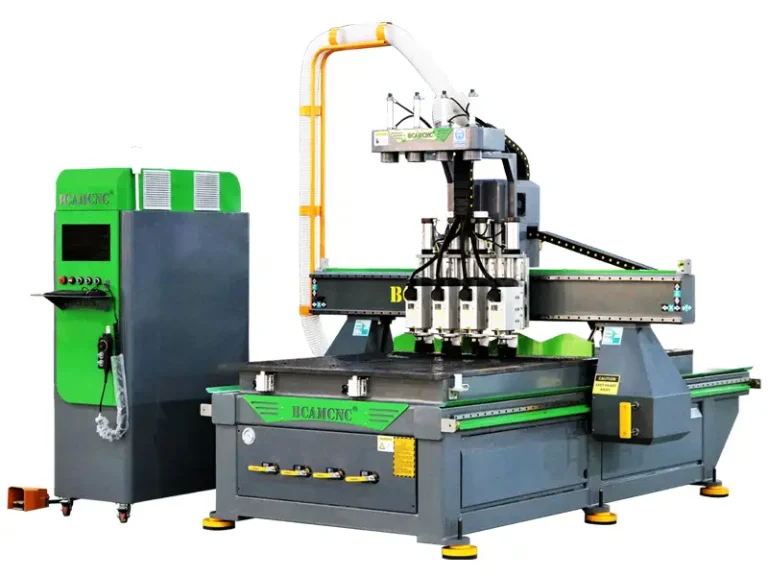
BCAMCNC machines use rack-and-pinion on most large-format models because it gives you the best balance of speed, power, and cost.
Our small-format and high-precision models use ball screws for better engraving accuracy.
If you are unsure which model fits your work, our team can help you choose based on your materials and production volume.
Final Thoughts
There is no “best” system for everyone.
Rack-and-pinion is strong, fast, and reliable.
Ball screw is precise, smooth, and ideal for fine work.
Choose the one that matches your production needs—not just the specs.