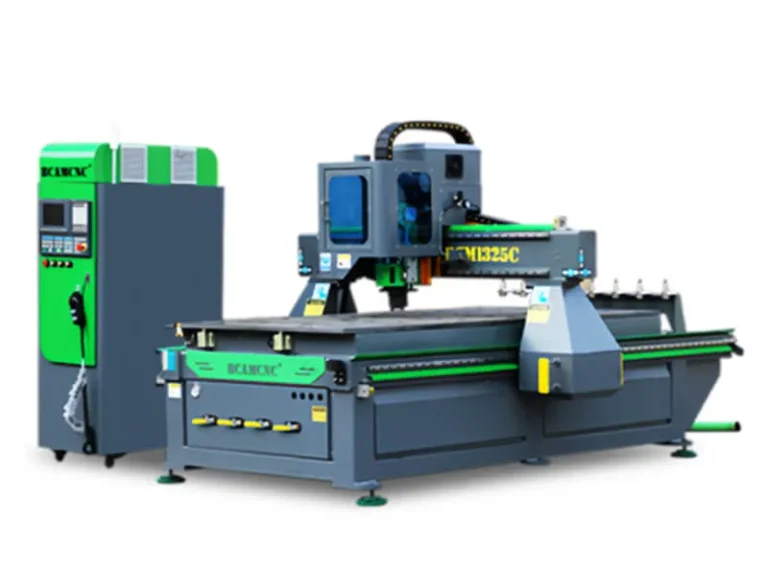

In fiber laser sales, wattage gets all the attention. On the shop floor, it’s usually not what causes the problems that actually cost you money. You can buy the highest power available, but if you build that power on a lightweight frame, you are essentially buying a machine that will vibrate itself out of alignment within eighteen months. Real-world precision isn’t about the light; it’s about the iron.
The Kinetic Reality: Speed vs. Stability
What often surprises buyers is that higher laser power can actually reduce your long-term accuracy. High-wattage machines are designed for speed, which requires aggressive acceleration and deceleration. Every time the cutting head snaps around a corner at high G-forces, it sends force through the entire chassis.
If the bed lacks the mass to dampen these micro-vibrations, you’ll start seeing slight double edges or jagged cuts on your parts. It’s not a software glitch—it’s the frame flexing. In a busy shop, this manifests as circles that gradually become ovals. You can recalibrate the software every week, but you can’t calibrate away a flimsy mechanical foundation.
Heat is More Than Just the Beam
A laser machine generates heat from more than just the cutting process; the high-speed movement of motors and friction in the guide rails create constant thermal shifts. This is why serious manufacturers invest heavily in proper stress-relief processes to ensure the metal doesn’t move as it ages.
If a machine bed hasn’t been through a 24-hour annealing furnace to settle the internal stresses of the welds, the frame remains active. Over its first year of service, that metal will naturally warp by fractions of a millimeter. In precision fabrication, that’s the difference between a perfect fit and a scrap pile.
The Engineering Focus: What is Under the Hood
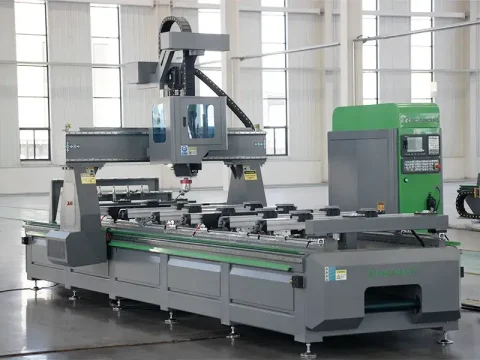
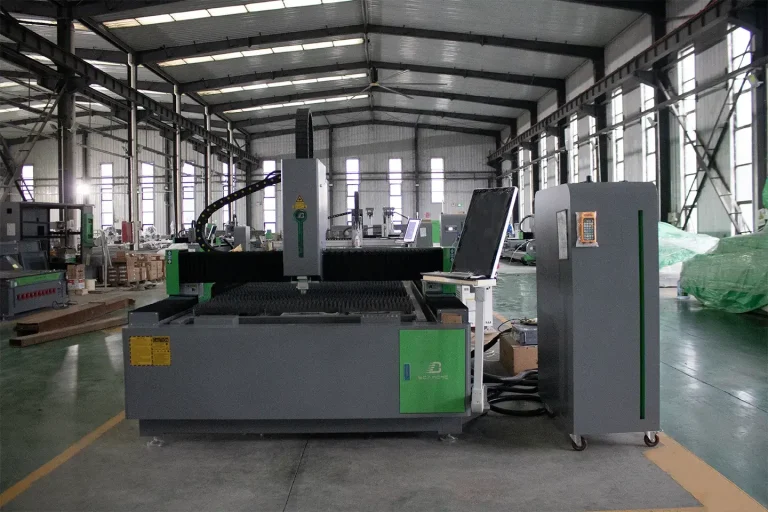
The real difference between mid-tier and high-end machines often comes down to what you don’t see in the brochure. This is why some manufacturers shift their engineering focus toward the structure itself rather than headline specs. More of that effort should go into the machine base—thicker plate-welded structures, internal reinforcement, and higher rigidity margins to ensure the bed acts as a dead weight against kinetic energy.
What to Check Before You Buy
When you’re on the showroom floor, stop looking at the touchscreen and start looking at the construction. These are the details that separate machines that hold tolerance from those that slowly drift:
- Gross Weight: Compare the actual weight of the machine base against others. If it’s 30% lighter, they’ve cut corners on the steel thickness. Mass equals stability.
- Frame Construction: Ask if it’s a thin-tube or heavy-plate weldment. For high-power applications, plate-welded frames are the only way to ensure long-term stability.
- Annealing Records: Don’t take heat treated at face value. Ask for proof of the furnace process. If they can’t show it, they likely didn’t do it.
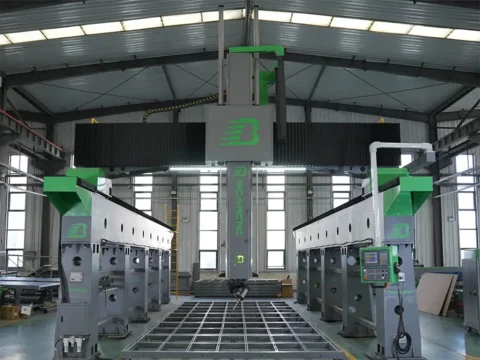
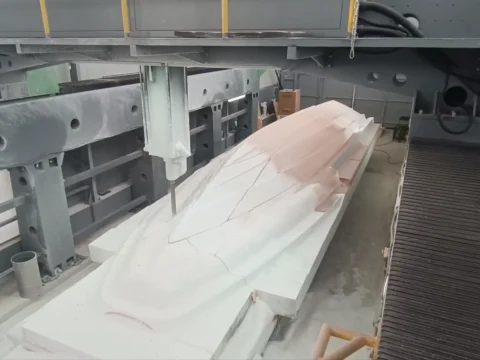
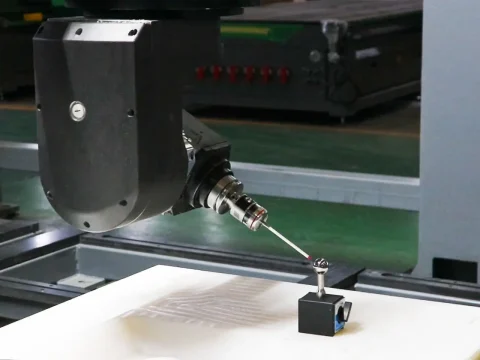
- Single-Pass Milling: Ensure the mounting surfaces for rails were machined on a large-scale gantry mill in a single setup. This is the only way to guarantee absolute parallelism over the entire length.
If a supplier avoids these questions or gives vague answers, that usually tells you everything you need to know.
Conclusion
The laser source is a modular component; it can be repaired or even upgraded. The machine structure cannot. If the base loses its geometric alignment due to poor rigidity or lack of heat treatment, the rest of the system simply follows.
Power determines how fast you cut today; rigidity determines if you’ll still be cutting accurately five years from now. And once the structure starts to drift, there’s no practical way to bring it back. Before you sign for the highest wattage you can afford, make sure you are buying enough iron to support it.