
In door production, most profit isn’t lost on standard routing. It’s lost when the process breaks.
Every time a door stile has to be removed from the CNC for a miter cut, a deep groove, or a side operation, you’re adding time, risk, and labor. That’s where irregular cutting and grooving become a real problem.
The solution isn’t adding more machines. It’s reducing how often you need to move the workpiece at all.
The Reality on the Shop Floor
For most door manufacturers, a standard CNC router is only a partial solution. It handles flat machining well, but once the job involves angled cutting, grooving, or joinery, the workflow stops being automatic.
At that point, the process usually shifts to manual work or secondary machines. This is where irregular cutting and grooving start to slow production down.
The Hidden Costs of Moving the Workpiece
Switching between machines doesn’t just take time. It creates problems that directly affect output and consistency:
- Alignment Errors: These happen easily during re-clamping, especially with solid wood door frames where even small deviations matter.
- Inefficient Labor: Operators spend time moving materials instead of running production.
- Safety Risks: Manual cutting, especially angled cutting on large components, increases shop floor hazards.
Over time, these issues lead to higher scrap rates and less predictable production.
The BCAMCNC Way: Functional Integration
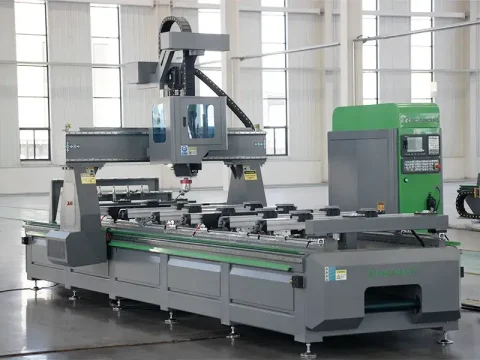
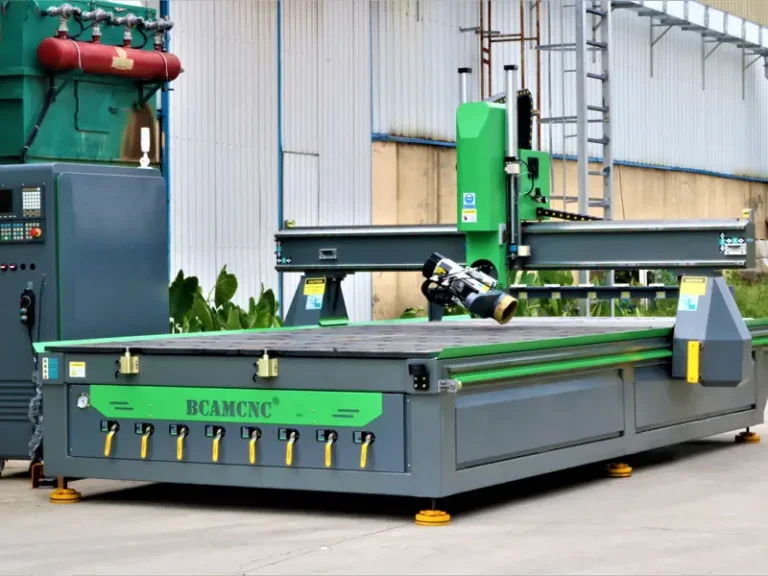
At BCAMCNC, our goal is to build a machine that fits the real workflow of door production. Irregular cutting and grooving are handled in a single setup through functional integration:
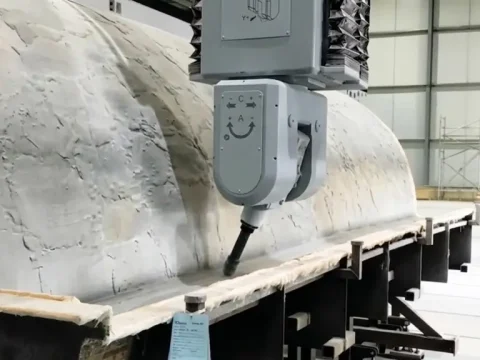
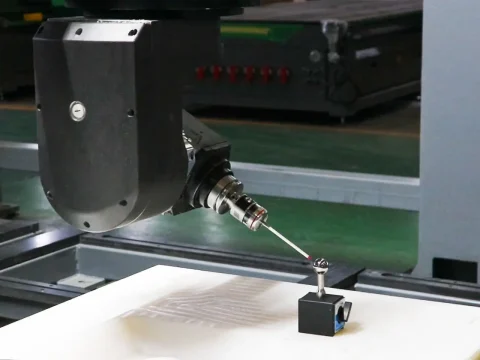
- C-Axis Saw Blade: The blade rotates 360 degrees, allowing angled cutting and miters without removing the workpiece. The part stays in position until the job is complete.
- Transverse & Side Processing: The spindle supports horizontal processing, making it possible to complete grooving, lock pockets, and hinge recesses within one continuous CNC program.
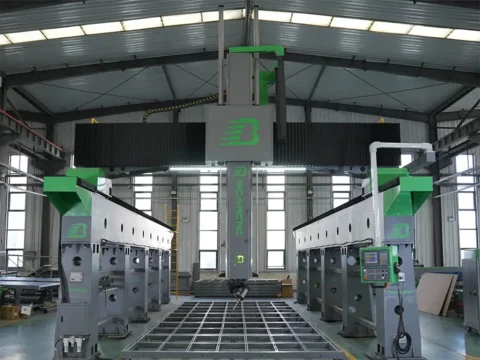
- Industrial Stability: A rigid steel frame ensures stability when working with hardwood, where lateral force is higher, maintaining clean edges and consistent results.
Why Multitasking CNC Routers Matter
A multitasking CNC router improves more than just capability; it improves control. When cutting, grooving, and joinery are completed in one setup, setup time is reduced and batch consistency improves. Complex door components become easier to produce without relying on repeated manual adjustments.
A More Predictable Production Flow
Upgrading a CNC router should simplify production. When one operator can load a raw component and unload a finished part with all machining completed, production becomes stable. Instead of managing multiple machines and steps, the workflow becomes streamlined.
Conclusion
Irregular cutting and grooving in door production are process problems. A CNC router designed for integrated operations allows the workpiece to stay on the table from start to finish. This reduces handling, lowers the chance of errors, and improves consistency.
In real production environments, efficiency comes from process control, not just machine speed.