
In the industrial CNC world, “Can it cut this material?” is the wrong question. Any 5,000 USD machine can “cut” almost anything once. The real question is: “Can it cut this material for 8 hours a day, at 15m/min, maintaining±0.05mm tolerance for the next 5 years?” For 90% of the machines on the market, the answer is a hard No.
Why Machine Accuracy is a Structural Property, Not a Software Setting
Why Your CNC Machine Loses Precision Over Time
If you are seeing quality drift after lunch, or if your finishing requires manual sanding, your problem isn’t the “calibration”—it’s the physics of your machine. Mass is the only dampener. If your gantry weighs less than the material it’s cutting, physics wins and vibration (chatter) is inevitable.
The Structural Lie of Heavy-duty CNC Router Frames
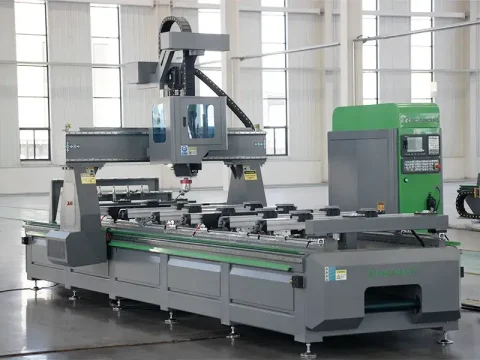
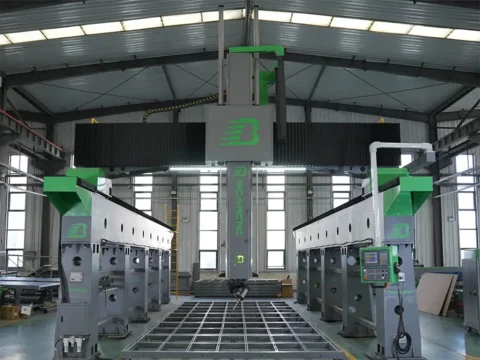
Most suppliers sell “industrial” routers that are actually oversized hobbyist frames. A Heavy-duty CNC Router without a heat-treated, stress-relieved steel base is a ticking time bomb of structural warping. Thermal drift is real; in long-cycle production (4+ hours), friction generates heat that causes Z-zero migration in unstable structures.
CNC Router for Wood: Real Production Limits and the Cost of “Good Enough”
Processing MDF and Plywood at Scale
These are “dust and hold-down” games. The limit here isn’t the spindle; it’s the Vacuum Table zoning. If your machine loses suction as parts are cut out, your high-speed nesting is a fantasy that leads to ruined sheets and wasted material.
Hardwood Production and the Rigidity Test
Cutting Ipe, Oak, or Walnut isn’t about RPM; it’s about lateral force. When a tool hits a dense knot at high feed rates, a light-duty gantry will flex. This flex translates to stepped edges and ruined end-grain that requires expensive manual rework.
Why Machine Architecture Defines Woodworking Profit
If you have to slow down your feed rate to get a clean finish in hardwood, your machine structure is failing you. An industrial-grade CNC Router 1325 with high-mass, welded-steel architecture allows you to push the tool to its technical limit, not the machine’s limit.
CNC Router for Plastics: Heat Management and Surface Finish Challenges
Avoiding the Melt Threshold in Polymer Machining
In Acrylic and PVC machining, the machine’s motion control fluidity is more important than raw power. Cheap motion controllers have “micro-stutter.” Even a millisecond of dwell time at a corner causes plastic to melt and weld to the carbide bit.
Achieving Optical Grade Edge Quality
For optical-grade acrylic, you need zero harmonic resonance. If your Z-axis assembly uses thin plates instead of heavy-duty castings, you will see “ghosting” lines that no amount of flame-polishing can fix. Structural stability equals a crystal-clear finish.
CNC Router for Composites: Abrasion and Protection Limits
Surrounding the Machine Killers: Carbon Fiber and GFRP
It’s not about cutting the composite; it’s about surviving the dust. Fine carbon dust is conductive and abrasive. If your machine doesn’t have shielded linear guides and pressurized electrical cabinets, you are essentially sandblasting your own electronics from the inside out.
Long-Cycle Stability in Large-Format Tooling
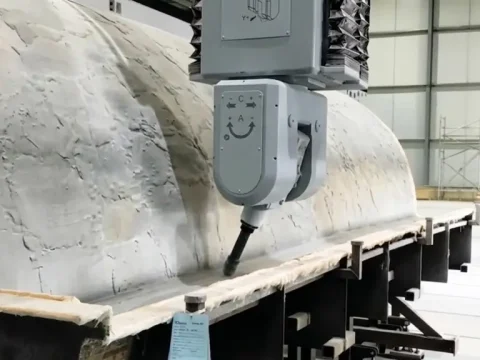
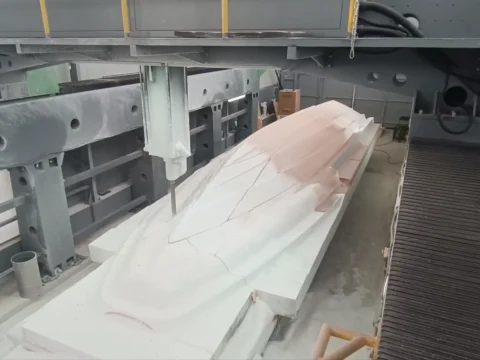
For 10-hour foam mold cycles, the “machining limit” is mechanical consistency. A 0.1mm error at hour 9 means the entire mold is scrap. This is where precision-ground helical racks and heat-treated frames separate professional production from amateur output.
CNC Router Aluminum Limitations in Real Production
Stripping the Marketing Hype from Aluminum Cutting
Every salesperson says their router “can cut aluminum.” They are half-right. A CNC router is a high-speed, low-torque environment. If you try to “hog” material out of a 6061 plate like a VMC, the resonance will destroy your spindle bearings in months.
The Reality of Industrial Aluminum Cutting Fabrication
High-end routers are excellent for aluminum sheet-work and extrusion profiling, provided they have a mist-lubrication system and a frame heavy enough to kill resonance. If the machine vibrates during an Aluminum Cutting process, you are burning profit on tool wear and bit breakage.
Where CNC Routers Actually Fail: 3 Typical “Buyer’s Remorse” Scenarios
1. The Hardwood Headache and Feed Rate Drops
Buying a lightweight “Professional” router for a furniture factory, only to find it chatters in Oak, forcing the shop to run at 50% speed just to get a sellable finish. This doubles your labor costs instantly.
2. The Aluminum Trap and Bit Breakage
Purchasing a wood-spec router for aluminum signs without a reinforced bridge. The result is constant carbide bit breakage and “wavy” vertical walls on letters that won’t fit their mounts.
3. The Precision Drift in Mold Making
Using a non-heat-treated frame for long-cycle mold making. By the time the machine finishes a 12-hour job, the start and end points don’t match due to structural expansion and mechanical fatigue.
Stop Compensating for Your Hardware: Identify Your Bottleneck
Is your production suffering from accuracy drift during long shifts or excessive tool wear?
If your operators are spending 20 minutes sanding every part, or if you’re afraid to run at the tool manufacturer’s recommended feed rates, your machine is the bottleneck. To stop “making it work” and start scaling production, you need a machine designed for the material you actually cut. Beyond the equipment, having reliable Technical Support is crucial for long-term machine uptime.
Let’s look at your current cycle times and tool consumption—if they aren’t optimal, it’s time to upgrade to real structural stability.