
What Is a 5-Axis CNC Machine? A Complete Guide for Modern Manufacturing
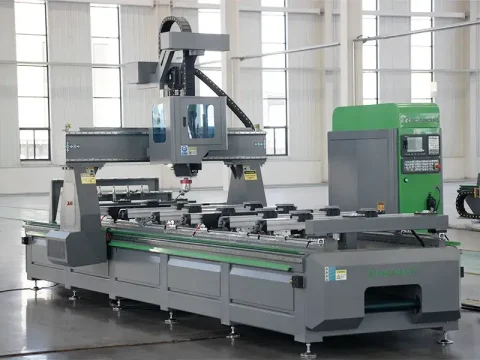
CNC machining is evolving fast. If you work in manufacturing, woodworking, metalworking, or mold processing, you’ve likely heard about 5-axis CNC routers. Like all CNC machines, a 5-axis router follows programmed paths to cut, mill, drill, or carve. But compared with a standard 3-axis machine, a 5-axis CNC offers far more flexibility, speed, and precision.
This guide explains how 5-axis CNC machining works, its advantages, common applications, and how to choose the right machine for your workshop.
What Exactly Is a 5-Axis CNC Machine?
A 5-axis CNC router can move in five directions at the same time:
- X, Y, Z – the three linear axes
- A and B – two rotational axes
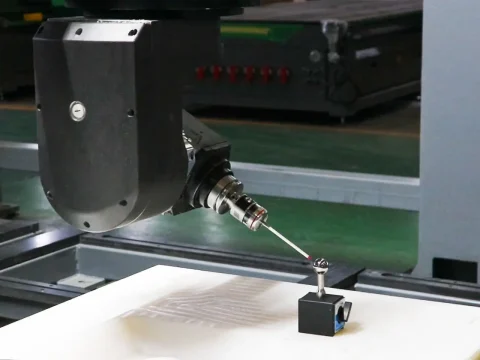
Because the spindle or the table can rotate, the cutting tool can approach the material from almost any angle. This reduces the need to manually flip or reposition the workpiece, making production faster and more accurate.
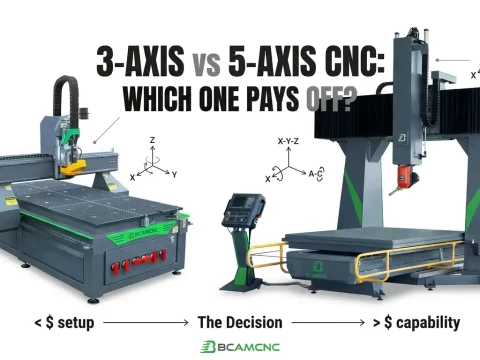
3-Axis vs. 5-Axis CNC: What’s the Difference?
3-Axis CNC
A traditional 3-axis machine moves only in X, Y, and Z:
- X-axis: worktable moves left/right
- Y-axis: worktable moves forward/back
- Z-axis: spindle moves up/down
A 3-axis CNC is excellent for flat surface machining — such as cabinets, furniture parts, signs, and simple molds.
5-Axis CNC
A 5-axis router adds two rotational axes (A and B).
All five can work simultaneously, allowing:
- Multi-side machining in a single setup
- More complex shapes
- Higher accuracy
- Better surface finishing
Some machines may also include a C-axis, rotating around the Z direction.
If you need to machine cavities, overhangs, complex contours, or deep angles, a 5-axis CNC eliminates most manual repositioning that a 3-axis machine would require.
Common Uses of 5-Axis CNC Machines
Because of their precision and efficiency, 5-axis routers are widely used in:
- Aerospace: turbine blades, structural parts, composite molds
- Automotive: molds, interior parts, mechanical parts
- Healthcare: medical device components, implants
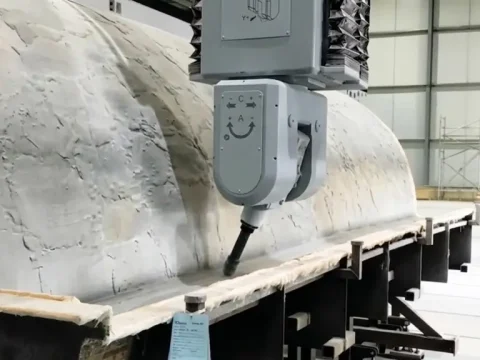
- Custom woodworking: complex furniture, sculpture, artistic 3D work
- Energy sector: turbine rotors, oil & gas parts
- Metal and aluminum mold manufacturing
Whenever a part requires multi-angle machining with tight tolerances, 5-axis technology becomes the ideal solution.
Two Main Types of 5-Axis CNC Routers
1. Swivel-Head (3+2) Machining
Here, the spindle tilts while the material stays still.
Advantages:
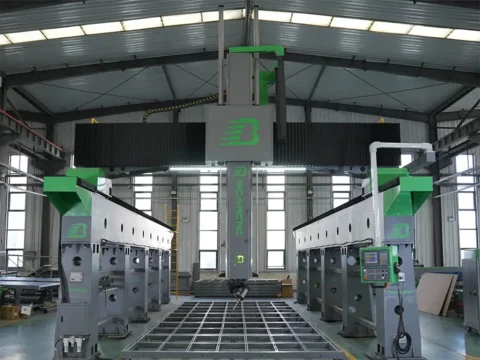
- Suitable for large or heavy materials
- Good for machining deep angles and tight areas
- More stable because the workpiece stays fixed
This is usually called 3+2 machining. The machine positions the spindle on two rotational axes, then cuts using the three linear axes.
2. Table-Moving (Simultaneous 5-Axis) Machining
In this type, the table rotates the workpiece around A and B axes.
Advantages:
- True simultaneous 5-axis cutting
- High speed and smoother surface finishing
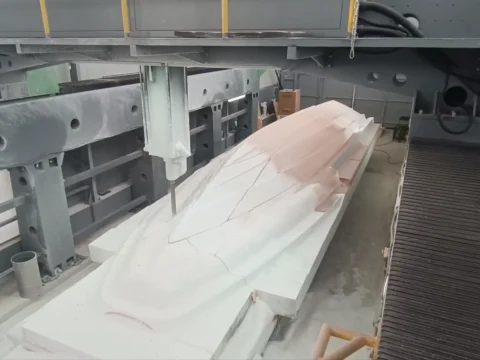
- Ideal for complex mold making and continuous contour cutting
This is known as continuous 5-axis machining.
Why Choose 5-Axis CNC Machining?
1. Higher Efficiency
One setup can finish multiple sides.
This reduces manual work and dramatically shortens production time.
2. Greater Accuracy
With fewer repositioning steps, machining errors decrease.
Surface quality is smoother and more consistent.
3. Fewer Tool Changes
5-axis machining reaches complex angles without swapping tools, making the entire workflow more stable.
4. Better Versatility
A single machine can complete operations that normally require several different tools or fixtures.
5. Improved Tool Life
Shorter cutting tools and optimized angles increase rigidity and reduce vibration.
Challenges of 5-Axis CNC Machining
Although powerful, 5-axis machining requires:
- Skilled programming
- Proper CAD/CAM software
- Training for operators
- Good planning to avoid collisions or errors
Because the machine cuts continuously without pauses for repositioning, programming mistakes can cause material waste. Training is essential.
How Much Does a 5-Axis CNC Machine Cost?
Prices vary depending on:
- Table size
- Servo motors and spindle power
- Controller system
- Accuracy level
- Optional functions
- Country of manufacture
Most industrial 5-axis machines range from $200,000 to $500,000+, depending on configuration and customization.
Setting Up a 5-Axis CNC Router
Correct setup is key to safe operation. Steps include:
- Ensure proper grounding and installation
- Check tool calibration and offsets
- Test each axis before running
- Use recommended PPE
- Maintain clean working conditions
- Train operators regularly
Routine maintenance keeps the machine stable and prolongs its lifespan.
How to Choose the Right 5-Axis Machine
1. Know Your Projects
3+2 machining: ideal for plane processing, drilling, angle positioning
Continuous 5-axis: better for molds, sculptures, contours, and curved surfaces
2. Compare Features
Look at spindle power, table structure, accuracy, software support, and automation options.
3. Plan for Maintenance Costs
5-axis routers reduce labor but require regular upkeep and replacement of key components.
4. Evaluate ROI
Although the initial investment is higher than a 3-axis CNC, the long-term output, part quality, and efficiency often result in much better profitability.
BCAMCNC: Your Trusted Partner for 5-Axis CNC Solutions
If you’re ready to upgrade to 5-axis machining, BCAMCNC offers:
- Reliable 5-axis CNC routers for woodworking, mold making, and industrial production
- Customizable table sizes and configurations
- Training support
- Professional after-sales service
- CE-certified, factory-direct machines
With years of manufacturing experience, BCAMCNC helps businesses improve machining accuracy, reduce manual work, and speed up production.
Want to learn more or get a quote?
📱 WhatsApp: +8615154109683