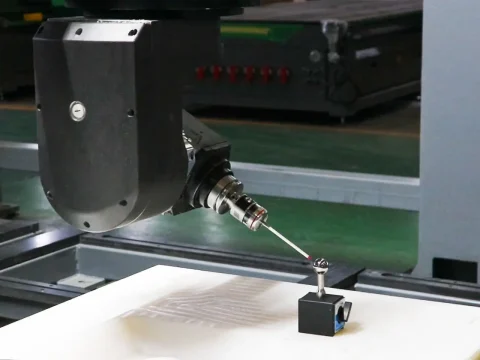

In the world of woodworking and cabinetry, the debate between the CNC Router and the Sliding Panel Saw is a classic. Choosing the right equipment is a pivotal decision that impacts your workshop’s footprint, production speed, and overall precision.
Whether you are a custom furniture maker or a high-volume cabinet manufacturer, understanding the nuances of each machine is essential for maximizing your ROI.
1. The CNC Router: The King of Versatility and Automation
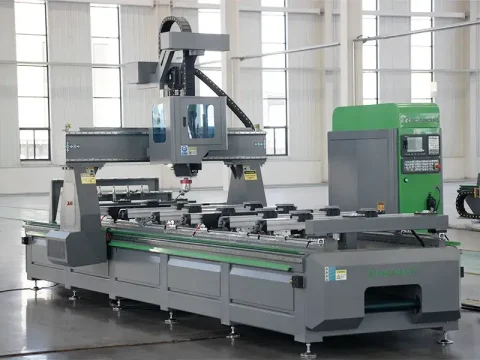
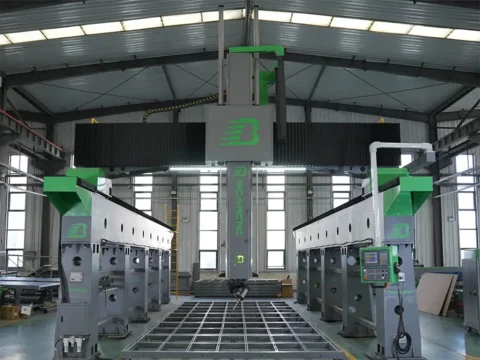
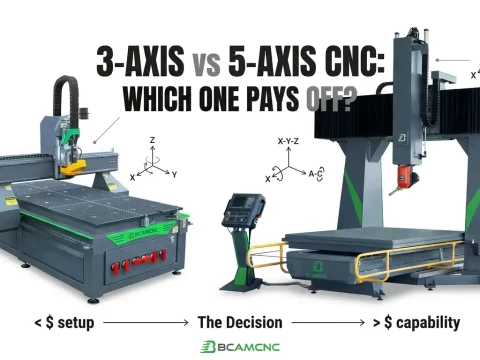
A CNC router is a computer-controlled cutting machine that uses a spinning bit to carve shapes into various materials. It is the ultimate tool for “nested-base” manufacturing.
Key Advantages:
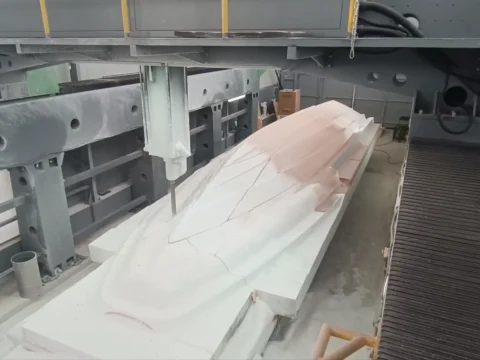
- Intricate Shaping: Unlike a saw, a CNC can cut curves, drill holes, and create decorative carvings all in one cycle.
- Material Efficiency: Using “nesting” software, the CNC calculates the best way to fit parts on a sheet, significantly reducing waste.
- Labor Savings: Once the program is loaded, the machine runs autonomously. One operator can often manage multiple machines.
- Precision: It delivers high repeatability, ensuring every part of a 100-cabinet order is identical.
Best For:
Complex cabinetry, signage, irregular shapes, and shops looking to automate their entire workflow.
2. The Panel Saw: The Workhorse of Straight Cuts
The sliding panel saw is a staple in traditional workshops. It features a large sliding table that carries the board past a stationary circular blade.
Key Advantages:
- Blistering Speed for Rectangles: If you only need to rip large sheets into squares or rectangles, a panel saw is significantly faster than a CNC.
- Ease of Use: There is no steep learning curve with CAD/CAM software. If you can measure and mark, you can use a panel saw.
- Lower Initial Investment: Generally, a high-quality panel saw is more affordable than a professional-grade CNC setup.
- Perfect Edges: Panel saws are designed to provide a clean, chip-free edge, which is vital for edge-banding.
Best For:
High-speed straight cutting, smaller shops with limited technical staff, and processing massive volumes of rectangular panels.
3. Head-to-Head Comparison
| Feature | CNC Router | Panel Saw |
|---|---|---|
| Cut Geometry | Curves, holes, 3D shapes | Straight lines only |
| Setup Time | Higher (Programming/CAD) | Low (Manual adjustment) |
| Speed | Moderate (Precise/Slow) | Very Fast (Straight rips) |
| Automation | High | Low/Manual |
| Waste Management | Excellent (Nesting) | Manual Planning |
Conclusion: Which One Do You Need?
The “better” machine depends entirely on your production goals.
Choose a Panel Saw if your business revolves around simple, rectangular cabinets and you need to process dozens of sheets per day at a lower entry cost.
Choose a CNC Router if you want to offer custom designs, reduce manual labor, and handle drilling and shaping in a single step.
In many modern, high-growth shops, these two machines actually work together. The CNC handles the complex, nested parts, while the panel saw quickly rips down the simple back panels and shelving.
Elevate Your Production with BCAMCNC
If you are ready to transition into the world of precision manufacturing, BCAMCNC offers industry-leading solutions tailored to your needs. Our high-performance CNC Routers are engineered for heavy-duty nesting and intricate carving, while our Precision Panel Saws ensure your straight cuts are flawless every time.
Built with industrial-grade components and backed by expert support, BCAMCNC machines are the backbone of successful woodworking businesses worldwide.