
Choosing the right workholding system is one of the most important decisions when buying or upgrading a CNC router. The table design directly affects cutting accuracy, production speed, material stability, and overall efficiency. Two of the most common options are the vacuum table and the T-slot table. Each system has clear strengths, and the better choice depends on your materials, production type, and machining goals.
Understanding the differences between these two table types will help you select the right configuration for your workshop.
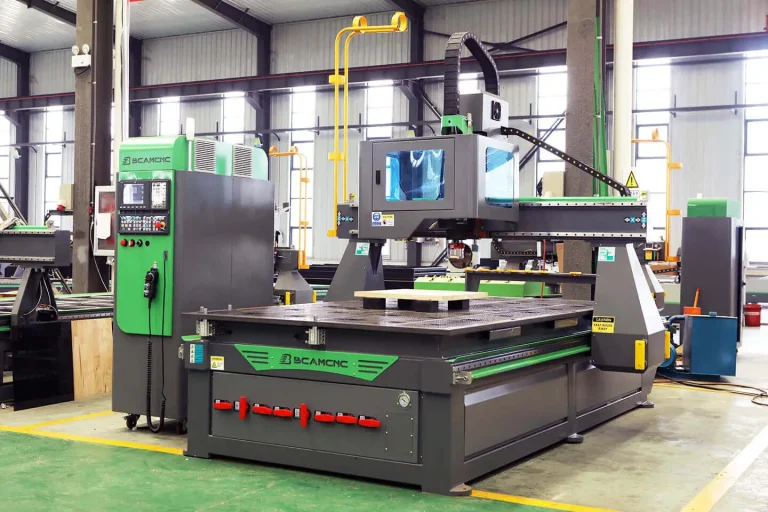
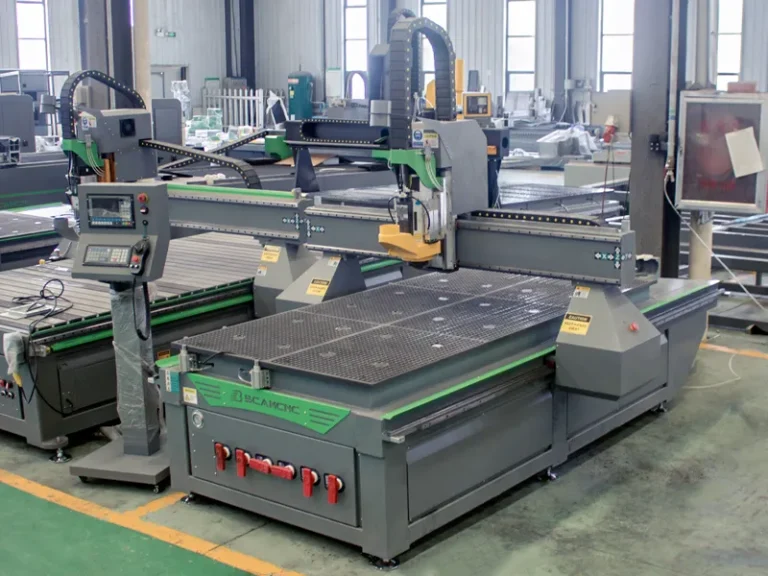
A CNC router with a vacuum table uses suction power to hold materials firmly against the machine surface. A vacuum pump removes air between the table and the workpiece, creating pressure that keeps the material in place. This system is especially popular in industries that process large sheet materials such as wood panels, MDF, plywood, plastic sheets, and composite boards.
The main advantage of a vacuum table is speed. Operators can load and unload sheets quickly without clamping and unclamping parts. This makes it ideal for mass production, nested-based manufacturing, cabinet making, and furniture production. Since there are no physical clamps in the cutting area, the spindle can move freely across the entire sheet. This reduces interruptions and improves overall machining efficiency.
Vacuum tables also provide even holding force across the surface. This helps prevent vibration and reduces the risk of material movement during cutting. As a result, surface finish and cutting accuracy are often improved, especially when working with thin or flexible materials.
However, vacuum tables are not perfect for every application. Very small parts may not have enough surface area to be held securely by suction alone. Porous materials can also reduce vacuum strength if air passes through the board. In addition, vacuum systems require a pump, which increases machine cost and energy use.
On the other hand, a T-slot table is a more traditional and highly flexible workholding solution. It features aluminum slots where clamps and fixtures can be mounted to hold materials in place. This method is widely used in woodworking, sign making, metal engraving, mold processing, and custom fabrication.
The biggest strength of a T-slot table is versatility. It can securely hold small parts, thick blocks, irregular shapes, and heavy materials that a vacuum system may struggle with. Clamps provide strong mechanical force, which is especially useful during heavy cutting operations or when working with solid wood, aluminum, or dense plastics.
T-slot tables are also easier to maintain. There is no vacuum pump, no seals, and fewer components that require regular servicing. For workshops that focus on custom jobs rather than high-volume sheet processing, a T-slot table can be a practical and cost-effective solution.
The trade-off is setup time. Each workpiece must be manually clamped, which slows down production compared to a vacuum table. Clamps can also limit toolpath access, meaning operators must plan carefully to avoid collisions between the cutting tool and the clamps. This can slightly reduce machining efficiency in large production runs.
When deciding which table is better, the answer depends on how the CNC router will be used. For businesses focused on cabinet production, furniture panels, doors, or other sheet-based products, a vacuum table usually offers faster workflow and higher output. For workshops that process many different material sizes, small parts, or thick and heavy workpieces, a T-slot table provides stronger and more flexible holding.
Many professional manufacturers choose a hybrid approach. Some CNC routers can be equipped with both a vacuum system and T-slots, allowing operators to switch between suction and mechanical clamping when needed. This combination offers maximum flexibility for mixed production environments.
In the end, the “better” option is the one that matches your materials, production volume, and machining style. A well-matched table system improves efficiency, protects workpieces, and helps you get the most from your CNC router.
If you are selecting a new CNC router or upgrading your current machine, BCAMCNC offers models with both vacuum table and T-slot table configurations to suit different industries and production needs. Choosing the right table setup from the start ensures better performance, higher productivity, and long-term reliability for your workshop.