
Plastic melts during CNC routing because the cutter generates heat faster than the chip can carry it away. The issue is not simply “high RPM” or “bad material.” It is an imbalance between heat generation and chip evacuation.
When the cutter slices properly, the chip removes heat from the cutting zone. When the tool rubs instead of cuts, friction stays concentrated inside the workpiece. The result is melted edges, welded chips, dimensional instability, and poor surface finish.
This is especially common when machining low-glass transition temperature materials such as Acrylic, HDPE, UHMW, PVC, and Polycarbonate.
The solution starts with chip load.
Chip Load Determines Whether the Tool Cuts or Rubs
Chip load defines how much material each flute removes during one spindle revolution.
Formula:
Chip Load = Feed Rate ÷ (RPM × Flutes)
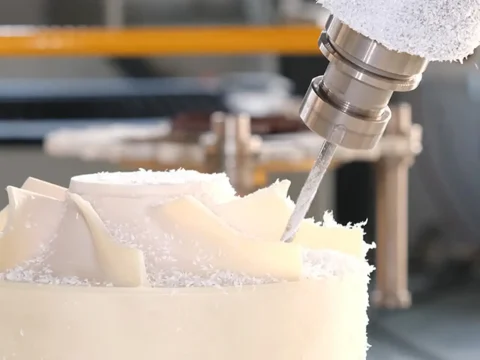
A healthy chip load produces actual cutting action. The chip forms cleanly, ejects quickly, and carries heat away from the cut.
A chip load that is too low creates friction instead of shearing. This is where most melting problems begin.
Typical warning signs include:
- Dust-like chips instead of solid curls
- Glossy or smeared edges
- High-pitched squealing sounds
- Material sticking to the cutter
- Hot workpiece with relatively cool chips
A properly tuned plastic cutting process usually produces warm chips and a surprisingly cool workpiece surface.
Increase Feed Rate Before Reducing Speed Blindly
One of the most common mistakes in plastic machining is reducing feed rate when edge quality starts deteriorating.
That usually makes the situation worse.
A slow-moving cutter spends too much time contacting the material, which increases frictional heat. Increasing feed rate often improves edge quality because the cutter begins slicing instead of polishing.
Reducing spindle RPM can also help, but RPM changes must work together with feed rate and flute count. Lower RPM alone does not solve rubbing if the chip load remains too small.
For most plastic routing applications:
- Higher feed rates are preferred
- Excessively high RPM should be avoided
- Low flute-count tools perform better
- Consistent chip evacuation is critical
Why O-Flute Bits Are the Standard for Plastics
Using standard wood or metal-cutting tools on plastic is one of the fastest ways to create melting issues.
O-flute router bits are specifically designed for plastic machining because they generate large, clean chips with minimal friction.
Compared with conventional end mills, O-flute tools provide:
- Larger flute valleys for chip evacuation
- Sharper cutting edges
- Lower cutting pressure
- Reduced heat buildup
- Cleaner edge finishes
Single-flute O-flute geometry is especially effective because it maximizes chip clearance and minimizes heat accumulation.
This matters more during deep pocket machining, where trapped chips quickly become a thermal problem.
Why Upcut Geometry Is Mandatory for Deep Pocket Routing
Deep pocket machining concentrates heat inside a confined area. If chips cannot escape, they are recut repeatedly by the tool.
That creates rapid heat buildup.
For this reason, upcut O-flute bits are strongly recommended for most plastic routing operations. The upward cutting action continuously lifts hot chips away from the cutting zone.
Downcut tools may improve top-edge finish in thin sheet applications, but they also force chips back into the slot. In deep pockets, this often leads to:
- Chip packing
- Material softening
- Melted sidewalls
- Increased spindle load
- Tool clogging
If chips stop ejecting cleanly, stop the cut immediately and correct the evacuation problem before continuing.
Air Blast Is More Effective Than Flood Coolant in Many Cases
For many plastics, airflow management is more important than liquid coolant.
A properly directed compressed air system:
- Removes hot chips immediately
- Prevents chip recutting
- Stabilizes cutting temperature
- Improves surface finish consistency
- Extends tool life
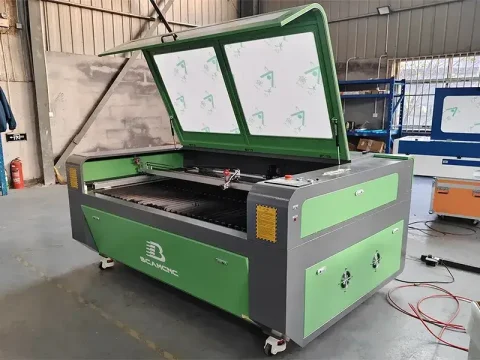
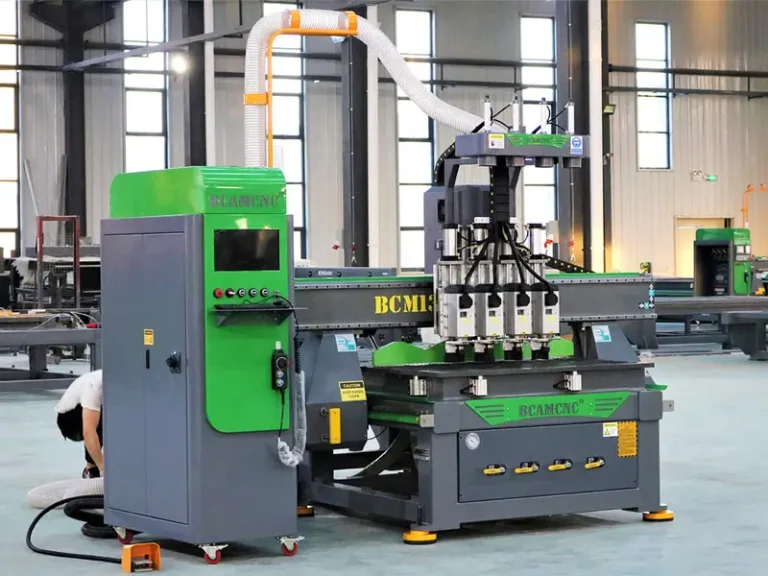
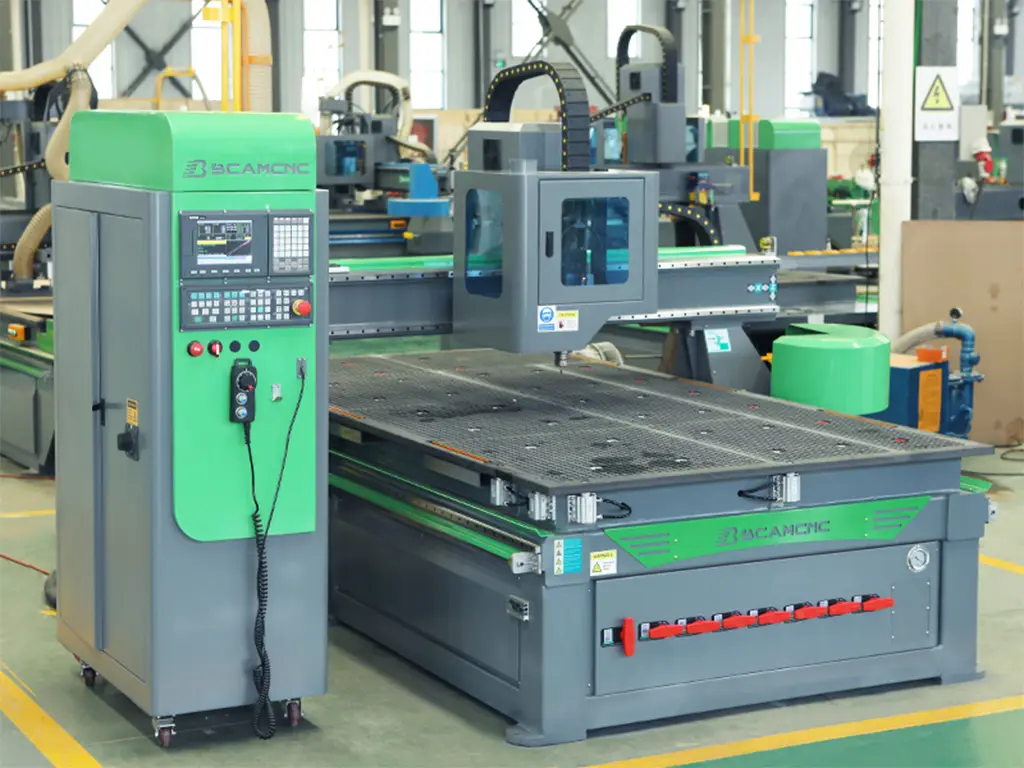
BCAMCNC series CNC routers are designed with high-capacity chip evacuation and airflow support specifically for high-feed-rate plastic machining strategies, where continuous heat removal is essential for dimensional stability and edge quality.
Mist cooling systems can help in high-speed production environments, especially when machining gummy or heat-sensitive plastics. However, excessive coolant use may create additional cleaning or bonding issues during secondary processing.
In many cases, clean airflow is the better solution.
Tool Sharpness Matters More Than Operators Expect
Plastic routing is unforgiving when it comes to tool wear.
A slightly dull cutter may still machine aluminum acceptably, but plastic reacts differently. Once the cutting edge loses sharpness, friction increases immediately.
Dull tools commonly cause:
- White or cloudy cut edges
- Burr formation
- Material smearing
- Increased heat generation
- Chip welding around the flute
Inspect tooling regularly under magnification if edge quality suddenly changes across multiple sheets.
Microscopic wear matters in plastic machining.
Cast Acrylic vs Extruded Acrylic Machining Behavior
Although both materials are called “acrylic,” their machining characteristics are very different.
| Property | Cast Acrylic | Extruded Acrylic |
|---|---|---|
| Machining Stability | More dimensionally stable | More heat-sensitive |
| Edge Finish | Clean polished edges possible | Smearing more likely |
| Chip Formation | Crisp chips | Gummy chips |
| Heat Resistance During Cutting | Better thermal stability | Softens more easily |
| Engraving Quality | Excellent detail retention | Edges may deform |
| Deep Pocket Performance | More stable | Higher melting risk |
| Common Failure Mode | Chipping from overload | Edge welding and melting |
Extruded acrylic requires tighter control over feed rate, RPM, and evacuation because it softens much faster under frictional heat.
Practical Troubleshooting Steps for Plastic Melting
When deformation or melting appears during CNC routing, diagnose the process systematically.
Check the Chip Shape
Powder-like chips indicate rubbing. Solid chips indicate cutting.
Increase Feed Rate Gradually
Do not reduce feed automatically. A higher chip load often improves thermal control.
Verify RPM Settings
Excess spindle speed creates unnecessary friction heat.
Inspect the Tool Geometry
Use sharp O-flute tooling whenever possible.
Improve Chip Evacuation
Add compressed air or improve extraction flow immediately.
Reduce Full-Width Slotting
Heavy radial engagement traps heat aggressively.
Replace Worn Tools Early
Plastic routing tolerates very little edge wear.
What Experienced Operators Listen For
Experienced machinists often diagnose plastic cutting problems by sound before visible defects appear.
A proper cut sounds stable and rhythmic.
A rubbing cutter produces a sharp, high-pitched squeal. Chips become dusty. Heat rises rapidly. Sometimes the smell of overheated plastic appears before visible melting starts.
That sound difference matters.
The spindle is not just removing material. It is managing heat in real time. When chip evacuation, feed rate, and tool geometry work together correctly, plastics machine cleanly with excellent dimensional stability and polished edge quality. When they do not, even a powerful CNC router becomes an expensive plastic welding machine. Human operators usually discover this about ten seconds after ignoring the chip stream.