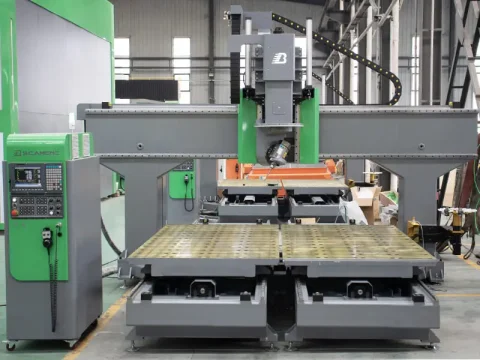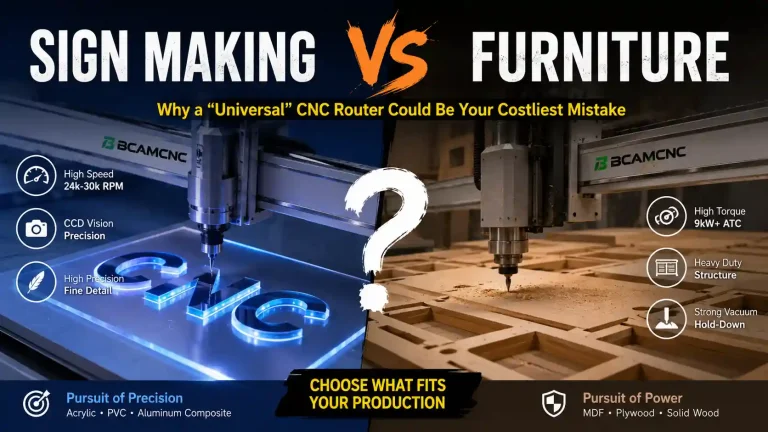

When purchasing a CNC router, many buyers ask the same question:
“Can one machine handle everything?”
Technically, yes.
But in industrial manufacturing, “universal” often means “compromised.”
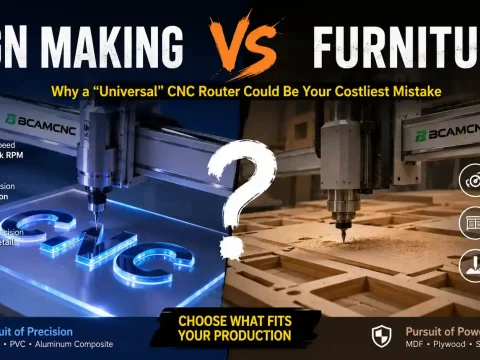
The processing logic behind sign making and furniture production is fundamentally different. One demands high-speed precision and rapid response. The other requires heavy-duty rigidity and continuous cutting stability.
A machine designed to do both usually ends up doing neither exceptionally well.
Industrial equipment rarely reveals its weaknesses during a showroom demo. It waits until you start running 10-hour production shifts, replacing broken tools, reworking chipped boards, and watching delivery schedules slip apart. Machinery has a dark sense of humor. Humans call it “unexpected maintenance costs.”
To maximize ROI, the real question is not:“What can this machine do?”
The real question is:“What will 80% of my orders look like over the next three years?”
1. The “Swiss Army Knife” Fallacy
Many first-time buyers are attracted to “all-in-one” CNC routers because versatility sounds financially safe.
But industrial production is not built around fantasy scenarios.
A universal CNC machine is like a Swiss Army knife:
- It technically contains every tool.
- It is rarely the best tool for serious production work.
The biggest mistake in CNC purchasing is not choosing the wrong brand.
It is choosing a machine whose mechanical structure does not match your actual production rhythm.
Because sign making and furniture manufacturing require completely different mechanical DNA.
2. Sign Making: The Art of High-Speed Precision
If your business focuses on:
- Acrylic letters
- PVC boards
- Aluminum composite panels (ACP)
- Advertising displays
- Pre-printed graphics
- Decorative engraving
Then your CNC router is essentially a high-speed precision instrument.
What Sign Production Actually Needs
High RPM Spindle Speed
Acrylic processing requires spindle speeds of:
- 24,000–30,000 RPM
Why?
Because acrylic edges are highly sensitive to heat and vibration.
A spindle with insufficient RPM often creates:
- Edge whitening
- Burr formation
- Surface melting
- Poor transparency
- Secondary polishing work
In real factories, operators often discover this after processing several expensive acrylic sheets incorrectly. Industrial education tends to invoice people before teaching them.
Lightweight High-Response Gantry
Sign production frequently uses:
- 3mm tools
- 4mm engraving bits
- Small-radius contour cutting
This requires:
- Fast acceleration
- Low moving mass
- High-frequency response stability
If the gantry is too heavy:
- Small tools snap during tight curves
- Corner quality deteriorates
- Fine lettering loses sharpness
A heavy nesting machine attempting delicate engraving usually behaves like a construction excavator trying to perform watch repair.
CCD Vision System Matters
In modern signage production, many jobs involve:
- UV printed boards
- Pre-printed graphics
- Irregular contour cutting
Without a CCD Vision Positioning System, the machine is effectively “blind.”
CCD systems allow:
- Automatic mark recognition
- Graphic alignment
- Precise contour tracking
For advertising factories processing hundreds of printed sheets daily, this is not an optional feature. It is survival.
3. Furniture Production: The Power of Rigidity and Endurance
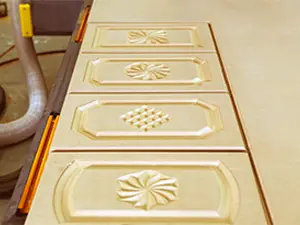
Furniture manufacturing follows a completely different production philosophy.
Here, efficiency is not measured by tiny engraving detail.
It is measured by:
- Continuous nesting speed
- Structural consistency
- Panel yield
- Long-term machine stability
A furniture CNC router is not a scalpel.
It is industrial heavy equipment expected to survive relentless production cycles.
What Furniture Factories Actually Need
High Torque Spindles
Furniture factories commonly process:
- 18mm MDF
- 25mm plywood
- Particle board
- Solid wood panels
Running continuously for:
- 8–12 hours daily
This requires:
- High torque
- Stable cutting force
- Continuous load capacity
Typical configurations include:
- 9kW ATC spindle
- Automatic tool changer
- Large-format vacuum adsorption tables
Unlike sign making, furniture production values:
- Cutting force
- Stability
- Endurance
More than extreme spindle speed.
Heavy-Duty Machine Structure
Furniture nesting creates substantial lateral cutting force.
If the machine frame lacks rigidity:
- Micro-vibrations develop
- Edge chipping increases
- Accuracy drifts over time
- Cabinet alignment becomes inconsistent
This problem usually appears after several months of real production.
The demo machine in the showroom always cuts beautifully. Reality begins when production schedules, overtime shifts, and exhausted operators enter the equation. Civilization itself appears to function this way.
Professional nesting machines therefore use:
- Thick-wall steel frames
- Reinforced gantries
- Heavy vibration damping structures
Because long-term rigidity is not optional in furniture production.
Automation Is the Real Productivity Multiplier
In furniture factories, the bottleneck is often not cutting speed.
It is:
- Loading
- Positioning
- Unloading
- Sorting
This is why dedicated furniture CNC systems often include:
- Auto loading/unloading platforms
- Push systems
- Pop-up positioning pins
- Labeling integration
- Intelligent nesting software
A sign-making machine rarely requires these systems.
Because the production logic is completely different.
4. Direct Comparison: Sign CNC vs. Furniture CNC
| Feature | Sign-Making Optimized CNC | Furniture-Focused CNC |
|---|---|---|
| Core Materials | Acrylic, PVC, ACP, Soft Metals | MDF, Plywood, Solid Wood |
| Spindle Type | High-Speed 24k–30k RPM | High-Torque 9kW+ ATC |
| Machine Structure | Lightweight / Agile | Heavy-Duty / Rigid |
| Main Priority | Surface Finish & Detail | Stability & Cutting Force |
| Typical Tool Size | 3mm–6mm | 12.7mm Nesting Tools |
| Key Accessory | CCD Camera / Oscillating Knife | Vacuum Table / Auto Loader |
| Production Goal | Precision & Appearance | Throughput & Reliability |
| Typical Risk if Misused | Burrs / Whitening | Vibration / Precision Drift |
5. The Hidden Cost of Choosing the Wrong Machine
The most expensive CNC machine is not the one with the highest price.
It is the one you are forced to keep using for three years after realizing it has become your production bottleneck.
If:
- 70% of your orders are signage
Then a heavy nesting machine may cause:
- Poor acrylic edge quality
- Higher electricity consumption
- Slower acceleration
- Excessive detail defects
If:
- 70% of your work is furniture production
Then a lightweight “universal” machine may:
- Lose precision within a year
- Develop vibration issues
- Increase maintenance frequency
- Reduce cabinet consistency
Do not purchase based on “what if someday.”
Purchase based on the work that pays your factory today.
6. How to Choose the Right CNC Router
Choose a Sign-Focused CNC If:
- Acrylic edge quality matters
- You process irregular shapes
- You need contour cutting
- Small detail engraving is common
- Fast acceleration is critical
Choose a Furniture-Focused CNC If:
- You process full-size sheets daily
- Long production shifts are normal
- Material removal efficiency matters
- Automation integration is planned
- Structural stability is your priority
Final Verdict: Specialization Creates Profit
At BCAMCNC, we do not believe in the “One-Machine-Does-Everything” myth.
We believe the right machine should match:
- Your material
- Your production rhythm
- Your order structure
- Your long-term growth direction
A specialized CNC router generates profit.
A compromised “universal” machine often becomes the most expensive storage rack in the workshop.
Factories are full of abandoned “flexible solutions” that were supposed to save money. Manufacturing history is basically a museum of expensive optimism.
Looking for the Right CNC Configuration for Your Production?
Whether you focus on:
- Acrylic signage
- Advertising display production
- Cabinet manufacturing
- Furniture nesting
- Composite material processing
BCAMCNC engineers can help you evaluate:
- Materials
- Spindle configuration
- Table structure
- Automation requirements
- Production scalability
Contact BCAMCNC today for a professional technical assessment.