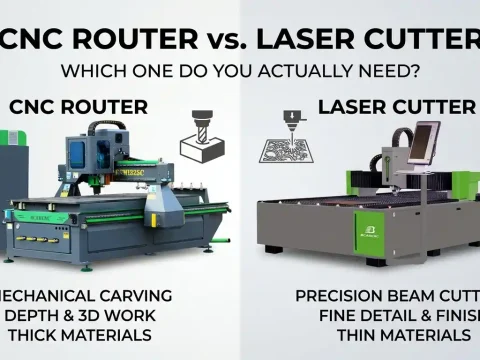

A CNC router is used to automate precision cutting, carving, drilling, and engraving across materials such as wood, acrylic, PVC, foam, and aluminum composites. In modern manufacturing, CNC routers are no longer limited to sign shops or woodworking studios. They now play a critical role in cabinet production, industrial prototyping, architectural decoration, and smart factory automation.
At BCAMCNC, we’ve worked with customers who started with a single 3-axis woodworking router and later expanded into fully automated nesting production lines with loading and labeling systems. The reality is simple: as labor costs rise and customization becomes standard, CNC routers have shifted from “optional equipment” to essential production infrastructure.
What Is a CNC Router?
A CNC router is a computer-controlled cutting machine that follows digital toolpaths generated by CAD/CAM software. Instead of relying on manual operation, the machine executes programmed movements with high precision and repeatability.
Modern CNC routers are commonly equipped with:
- High-speed spindles
- Servo motor systems
- Vacuum working tables
- Automatic tool changers (ATC)
- Intelligent control systems
These features allow manufacturers to improve production efficiency while maintaining stable machining quality across large production volumes.
Unlike traditional cutting equipment, CNC routers can switch quickly between custom designs without extensive setup changes. This flexibility has become increasingly important as manufacturers move toward short-run and customized production.
What Materials Can a CNC Router Cut?
One of the biggest advantages of CNC routers is material versatility. Different machine configurations allow manufacturers to process everything from soft wood panels to industrial composite materials.
Wood and Wood-Based Panels
Woodworking remains one of the most common CNC router applications.
Typical products include:
- Kitchen cabinets
- Wardrobes
- Office furniture
- Decorative wall panels
- Wooden doors
- Custom signage
Common materials:
- MDF
- Plywood
- Particle board
- Solid wood
- Melamine boards
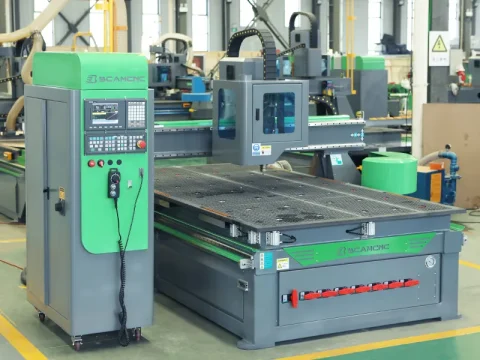
For furniture factories, nesting CNC routers have become especially important because they help optimize sheet utilization and reduce raw material waste.
Cabinet Production Is No Longer Just “Cutting Panels”
In the furniture industry, CNC routing has evolved far beyond simple panel cutting.
Today, intelligent nesting software allows manufacturers to optimize entire MDF sheets automatically. Parts are arranged dynamically to reduce waste while maintaining drilling accuracy and grain direction consistency.
A well-configured nesting CNC router can:
- Reduce material waste
- Improve production consistency
- Minimize manual handling
- Shorten production cycles
- Lower labor dependency
For many cabinet factories, the biggest efficiency gain no longer comes from spindle speed alone. It comes from workflow automation.
That includes:
- Automatic loading tables
- Barcode labeling systems
- Automatic tool changers
- Intelligent nesting software
- Integrated dust collection systems
In other words, the router itself is only one part of the manufacturing ecosystem.
Acrylic and Plastic Processing: Heat Control Matters
Many first-time operators assume acrylic is easy to machine. In reality, acrylic can be less forgiving than wood.
If spindle speed, feed rate, and chip load are not properly balanced, the material does not cut cleanly. It melts.
Once melted chips begin sticking to the cutting edge, surface quality deteriorates quickly and polishing time increases significantly.
This is why professional CNC router setups for acrylic processing often rely on:
- Sharp single-flute cutting tools
- Stable spindle RPM
- Proper vacuum hold-down pressure
- Air cooling or dust extraction systems
- Optimized feed rates
For high-volume acrylic production, machine rigidity matters just as much as spindle power.
Applications include:
- Acrylic signs
- LED channel letters
- Retail displays
- PVC advertising boards
- Exhibition stands
BCAMCNC Engineer’s Tip
“When machining acrylic sheets, operators often focus only on spindle speed. But chip evacuation is equally important. If chips remain trapped inside the cutting path, edge quality drops much faster than most beginners expect.”
Aluminum and Composite Material Processing
Certain CNC routers are also capable of machining non-ferrous metals and industrial composite materials, including:
- Aluminum sheets
- Aluminum composite panels (ACP)
- Copper plates
- PVC foam boards
However, aluminum processing requires more than simply increasing spindle power.
Stable machine structure, proper tooling geometry, and lubrication strategy all influence machining quality.
For aluminum composite processing, many manufacturers use:
- O-flute cutting tools
- Mist cooling systems (MQL)
- Lower feed vibration settings
- Stronger vacuum adsorption tables
Without proper chip evacuation and cooling, aluminum chips can stick to the tool edge and damage surface finish.
BCAMCNC Engineer’s Tip
“When processing aluminum composite panels, tool geometry often matters more than spindle horsepower. A polished O-flute bit can significantly improve chip evacuation and edge finish quality.”
Industries That Commonly Use CNC Routers
CNC routers are widely used across multiple industries because they combine precision, automation, and production flexibility.
Furniture Manufacturing
Used for:
- Cabinet production
- Custom furniture
- MDF nesting
- Decorative carving
Advertising and Sign Making
Used for:
- Acrylic letter cutting
- PVC engraving
- 3D signage
- Display production
Architectural Decoration
Used for:
- Decorative screens
- Wall panels
- Ceiling patterns
- Artistic carving
Mold and Prototype Manufacturing
Used for:
- Foam molds
- Composite molds
- Automotive prototypes
- Sculpture modeling
As customization becomes more common across industries, CNC routers continue replacing manual processing methods in both small workshops and large-scale factories.
Understanding the Difference Between 3-Axis, 4-Axis, and 5-Axis CNC Routers
Choosing the right machine depends heavily on product complexity and machining requirements.
| Feature | 3-Axis CNC Router | 4-Axis CNC Router | 5-Axis CNC Router |
|---|---|---|---|
| Best For | Flat panels & cabinets | Cylindrical carving | Complex 3D surfaces |
| Typical Industry | Furniture production | Decorative woodworking | Aerospace & molds |
| Programming Difficulty | Low | Medium | High |
| Machining Flexibility | Standard | Rotary capability | Multi-angle machining |
| Cost Level | Lower | Medium | High |
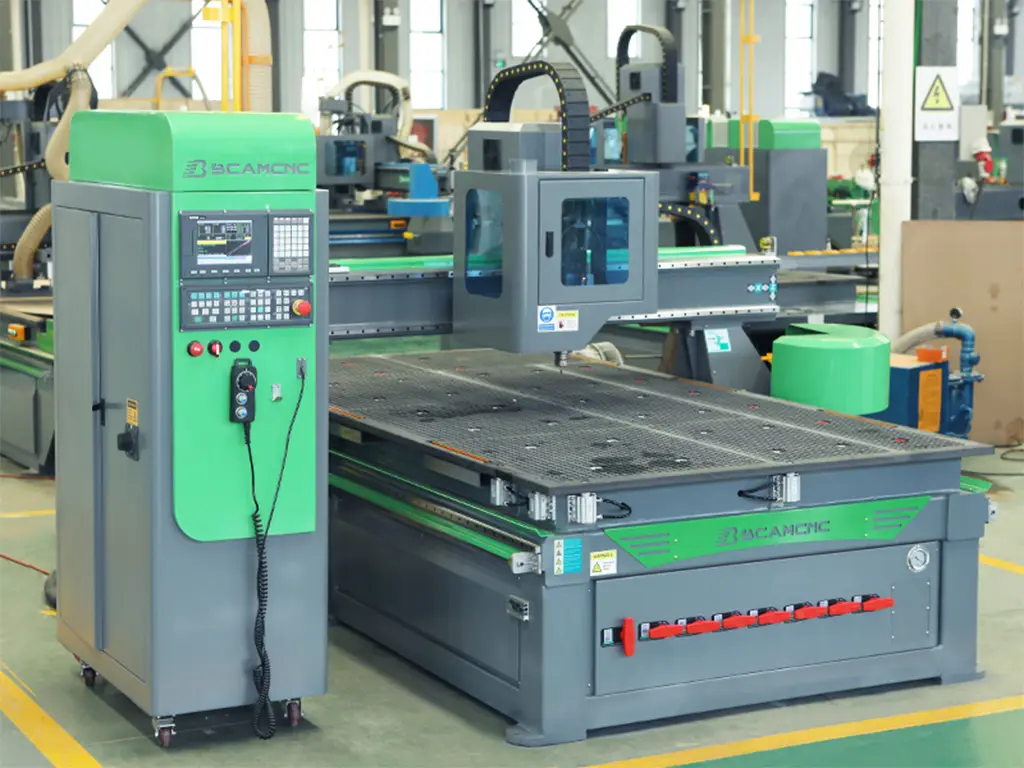
3-Axis CNC Router
A 3-axis CNC router moves along the X, Y, and Z axes.
This configuration is widely used for:
- Cabinet manufacturing
- Sign making
- Flat panel cutting
- Wood engraving
For many woodworking businesses, a 3-axis CNC router remains the most practical entry point into automated production.
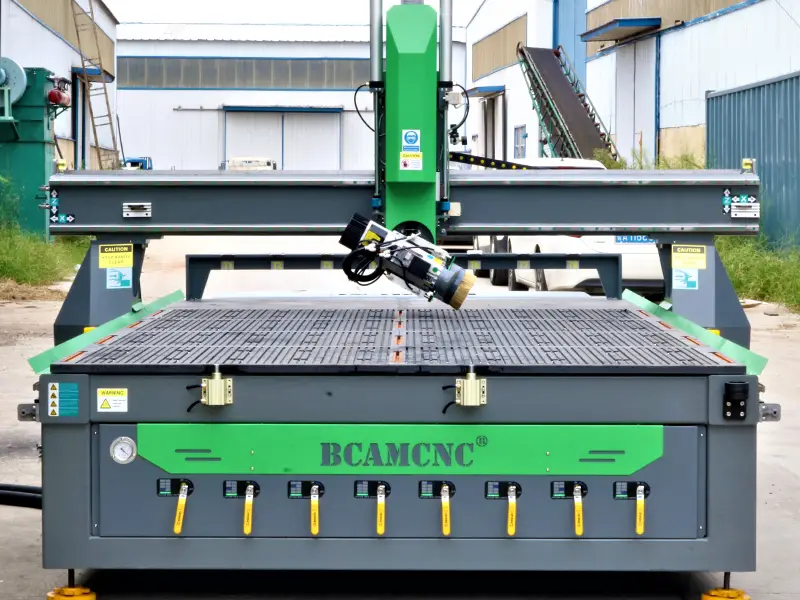
4-Axis CNC Router
A 4-axis CNC router introduces rotary machining capability.
This allows manufacturers to process cylindrical workpieces such as:
- Chair legs
- Stair columns
- Wooden sculptures
- Cylindrical decorative parts
The rotary axis adds more machining flexibility without reaching the complexity level of full 5-axis systems.
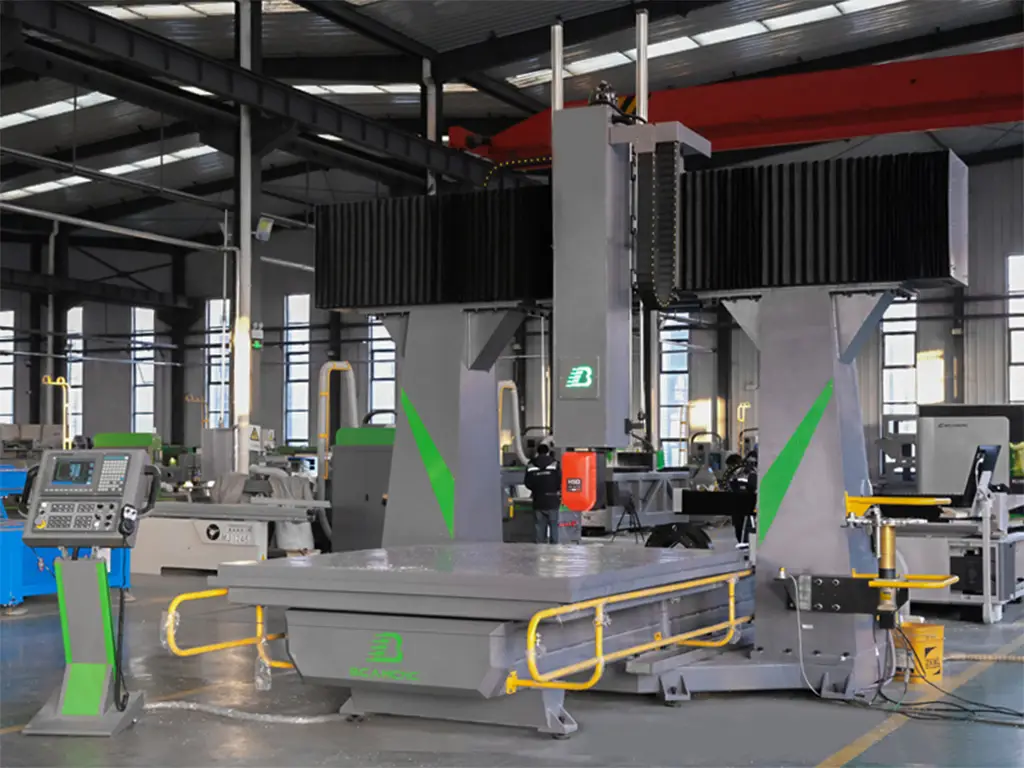
5-Axis CNC Routers: When Surface Complexity Changes Everything
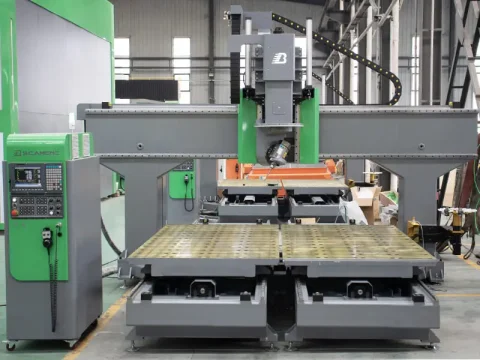
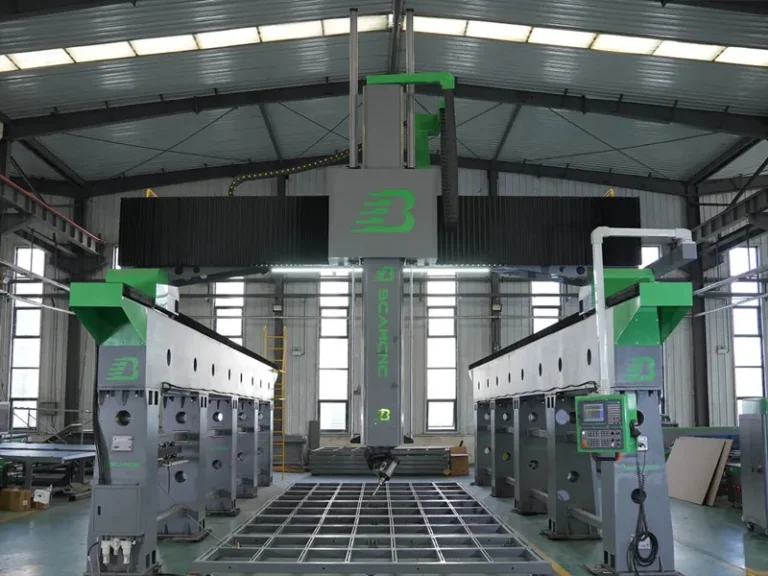
A 5-axis CNC router becomes necessary when the cutting tool can no longer approach the material from a single vertical direction.
This commonly occurs in:
- Automotive molds
- Aerospace components
- Composite tooling
- Large-scale sculptures
- Complex curved furniture
The real challenge is not simply machine movement. It is collision control, toolpath strategy, and maintaining consistent surface finish across multiple angles.
For manufacturers transitioning from 3-axis machining, the learning curve is often CAM software rather than hardware itself.
How to Choose the Right CNC Router
Selecting the correct CNC router depends on several factors:
- Material type
- Product size
- Production volume
- Automation requirements
- Machining precision
- Future expansion plans
For example:
- Furniture factories often prioritize nesting systems with automatic loading.
- Sign-making businesses may focus on engraving precision and cutting speed.
- Industrial manufacturers typically require stronger machine frames for aluminum processing.
- Advanced mold production may require 5-axis machining capability.
The reality is that machine specifications alone do not determine production efficiency.
Software integration, tooling strategy, dust collection, vacuum performance, and technical support all play major roles in long-term operational stability.
Buying a CNC router based only on price usually becomes expensive later. Manufacturing has a habit of punishing shortcuts with brutal efficiency.
The Bottom Line
A CNC router is no longer just a cutting machine. In many factories, it has become the center of digital manufacturing.
Whether the application involves cabinet production, acrylic signage, aluminum composite processing, or advanced 5-axis machining, the true value of a CNC router comes from consistency, automation, and process control.
The machine itself matters. But long-term productivity depends even more on workflow integration, operator training, software optimization, and reliable technical support.
That is why experienced manufacturers focus on the entire production system instead of spindle power alone.