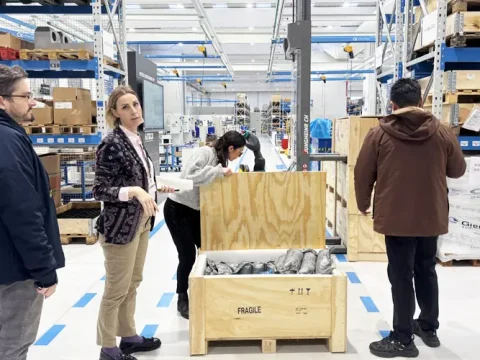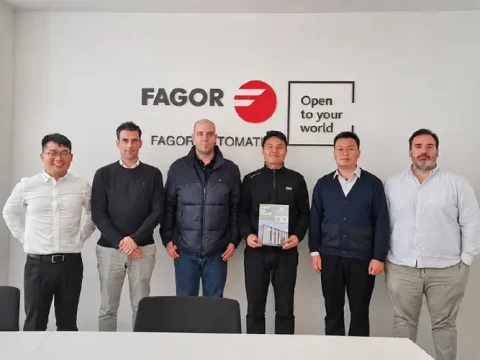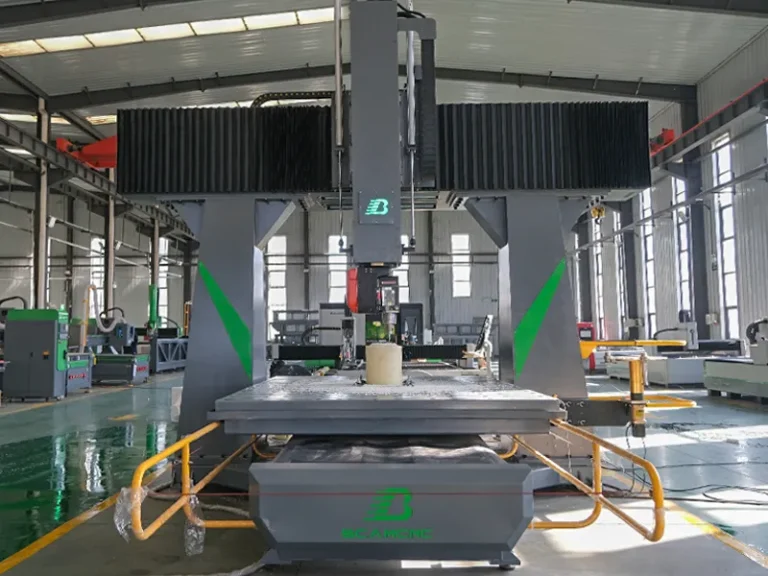

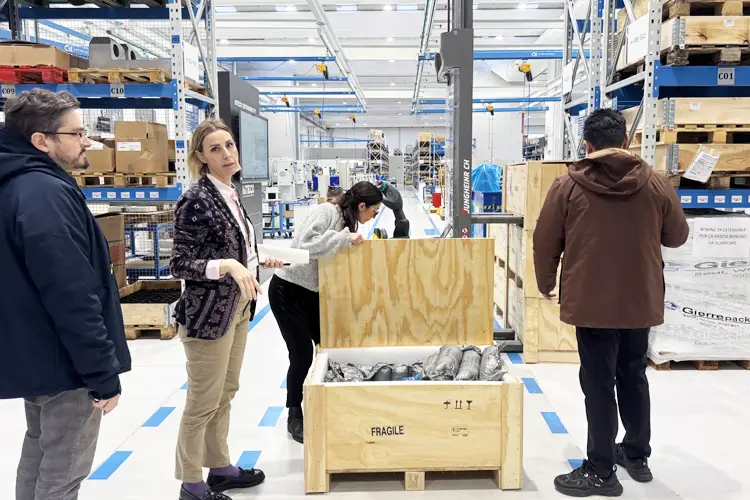
BCAMCNC engineers visiting Hiteco Italy for industrial 5-axis spindle integration discussions
Why BCAMCNC Standardized Hiteco Spindles on Its 5 Axis CNC Routers?
Most 5 axis CNC problems blamed on software are actually spindle problems.
Not immediately. At first, everything looks acceptable during test cutting. The machine runs smoothly at the exhibition hall. Sample parts look clean under showroom lighting. Then the machine enters real production.
Eight-hour finishing cycles start exposing thermal drift. Long-reach tools begin leaving inconsistent blending marks. Operators quietly reduce feed rates because vibration becomes unpredictable near complex contours. Tool life starts varying between shifts. Eventually someone spends half a day chasing “CAM optimization issues” that were actually caused by spindle instability under continuous load.
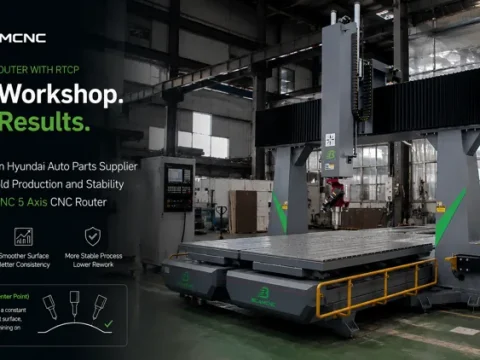
That is the real reason BCAMCNC standardized Hiteco spindles across its 5 axis CNC router platform.
Not because customers ask for Italian branding.
Because after enough factory installations, you realize spindle behavior controls far more than spindle RPM. It affects finishing consistency, unattended machining confidence, downstream sanding hours, tooling costs, maintenance intervals, and ultimately whether a production manager trusts the machine enough to run overnight without emergency phone calls at 1:40 AM.
Factories rarely buy 5 axis routers for decoration.
They buy production stability.
Why BCAMCNC Strengthened Technical Cooperation with Hiteco in Italy
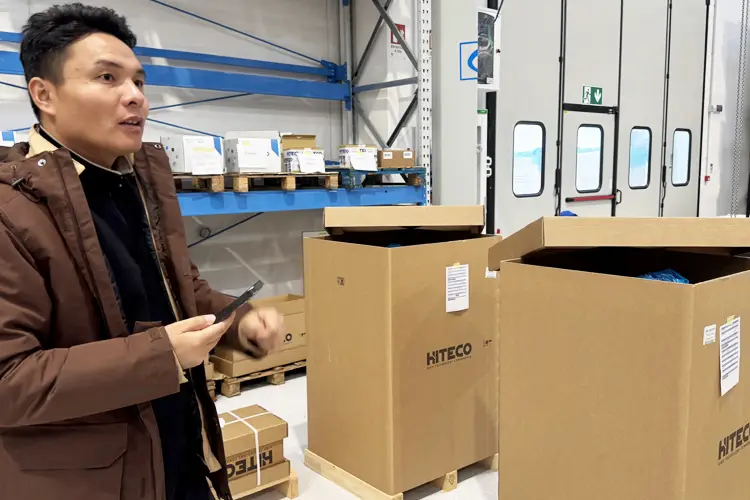
BCAMCNC and Hiteco technical cooperation for aerospace composite machining spindle solutions
As aerospace composites, carbon fiber tooling, and large-format mold projects became more demanding, BCAMCNC engineers worked more closely with Hiteco’s technical team in Italy to improve spindle stability under continuous 5-axis machining conditions.
During the factory visit and engineering discussions, both teams focused on several critical challenges commonly seen in long-cycle industrial machining:
- Thermal stability during extended machining hours
- Spindle vibration behavior in aggressive 5-axis movement
- Surface consistency in composite and carbon fiber cutting
- Cooling efficiency under high-load production conditions
- Reliability during unattended overnight machining
- Integration between spindle dynamics and large gantry machine structures
Rather than focusing only on spindle speed specifications, the discussions centered on long-term production stability in aerospace, marine, automotive tooling, and composite material applications.
This cooperation further strengthened BCAMCNC’s spindle integration standards for high-end 5-axis CNC routers designed for demanding industrial production environments.
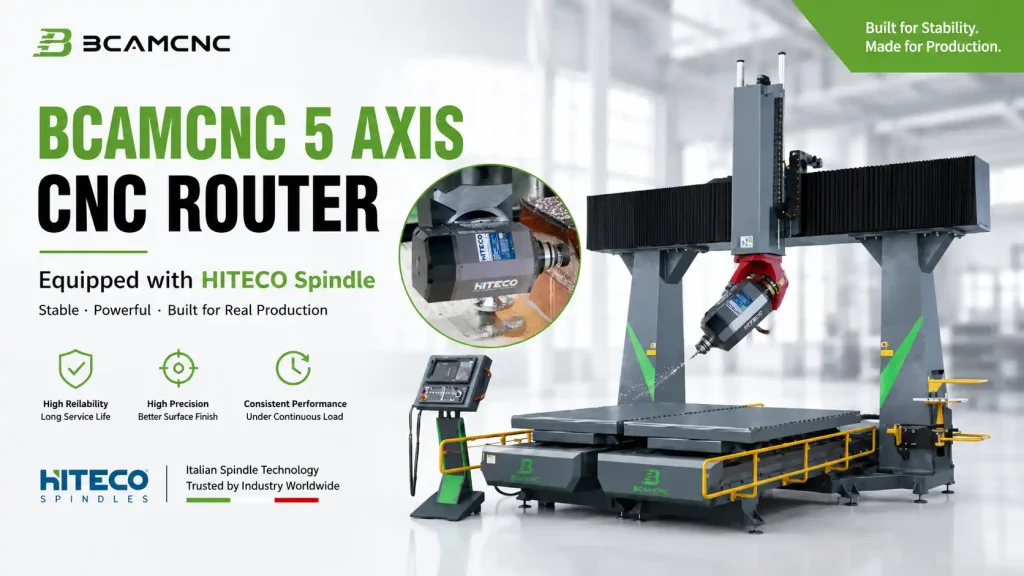
Why 5 Axis Machining Exposes Spindle Weakness Faster
A 3 axis router lives a relatively simple life.
Most cutting forces remain predictable. The spindle mainly sees vertical engagement and relatively stable toolpaths.
A 5 axis machine is different.
The moment the head begins simultaneous interpolation across B and C axes, cutting forces stop behaving nicely. Load direction changes constantly. Long-reach tooling amplifies vibration. Small instability at the spindle nose becomes much larger at the tool tip.
This is where spindle quality stops being a brochure topic and becomes a production problem.
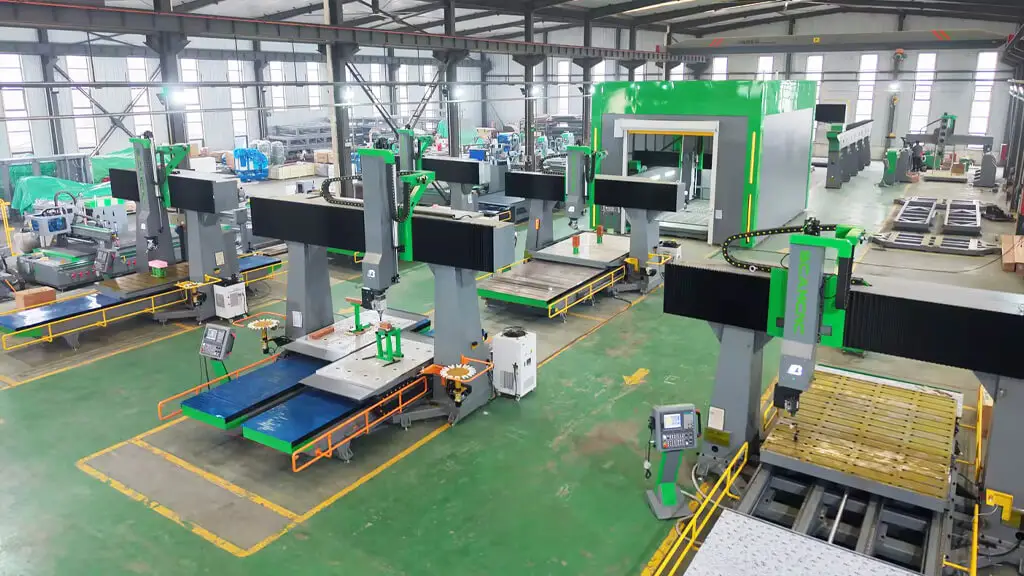
Runout Problems Become Expensive Very Quickly
A lot of buyers focus only on spindle power:
- 9kW
- 12kW
- 13kW
- 24,000 RPM
- HSK63F
Those numbers matter, but they do not explain whether the spindle remains stable after six hours of continuous composite finishing.
In real production, dynamic runout matters more than many workshops realize.
If spindle runout increases under thermal load:
- Only part of the cutting edge does the actual work
- Tool wear becomes uneven
- Heat concentration increases
- Surface chatter appears unpredictably
- Tool life drops sharply
Operators usually notice this before management does.
You hear comments like:
- “The machine sounds different after lunch.”
- “Finishing looked cleaner yesterday.”
- “This tool shouldn’t be worn out already.”
- “Why are we slowing the feed rate again?”
Those are often spindle stability conversations disguised as programming discussions.
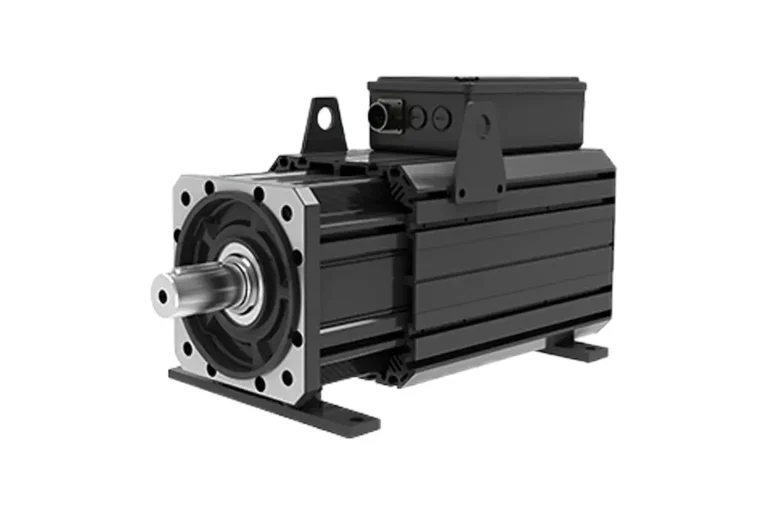
Hiteco spindle systems are widely used in advanced woodworking, composite machining, mold production, and industrial routing environments because their thermal and mechanical stability under continuous operation is generally more predictable than lower-cost spindle packages.
That matters much more than impressive peak RPM figures printed in large bold fonts.
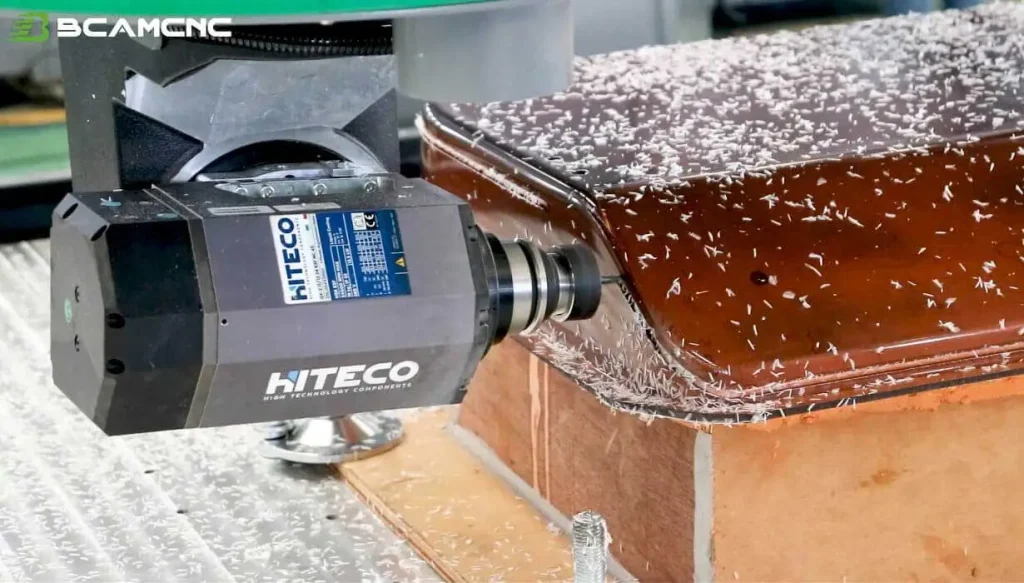
Continuous Power Ratings Matter More Than Peak Marketing Numbers
One of the most misunderstood areas in spindle procurement is S1 versus S6 power ratings.
Some spindle suppliers advertise peak intermittent power because the number looks bigger on quotations.
Production reality does not care about quotation aesthetics.
In real factories:
- Mold finishing cycles may run for 8-12 hours
- Composite trimming programs run continuously
- Hardwood machining creates sustained spindle load
- Nobody pauses every few minutes to let the spindle cool down
A spindle rated for continuous S1 duty behaves very differently from one relying heavily on short-term peak output.
Thermal Drift Starts Small and Gets Expensive Later
During long machining cycles, poor thermal control creates:
- Z-axis dimensional drift
- Surface inconsistency
- Misalignment between sequential operations
- Increased manual correction work
And thermal growth is deceptive because it develops gradually.
At first, operators compensate manually.
Then sanding increases.
Then tolerance complaints appear downstream during assembly.
Eventually someone mounts an indicator and realizes spindle growth changed tool position enough to affect the finished part.
That conversation tends to get very quiet.
Dust, Air Quality, and Cooling Cause More Failures Than Most Factories Admit
Wood dust and composite dust destroy spindles slowly.
Not dramatically.
Slowly enough that workshops postpone maintenance until the damage becomes expensive.
In woodworking and composite environments:
- MDF dust contaminates weak sealing systems
- Carbon fiber dust accelerates bearing wear
- Wet compressed air damages pneumatic sealing
- Poor extraction increases spindle heat retention
Many factories install high-end machines while running unstable air systems with inconsistent moisture filtration. Then they wonder why spindle bearing life varies unpredictably between machines.
For industrial spindle systems, stable compressed air around 6-8 bar with proper drying and filtration is not optional maintenance detail. It directly affects spindle longevity.
The spindle itself is only one part of the reliability chain.
Reliability Is Usually a System Problem
This is why BCAMCNC focuses not only on spindle selection, but also:
- Cooling circulation layout
- Dust extraction integration
- Pneumatic stability
- Thermal load management
- Machine enclosure airflow
Because machine reliability is usually systemic.
Factories prefer simple explanations. Production failures rarely cooperate.
Real Factory Case: Oak Stair and Curved Handrail Production
A North American architectural millwork factory was machining thick solid oak stair components and curved handrails using a lower-cost 5 axis router with a generic spindle package.
The machine looked acceptable during initial testing.
Production exposed the weaknesses quickly.
The factory faced:
- Severe chatter on cross-grain curved cuts
- Frequent over-current alarms during aggressive cutting
- Inconsistent surface finish near complex contours
- Extremely high sanding labor
- Compression tooling wearing out every few days
Operators reduced feed rates simply to keep the machine stable.
The larger hidden cost was not tooling.
It was labor and lost production confidence.
Experienced operators no longer trusted unattended machining. Every long program required supervision because spindle behavior became unpredictable under continuous hardwood load.
After switching to a BCAMCNC 5 axis CNC router equipped with a Hiteco spindle system:
- Feed rates increased substantially
- Surface finish consistency improved
- Chatter during cross-grain cutting was dramatically reduced
- Tool life stabilized
- Manual sanding time dropped significantly
- Overnight machining became more reliable
Nothing magical happened.
The machine simply became mechanically stable enough for production environments that punish inconsistency very quickly.
That is usually what factories are actually paying for.
Why Engineers Notice Spindle Problems Before Purchasing Departments
Finance teams see purchase price.
Production managers see downtime.
Process engineers hear instability first.
Especially during:
- Simultaneous 5 axis finishing
- Long-reach ball nose machining
- Composite edge trimming
- Deep cavity work
- Thin wall parts
- High-speed contouring
Experienced engineers pay attention to:
- Spindle sound changes
- Heat accumulation
- Surface blending consistency
- Tool wear patterns
- Load fluctuations during interpolation
Because those small changes often predict larger failures later.
Machines usually warn you before they fail.
Humans tend to ignore the warning signs until maintenance invoices start multiplying.
Long-Term Production Logic vs Short-Term Purchase Logic
| Decision Factor | Lower-Cost Spindle Package | Hiteco-Based Configuration |
|---|---|---|
| Initial purchase price | Lower | Higher upfront |
| Continuous thermal stability | Often inconsistent | More stable |
| Long-cycle finishing consistency | Can drift over time | More predictable |
| Tool life stability | Variable | Easier to control |
| Risk during unattended machining | Higher | Lower |
| Bearing life under continuous load | Less predictable | Generally longer |
| Maintenance planning | Reactive | More manageable |
| Surface finishing repeatability | Inconsistent during long cycles | More stable |
| Downtime exposure | Higher after warranty period | Lower overall |
| Total ownership cost | Frequently underestimated | Usually more controlled |
A cheaper spindle package may reduce initial machine cost.
But factories eventually pay elsewhere:
- Downtime
- Tooling waste
- Manual rework
- Delivery delays
- Additional labor
- Scrap material
- Lost scheduling stability
These costs accumulate quietly until they become impossible to ignore.
FAQ
Does a premium spindle automatically make a 5 axis router high quality?
No.
Machine rigidity, controller tuning, thermal compensation, vacuum stability, tool balancing, and CAM strategy all still matter heavily.
A strong spindle inside a poorly integrated machine cannot solve structural design problems.
Why are Hiteco spindles common in advanced woodworking and composites?
Because those industries punish instability quickly.
Long finishing cycles, abrasive dust, extended tooling, and continuous interpolation expose spindle weaknesses much faster than simple panel cutting operations.
What shortens spindle life fastest in real factories?
Usually:
- Poor dust extraction
- Wet compressed air
- Improper warm-up procedures
- Running damaged collets too long
- Tool imbalance
- Minor crashes operators never report
Many spindle failures begin as small maintenance shortcuts.
Is higher spindle power always better?
No.
Oversized spindle mass can negatively affect machine dynamics if improperly matched to the machine structure.
Stable torque delivery and thermal consistency usually matter more than chasing maximum power numbers.
What matters more for finish quality: spindle RPM or machine stability?
Stability.
A machine holding stable RPM, consistent torque, and low vibration under load will usually produce better surface finish than a machine chasing extreme spindle speed with unstable dynamics.
Final Thoughts
Factories running real production eventually stop chasing specification sheets and start chasing predictability.
That shift changes how equipment gets evaluated.
BCAMCNC’s long-term cooperation with Hiteco comes from repeated exposure to actual production environments where spindle instability creates expensive downstream problems that brochures never mention:
- Sanding labor
- Tool consumption
- Surface inconsistency
- Thermal drift
- Operator hesitation
- Unplanned downtime
A 5 axis CNC router is not judged by how it performs during a showroom demo.
It is judged after thousands of production hours when deadlines tighten, operators get tired, dust accumulates everywhere, and the machine still needs to hold tolerance on the last part of the shift.
That is where spindle quality becomes very visible. Human manufacturing remains strangely dependent on a handful of experienced people quietly preventing chaos every single day.