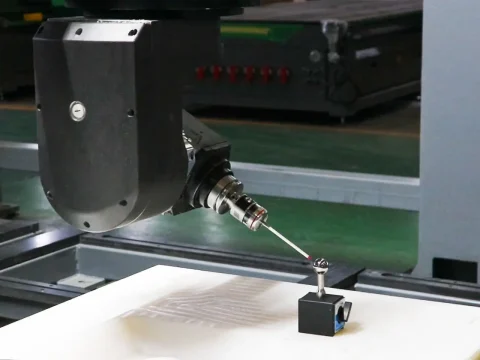

The spindle motor is an important component of the CNC router, and its performance has a vital impact on the performance of the entire CNC router. What the two have in common:in terms of internal structure, the two are unified, and both use the stator to rotate around the coil. In terms of motor control methods, almost all water-cooled ones are controlled by frequency conversion, while air-cooled spindles are not. It can be controlled by frequency conversion and non-frequency conversion. The difference between water-cooled spindle and air-cooled spindle
1. Cooling method
The water-cooled spindle motor uses water circulation to cool the heat generated after the spindle rotates at a high speed. This method will have a good effect, because the temperature after circulation will not exceed 40 degrees.
2. Noise
The water-cooled spindle motor is basically no noise, but the air-cooled spindle motor is very loud.

3. Service life
Because water-cooled spindle motors need to pay attention to maintenance, frequent water changes or use industrial water coolers, their service life is much longer than that of air-cooled spindle motors.
4. Precision
Since the water-cooled spindle needs to be connected to a water pump, a bucket is needed to hold the water, and the water pipe needs to be connected. Especially in the cold winter in the north, it is easier to freeze, and some customers may find it more troublesome; while the air-cooled spindle does not have so many Use problem.
Is it better to choose water cooling or air cooling for the spindle of the CNC router? High-quality CNC routers are generally equipped with a high-performance spindle to play its role. As for the choice of water-cooled or air-cooled, you need to decide according to actual needs, compare the differences between the two, and choose the one that is most suitable for your company.
For more detailed product information or technical problem,please contact us online customer service or email admin@bcamcnc.com, We will try our best to help you the most.