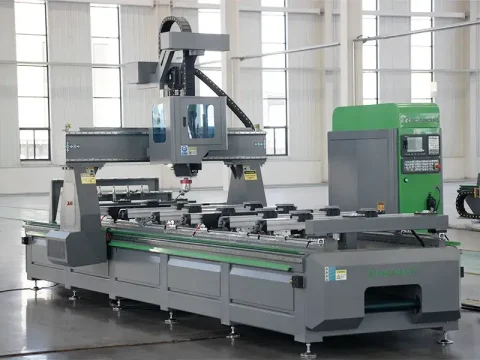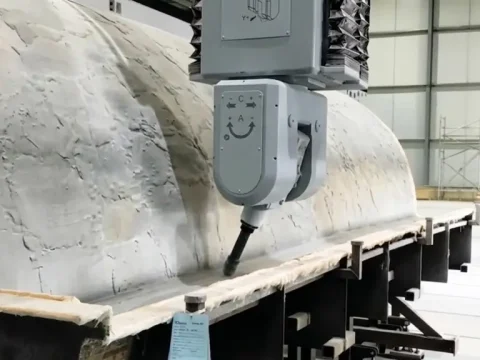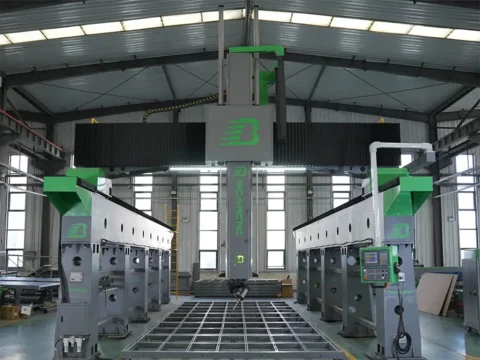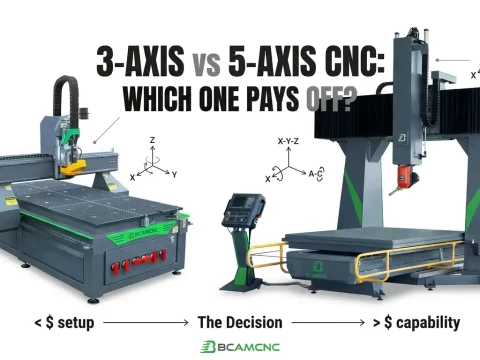

Today, I mainly analyze the selection method of the frequency converter of the industrial engraving machine. The frequency converter is used as the main shaft motor drive of the woodworking cnc router machine. The main requirements are stable operation and smooth speed change. The full-speed fluctuation is small, and the low-speed torque is large, which can ensure low-speed cutting. Therefore, the woodworking cnc router machine should pay attention to the following points when choosing the inverter to prevent damage to the woodworking cnc router machine. Analyze from the following aspects:
woodworking cnc router machine Inverter
1) The purpose of using frequency conversion; constant voltage control or constant current control, etc.
2) The load type of the woodworking cnc router machine inverter; such as vane pump or positive displacement pump, etc., pay special attention to the performance curve of the load, the performance curve determines the way and method of application.
3) The matching problem of woodworking cnc router machine inverter and load;
I. Voltage matching; the rated voltage of the engraving machine inverter matches the rated voltage of the load.
II. Current matching; the rated current of ordinary centrifugal pumps and engraving machine inverters is consistent with the rated current of the motor. For special loads such as deep water pumps, it is necessary to refer to the motor performance parameters to determine the current and overload capacity of the engraving machine inverter with the maximum current.
III. Torque matching; this situation may occur under constant torque load or when there is a deceleration device.

4) When using the engraving machine inverter to drive a high-speed motor, due to the low reactance of the high-speed motor, the increase in high-order harmonics leads to an increase in the output current value. Therefore, the capacity of the engraving machine inverter used for high-speed motors is slightly larger than that of ordinary motors.
5) If the inverter of the engraving machine needs to run with a long cable, measures should be taken to suppress the impact of the long cable on the ground coupling capacitance to avoid insufficient output of the inverter of the engraving machine. Therefore, in this case, the capacity of the inverter of the engraving machine should be enlarged by one. Or install an output reactor at the output end of the inverter of the engraving machine.
6) For some special applications, such as high temperature and high altitude, this will cause the derating of the inverter of the engraving machine. The inverter capacity of the engraving machine should be enlarged by one block.
The above is the selection method of woodworking cnc router machine inverter collected and organized by BCAM, I hope it will be helpful to you.