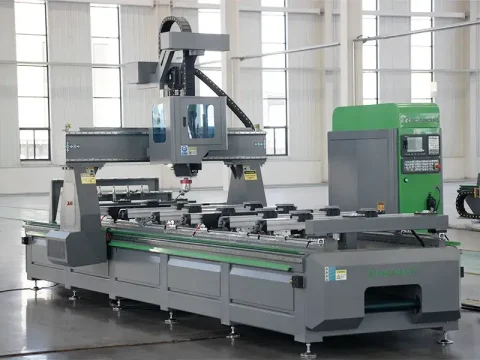

Musical instrument production demands high precision, consistency, and careful material control. Even small dimensional differences can affect tone, playability, and assembly quality. While traditional handcrafting remains important, it is difficult to maintain stable output when production volume increases. For this reason, CNC routers have become an essential tool in modern musical instrument manufacturing.
In guitar production, CNC routers are widely used to machine bodies, necks, and fingerboards. Guitar bodies can be cut with accurate outer contours, internal cavities, and smooth ergonomic curves. This ensures that every body follows the same geometry, which is especially important for electric guitars and batch production. Acoustic guitar parts can also be machined with controlled thickness and shape, providing a reliable foundation for later manual tuning and finishing.
The guitar neck is one of the most critical components in any instrument. CNC routers allow manufacturers to machine neck profiles, truss rod slots, and headstock transitions with high repeatability. Once a neck profile is proven to be comfortable and stable, it can be reproduced accurately across multiple instruments. This level of consistency is difficult to achieve with manual shaping alone, especially in long production runs.
Fingerboard machining is another important application. CNC routers are commonly used to cut fret slots, machine inlay pockets, and shape fingerboard radii. Precise fret spacing and consistent slot depth are essential for correct intonation and playing comfort. With CNC machining, fingerboards can be produced to exact specifications, reducing adjustment time during final assembly.
Beyond guitars, CNC routers are also used in the production of violins, bass guitars, ukuleles, and other string instruments. In violin making, CNC routers are often applied for rough shaping of plates, molds, and structural components. While final acoustic tuning is still performed by skilled craftsmen, CNC machining significantly reduces preparation time and improves dimensional consistency.
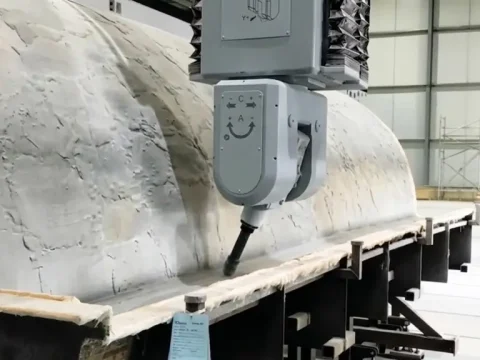
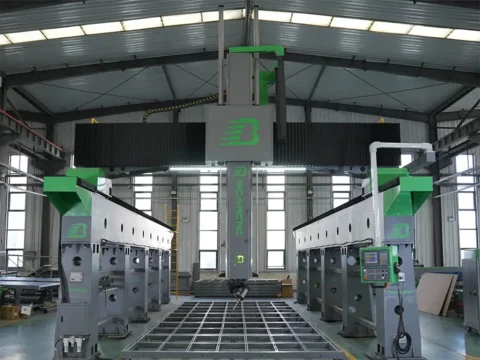
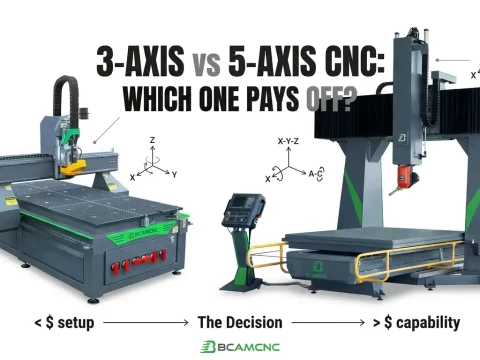
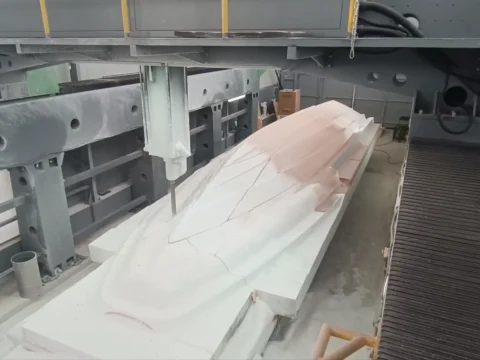
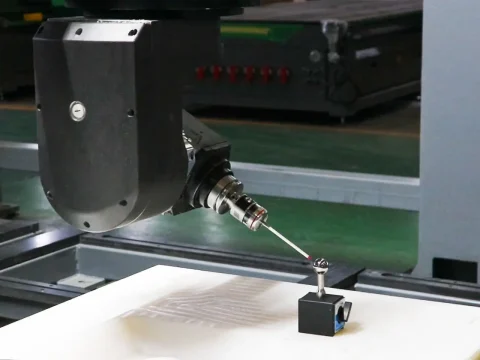
The choice between a 3 axis and a 5 axis CNC router depends on the complexity of the instrument design. A 3 axis CNC router is sufficient for most flat and moderately curved parts, making it suitable for small workshops and standard instrument production. A 5 axis CNC router, however, offers clear advantages when machining complex neck profiles, angled headstocks, and deep curved surfaces. It reduces multiple setups and improves surface quality on complex geometries.
Musical instruments are commonly made from materials such as maple, mahogany, rosewood, ebony, and basswood. CNC routers equipped with high-speed spindles and stable machine structures can process these materials cleanly, achieving smooth surfaces and accurate dimensions. Machine rigidity and vibration control are especially important when working with hardwoods used in premium instruments.
Overall, CNC routers do not replace traditional craftsmanship in musical instrument production. Instead, they support it by providing precision, efficiency, and consistency. By combining CNC machining with skilled hand finishing, manufacturers can produce high-quality instruments while maintaining stable production efficiency. As demand for customized and high-quality instruments continues to grow, CNC routers will remain a key part of modern musical instrument manufacturing.